Quranic Answer
The Holy Quran, regarded as the divine text of Islam, greatly emphasizes the importance of knowledge, urging humanity as a whole to actively seek and acquire it. This call to knowledge is not merely a suggestion; it's a profound aspect of Islamic teachings foundational to the faith and essential for the enrichment of the human experience. Among all the verses in the Quran, a few stand out, especially those in Surah Al-Alaq, which detail the very first revelation received by the Prophet Muhammad (peace be upon him). The importance of these verses cannot be overstated, as they set a precedent for the value of knowledge in the spiritual and physical realms. Surah Al-Alaq begins with a pivotal instruction to the Prophet Muhammad (peace be upon him): 'Read in the name of your Lord who created. Created man from a clinging substance. Read, and your Lord is the most Generous' (Al-Alaq 1-5). These verses are more than just an order; they encapsulate a vital truth about the act of reading and engaging with knowledge, underscoring the relationship between the Creator and His creation. It is through reading and comprehension that one can come to understand the magnificence of Allah's creation and, more fundamentally, how one's own existence and knowledge are intertwined. The fact that these were the first words revealed to the Prophet suggests that seeking knowledge is of utmost importance, framing the pursuit of learning as a primary endeavor for all followers of Islam. The Quran encourages followers not only to read but to engage with knowledge critically and reflectively. The recourse to reading, especially in the context of divine guidance, indicates a continued emphasis on the acquisition of knowledge as a path toward spiritual enlightenment and societal betterment. This position is reinforced further in Surah Az-Zumar, verse 9, where Allah poses a thought-provoking question: 'Are those who know equal to those who do not know?' This rhetorical inquiry highlights the immense value and differentiation that knowledge provides in elevating one's status in both a spiritual and worldly context. Knowledge, as articulated in this verse, is portrayed as a significant asset, marking a clear disparity between the learned and the ignorant. In Islam, being knowledgeable is not just beneficial; it becomes a status that distinguishes individuals in the eyes of the Creator. The pursuit of knowledge, as implied by various Quranic verses, extends beyond the limits of religious understanding. Islam recognizes the significance of worldly knowledge across multiple disciplines, including science, philosophy, arts, and social studies. This comprehensive approach invites followers to realize that knowledge is not confined merely to religious texts but spans all areas of human inquiry and creativity. The pursuit of such knowledge is not just encouraged; it is viewed as an obligation for every Muslim. This doctrine inherently broadens the horizons for believers, facilitating a more profound scrutiny of the world around them and enabling them to contribute effectively to society. In another illuminating verse from Surah At-Talaq, verse 12, believers are urged to 'reflect on God's creation,' thus reinforcing the importance of being cognizant of their surroundings and understanding the laws that govern life. This call resonates deeply in contemporary contexts, inviting individuals to seek knowledge in natural sciences, technology, and even humanities, ensuring a holistic approach to learning. The Quranic endorsement of observation and reflection connects the ethical pursuit of knowledge with the divine wisdom that governs the universe. Each element within creation speaks of a deliberate design, motivating believers to explore the depth of knowledge available to them. The Quranic advocacy for knowledge thus becomes a multifaceted guideline for its adherents. It emphasizes various dimensions, such as the need for education, the responsibility of teaching, and the moral imperative of using one’s acquired knowledge for the benefit of humanity. Islamic history is laden with examples of scholars, writers, and scientists who epitomized this ethos. Thinkers like Ibn Sina (Avicenna) and Al-Ghazali dedicated their lives to the pursuit of knowledge, transcending cultural barriers and contributing profoundly to various fields of study, ranging from medicine to theology. Furthermore, the role of knowledge transcends personal benefit; it is woven into the fabric of communal responsibility in Islam. Educated individuals are urged to pass on their knowledge to others, fostering a society where learning and teaching are reciprocal and ongoing endeavors. The Quran encourages a culture where knowledge is shared widely, emphasizing that it is not merely the possession of information but the dissemination and application of that knowledge for the welfare of the community that counts. In conclusion, the Holy Quran serves as a timeless beacon for the acquisition and application of knowledge. By framing knowledge not only as an asset but as a divine command, it elevates its pursuit to an obligatory act for all Muslims. The verses discussed inspire individuals to engage deeply with their surroundings, instilling a sense of curiosity and motiviating them towards intellectual exploration and reflection. This impactful guidance undoubtedly lays the groundwork for an enlightened society where knowledge flourishes, and individuals work collectively towards the prosperity of the community. Therefore, it can be unequivocally affirmed that the Quran explicitly advises people to learn, study, and seek knowledge as a fundamental tenet of faith and practice.
Related Verses
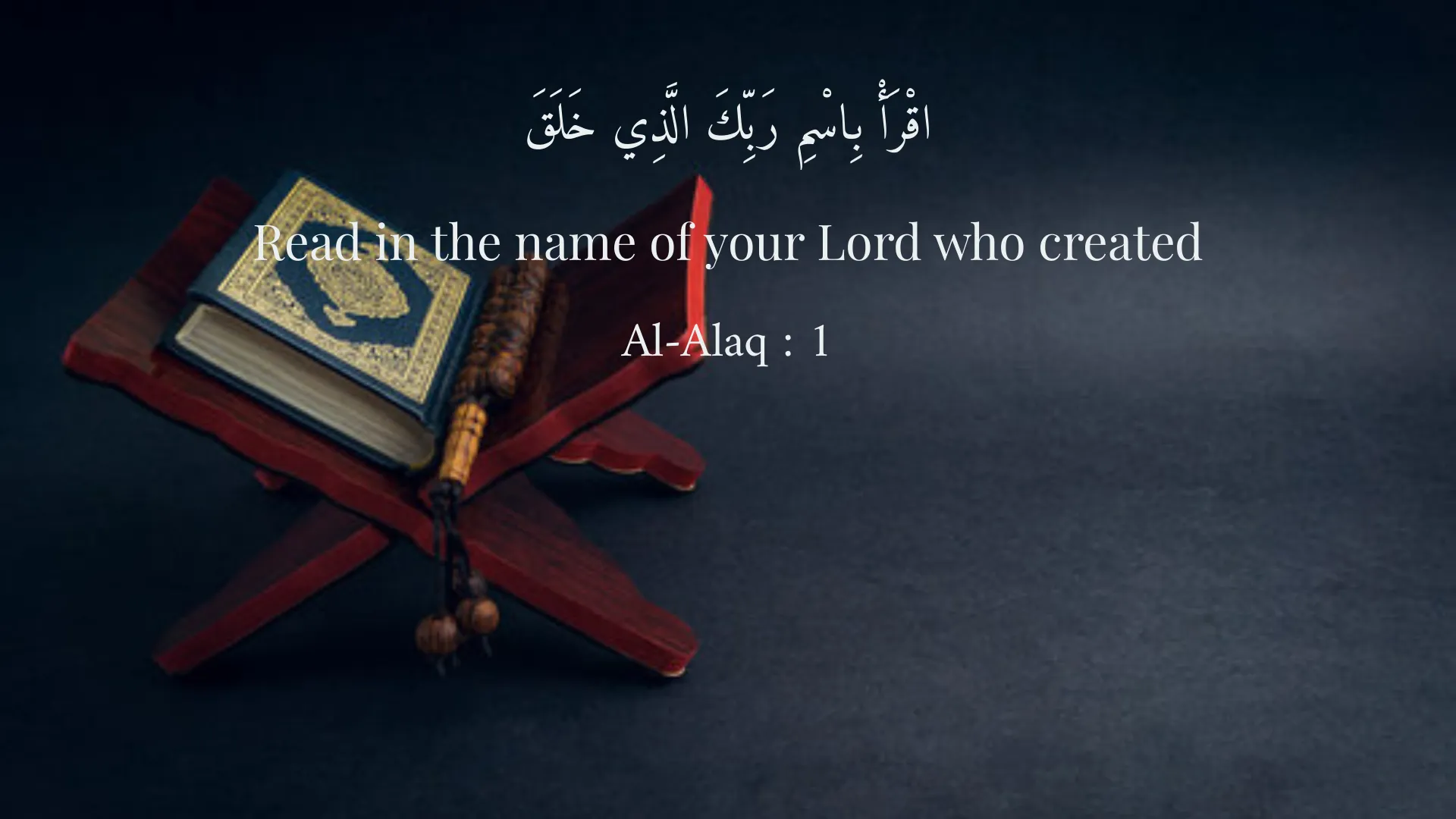
اقْرَأْ بِاسْمِ رَبِّكَ الَّذِي خَلَقَ
Read in the name of your Lord who created
Al-Alaq : 1
خَلَقَ الْإِنْسَانَ مِنْ عَلَقٍ
Created man from a clinging substance
Al-Alaq : 5
أَفَمَن يَعْلَمُ كَمَن لَا يَعْلَمُ
Are those who know equal to those who do not know?
Az-Zumar : 9
Short Story
Once upon a time, there was a young man named Ali who was in search of greater understanding of the world and God. He would go to the library every day and read books about science and knowledge. One day, while reading, he came across Quranic verses encouraging the pursuit of knowledge. Ali thought to himself, 'If God values knowledge so much, I must strive for it too.' From that day on, he dedicated more time to learning, which transformed his life and brought a light of understanding to his heart.