Quranic Answer
The Holy Quran, regarded as the divine word of God in Islam, offers guiding principles for various aspects of life, including interpersonal relationships and friendship. Among these relationships, the Quran provides specific views concerning friendship with non-Muslims. Understanding the context in which these verses were revealed and their implications is crucial for Muslims today as they navigate a diverse and interconnected world. One of the central verses addressing the issue of friendship with non-Muslims is found in Surah Al-Ma'idah, verse 51: "O you who have believed, do not take the Jews and the Christians as allies; they are in fact allies of one another." This verse is often interpreted as a warning for Muslims against forming close alliances with non-Muslims, particularly those who are perceived to foster enmity towards Islam or Muslims. The term "allies" in this context indicates a deep bond that can potentially influence a believer's faith, encouraging caution in establishing relationships that could weaken one's religious convictions. Complementing the message from Surah Al-Ma'idah, Surah Al-Imran, verse 28 offers further guidance: "Let not the believers take the disbelievers as allies instead of the believers. And whoever does that has nothing with Allah." This verse underscores the importance of maintaining a strong connection with fellow Muslims while being vigilant in interactions with non-believers. It implies that forming alliances that supersede those of fellow believers can jeopardize one’s relationship with God, suggesting that one’s ideological and spiritual associations should be grounded first and foremost in faith. However, the Quran does not advocate for complete rejection of all non-Muslims. It recognizes the complexities of human relationships and emphasizes the importance of compassion, justice, and fairness in interactions with others, regardless of their religious beliefs. For instance, in Surah Al-Mumtahanah, verse 8, it states: "Allah does not forbid you from being righteous and just to those who have not fought you because of religion and have not driven you out of your homes. Indeed, Allah loves those who act justly." This verse highlights that the Quran encourages Muslims to engage positively with non-Muslims, provided that these interactions do not compromise their faith. The covenant of justice illustrated in Surah Al-Mumtahanah reveals an essential facet of Islamic teaching: Muslims are not to harbor animosity towards non-Muslims unjustly. Rather, the Quran promotes a balanced approach where kindness and fairness are paramount, especially towards those who coexist peacefully with Muslims and do not oppress them for their beliefs. From a historical perspective, one can observe that the Islamic community during Prophet Muhammad's time exemplified this principle. The Prophet maintained relationships with various tribes and communities, regardless of their religious affiliation. Through diplomacy, representing justice, and establishing treaties with non-Muslim entities, these interactions flourished, signifying an understanding that interfaith relations are vital for societal harmony. This historical narrative is crucial today, as it implores Muslims to engage in dialogue and interactions with non-Muslim communities in a manner that fosters mutual respect and understanding. The checks placed by the Quran on friendships with non-Muslims appear as a precautionary mechanism. They aim to guard the faith of the believer while promoting inclusivity and fairness. It directs Muslims to be mindful of the influences that friendships can have on their beliefs and practices. While the Quran advocates for discretion in forming friendships, it simultaneously calls for justice and kindness towards others, suggesting that Muslims can have friendly interactions and positive relationships that do not endanger their faith. In facing contemporary challenges, Muslims are often presented with opportunities to build bridges with non-Muslims across various domains – be it education, work, or community service. The Quranic guidance on nurturing friendships with care establishes a framework for these interactions, encouraging Muslims to uphold their identity while promoting good character and ethical principles in their dealings with others. Interfaith dialogues, community outreach programs, and cooperative efforts on social issues can serve as platforms for Muslims to engage with their non-Muslim neighbors in constructive ways. Another critical point drawn from these Quranic verses is the distinction between enmity and alliance. While a Muslim should be cautious about forming friendships that may compromise their faith, it does not equate to hostility towards non-Muslims. The Quranic verses encourage Muslims to foster a sense of community and respect for all human beings, advocating for an approach rooted in ethics and mutual understanding. Focusing on shared values, such as justice, compassion, and respect for one another, creates an environment conducive to harmony and cooperation. In conclusion, the Holy Quran offers a nuanced perspective on friendship with non-Muslims. While it emphasizes the importance of maintaining alliances primarily within the Muslim community, fostering justice and kindness towards others is equally vital. Muslims are encouraged to exercise discretion and wisdom in their relationships, ensuring that their faith remains uncompromised while cultivating an environment of respect and understanding. In a world marked by diversity, the legacy of the Quran encourages believers to be both steadfast in their faith and compassionate in their interactions with others, ultimately promoting a more harmonious coexistence.
Related Verses
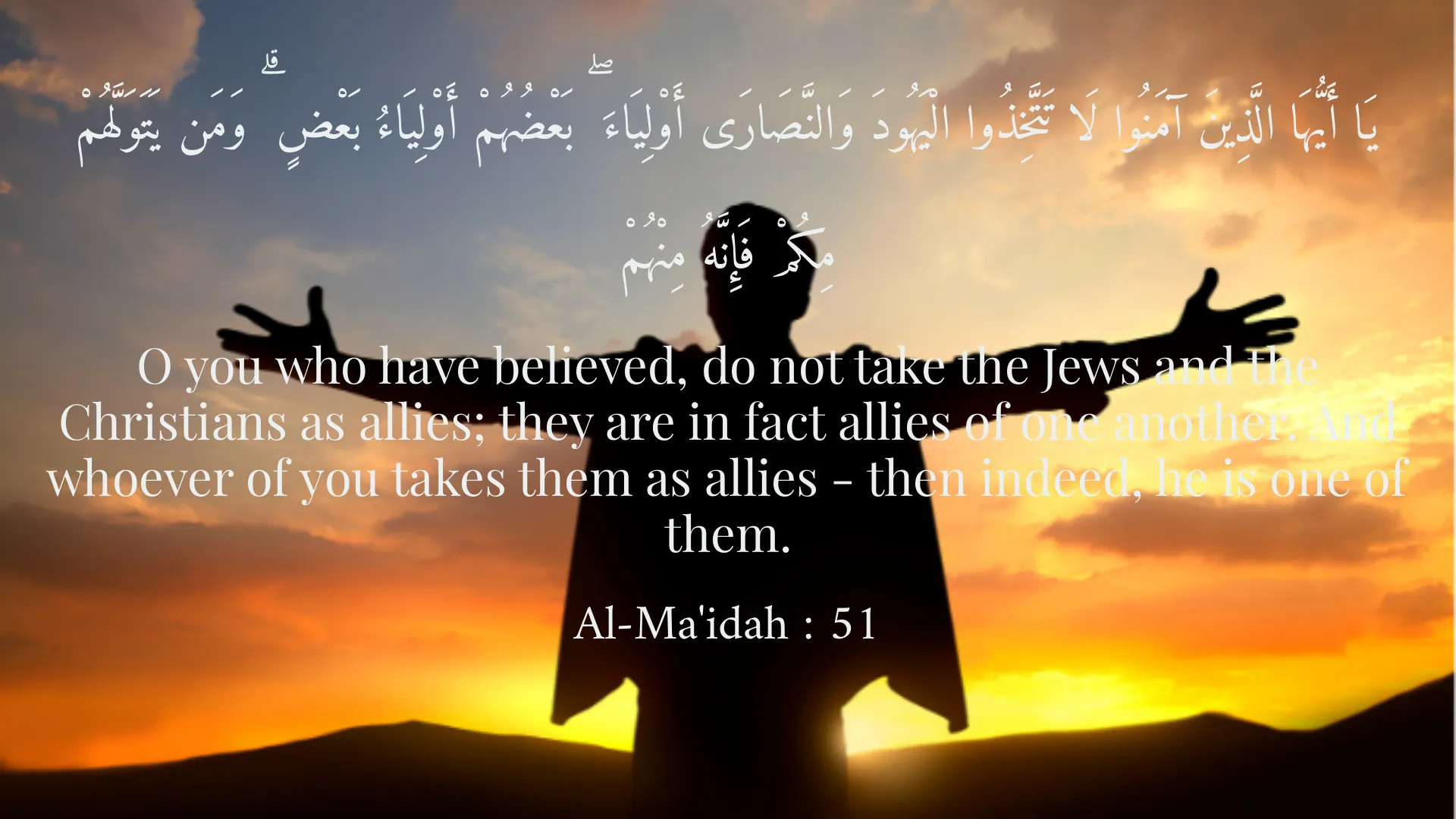
يَا أَيُّهَا الَّذِينَ آمَنُوا لَا تَتَّخِذُوا الْيَهُودَ وَالنَّصَارَى أَوْلِيَاءَ ۖ بَعْضُهُمْ أَوْلِيَاءُ بَعْضٍ ۗ وَمَن يَتَوَلَّهُمْ مِكُمْ فَإِنَّهُ مِنْهُمْ
O you who have believed, do not take the Jews and the Christians as allies; they are in fact allies of one another. And whoever of you takes them as allies - then indeed, he is one of them.
Al-Ma'idah : 51
لَا يَتَّخِذِ الْمُؤْمِنُونَ الْكَافِرِينَ أَوْلِيَاءَ مِن دُونِ الْمُؤْمِنِينَ ۚ وَمَن يَفْعَلْ ذَٰلِكَ فَلَا يَسْتَثْنِي مِنَ اللَّهِ شَيْئًا
Let not the believers take the disbelievers as allies instead of the believers. And whoever does that has nothing with Allah.
Al-Imran : 28
لَا يَنْهَاكُمُ اللَّهُ عَنْ الَّذِينَ لَمْ يُقَاتِلُوكُمْ فِي الدِّينِ وَلَمْ يُخْرِجُوكُمْ مِنْ دِيَارِكُمْ أَلَّا تَبَرُّوهُمْ وَتُقْسِطُوا إِلَيْهِمْ
Allah does not forbid you from being righteous and just to those who have not fought you because of religion and have not driven you out of your homes.
Al-Mumtahanah : 8
Short Story
Once upon a time, there was a man named Hossein who decided to live by the teachings of the Quran. He was careful with his friendships and aimed to maintain positive and fair relationships with non-Muslims. He believed that friendship should be built on the foundations of respect and justice. Hossein used his experiences to tell stories to others about how establishing fair friendships could contribute to a better community.