Quranic Answer
The Quran, the holy book of Islam, is a comprehensive source of guidance that addresses various aspects of human behavior and moral conduct. One of the significant issues it addresses is slander, which is regarded as a reprehensible and iniquitous act. This article explores the Quranic perspective on slander, delving into its definitions, the consequences outlined in the Quran, and the broader implications for individuals and society. ### Understanding Slander in the Quranic Context Slander, in general, refers to the act of making false statements about someone that could damage their reputation. This act can take many forms, including spoken words, written statements, and even insinuations. The Quran regards such behaviors as dishonorable and destructive, categorizing them among the sins that individuals must actively avoid. The damage that slander can inflict on relationships and community ties is profound, prompting the Quran to provide clear guidance against such actions. ### Quranic Verses Addressing Slander The Quran contains numerous verses that explicitly highlight the negativity associated with slander. One notable reference can be found in Surah An-Nur. Verse 19 states: "Indeed, those who love to spread falsehood among the believers will have a painful punishment in this world and the Hereafter." This verse lays out a stark warning, indicating that individuals who indulge in the act of spreading falsehoods among the faithful will face dire consequences. It emphasizes that the repercussions of such actions do not merely manifest in this life but also extend into the afterlife, signifying the gravity with which slander is perceived in Islam. Another significant verse appears in Surah Al-Hujurat, verse 12: "O you who have believed, avoid much [negative] assumption. Indeed, some assumption is sin. And do not spy or backbite one another." This verse expands the concept of slander to include negative assumptions and the act of spying, ultimately warning the believers against backbiting. The inclusion of these prohibitions indicates a comprehensive approach to maintaining harmony within the community; negative assumptions and spying can lead to misunderstandings and further conflict, which can spiral into slander. ### The Consequences of Slander The consequences of slander are multifaceted and significant, both from a spiritual and social perspective. Firstly, those who engage in slanderous behavior risk incurring the anger of Allah, as indicated by the word "punishment" in the verse from Surah An-Nur. The concept of divine retribution serves as a deterrent for believers, reminding them of the importance of honesty and integrity in their dealings with others. Moreover, the social consequences of slander can be equally damaging. Slander erodes trust within communities, leading to discord and division among individuals. When people engage in slander, they not only harm the individual being slandered but also risk alienating themselves from others, as trust is a fundamental aspect of healthy relationships. In many cases, communities that tolerate slanderous behavior may find themselves plagued by division and suspicion, making it challenging for their members to work together harmoniously. ### Upholding Kindness and Fairness Given the Quran's strong stance against slander, it is crucial for Muslims to cultivate an environment of kindness, fairness, and understanding in their interactions with others. The Quran's calls for restraint and self-discipline encourage believers to be mindful of their words and actions, fostering a community based on mutual respect and regard. Muslims are encouraged to evaluate information critically, choosing to refrain from spreading unverified claims or engaging in gossip that may lead to belittling others. This emphasis on kindness extends beyond mere avoidance of slander. The Quran calls on believers to actively promote goodwill, to speak positively of others, and to engage in supportive dialogue. By fostering a culture of positivity and understanding, community members can work towards healing and unity, mitigating the risk of conflict and misunderstanding. ### Broader Implications for Society The implications of the Quran's teachings on slander extend beyond the personal and into the societal realm. In a world where social media and instant communication dominate, the risk of slander has been amplified. False statements can spread rapidly, leading to potentially irreversible harm to individuals' reputations. As such, understanding the Quran's teachings becomes even more critical in modern contexts. Communities and societies that internalize these teachings can benefit from increased harmony and cooperation. By collectively rejecting slander and its associated behaviors, individuals can contribute to creating environments where people feel secure, valued, and respected. Furthermore, implementing educational programs that raise awareness about the consequences of slander and promote values of honesty and integrity can empower individuals to challenge slanderous behaviors proactively. ### Conclusion In conclusion, the Quran's stance on slander is clear and emphatic. It illustrates that slander is a heinous act that carries severe consequences for individuals and the community at large. The teachings encourage Muslims to avoid slander, gossip, and negative assumptions while promoting values of kindness, truthfulness, and integrity. By adhering to these principles, believers can contribute to a more just and harmonious society, demonstrating the profound wisdom encapsulated within the Quran. Ultimately, fostering a culture that prizes ethical communication and interaction can pave the way for a more cooperative and compassionate community, reflecting the true spirit of Islam.
Related Verses
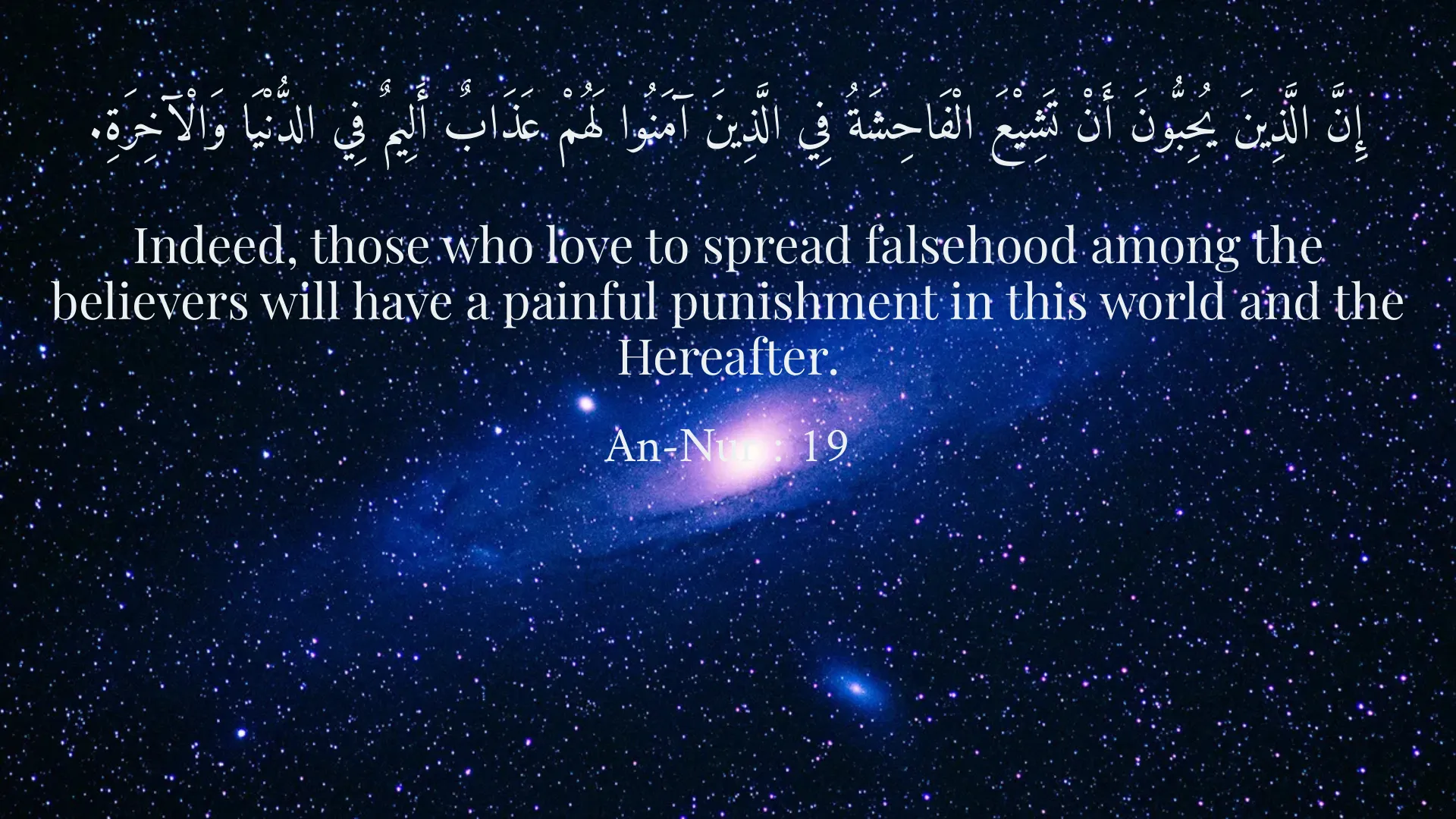
إِنَّ الَّذِينَ يُحِبُّونَ أَنْ تَشِيْعَ الْفَاحِشَةُ فِي الَّذِينَ آمَنُوا لَهُمْ عَذَابٌ أَلِيمٌ فِي الدُّنْيَا وَالْآخِرَةِ.
Indeed, those who love to spread falsehood among the believers will have a painful punishment in this world and the Hereafter.
An-Nur : 19
يَا أَيُّهَا الَّذِينَ آمَنُوا اجْتَنِبُوا كَثِيرًا مِّنَ الظَّنِّ إِنَّ بَعْضَ الظَّنِّ إِثْمٌ وَلا تَجَسَّسُوا وَلَا يَغْتَبْ بَعْضُكُمْ بَعْضًا.
O you who have believed, avoid much [negative] assumption. Indeed, some assumption is sin, and do not spy or backbite one another.
Al-Hujurat : 12
Short Story
Once upon a time, a man named Hasan in his town was fueling rumors and slander. However, one day a close friend told him, "Hasan, know that this behavior not only harms others but will also invoke God's punishment upon you." Hasan pondered over these words, and decided to treat others kindly and stay away from spreading slander. From that day on, he began a new life, focusing on helping others instead of slandering.