Quranic Answer
Yes, absolutely. The Holy Quran provides comprehensive guidance and fundamental principles that help believers choose a profession that not only provides a lawful livelihood but also aligns with the moral and divine values of Islam. This guidance extends beyond mere income generation, offering a roadmap for a meaningful and purposeful life where work and earnings are considered an integral part of worship and social responsibility. One of the most fundamental principles emphasized by the Quran is the acquisition of lawful (halal) and pure (tayyib) sustenance. In numerous verses, believers are encouraged to consume 'good things' (tayyibat) and earn their livelihood through legitimate means. This implies that any profession involving fraud, usury (riba), deception, oppression, production or promotion of sin, or any form of corruption is rejected by the Quran. The Quran teaches us that business must be founded on justice, honesty, and trustworthiness. For instance, Surah Al-Mutaffifin (The Defrauders) severely warns those who cheat in weights and measures. This warning highlights the paramount importance of respecting the rights of others, avoiding deceit and fraud, and adhering to ethical principles in all transactions and businesses. Choosing a profession based on values means refraining from any activity that harms society or individuals. A job that contributes to the spread of corruption, addiction, immorality, or any form of injustice, even if it yields significant material profit, is illegitimate and undesirable from a Quranic perspective. Conversely, the Quran values professions that contribute to the prosperity of the land, service to humanity, and meeting the needs of society. Agriculture, industry, medicine, education, and any profession beneficial to humanity are encouraged. The Quran also emphasizes the importance of effort and diligence in earning a livelihood. Idleness and being a burden on others are condemned in Islam, while striving for a lawful livelihood is itself considered a form of worship. The Prophet Muhammad (PBUH) said: 'The honest and trustworthy merchant is with the prophets, the truthful ones, and the martyrs.' This illustrates that work and effort, when undertaken with pure intention and in the right path, also bring spiritual reward. Furthermore, the Quran advises believers not to neglect the remembrance of God amidst worldly activities. In Surah Al-Jumu'ah (verse 10), we read: 'And when the prayer has been concluded, disperse within the land and seek from the bounty of Allah and remember Allah often that you may succeed.' This verse underscores the balance between striving for livelihood and performing acts of worship. In other words, the chosen profession should not so engross an individual in worldly pursuits that they neglect their religious and moral duties. Rather, work should be a means to achieve higher spiritual goals, not an end in itself. Quranic values in choosing a profession guide an individual towards social responsibility and performing tasks that benefit the wider community. On one hand, this responsibility includes paying Zakat and Khums from lawful earnings, which is repeatedly emphasized in the Quran, and on the other hand, it involves undertaking work that leads to solving people's problems and societal development. Choosing a job where one can serve others, transmit knowledge, solve problems, or provide useful goods and services is highly valued in the Quran. Ultimately, the Quran reminds us that sustenance (rizq) is solely in the hands of Allah, and we should seek it with reliance on Him and honest effort. This perspective brings tranquility to an individual and prevents excessive greed and covetousness. A believing individual knows that if they work according to divine values, Allah will provide for them. Therefore, choosing a profession from a Quranic perspective is not merely an economic decision but an ethical, spiritual, and social choice that must be made with full awareness of Quranic principles and values, so that the individual may be successful both in this world and the Hereafter. This approach ensures that the chosen profession not only provides financial sustenance but also significantly contributes to one's spiritual and moral growth, keeping them steadfast on the path of servitude and closeness to Allah.
Related Verses
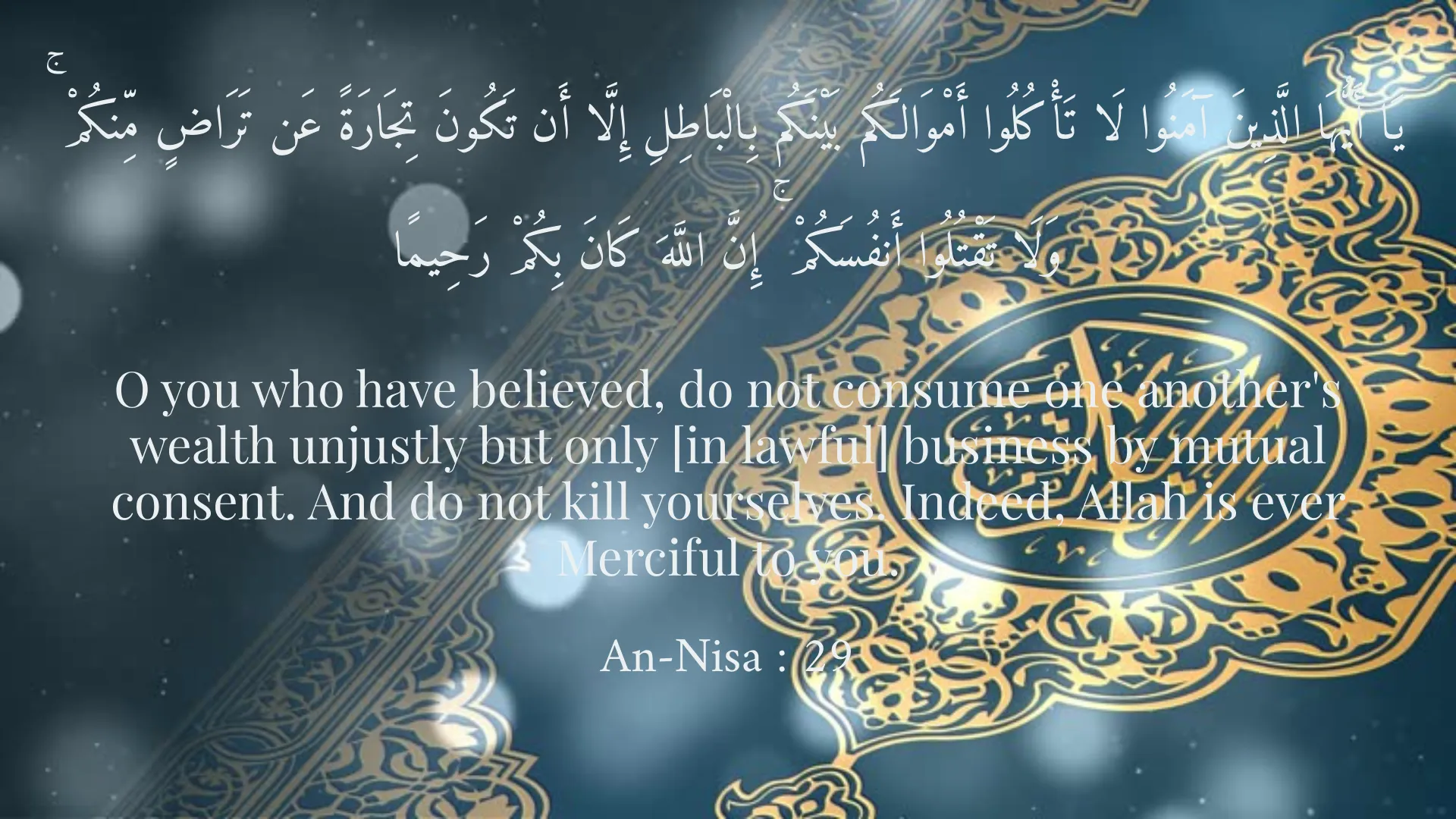
يَا أَيُّهَا الَّذِينَ آمَنُوا لَا تَأْكُلُوا أَمْوَالَكُم بَيْنَكُم بِالْبَاطِلِ إِلَّا أَن تَكُونَ تِجَارَةً عَن تَرَاضٍ مِّنكُمْ ۚ وَلَا تَقْتُلُوا أَنفُسَكُمْ ۚ إِنَّ اللَّهَ كَانَ بِكُمْ رَحِيمًا
O you who have believed, do not consume one another's wealth unjustly but only [in lawful] business by mutual consent. And do not kill yourselves. Indeed, Allah is ever Merciful to you.
An-Nisa : 29
فَإِذَا قُضِيَتِ الصَّلَاةُ فَانتَشِرُوا فِي الْأَرْضِ وَابْتَغُوا مِن فَضْلِ اللَّهِ وَاذْكُرُوا اللَّهَ كَثِيرًا لَّعَلَّكُمْ تُفْلِحُونَ
And when the prayer has been concluded, disperse within the land and seek from the bounty of Allah and remember Allah often that you may succeed.
Al-Jumu'ah : 10
وَيْلٌ لِّلْمُطَفِّفِينَ
Woe to the defrauders [of weights and measures]
Al-Mutaffifin : 1
الَّذِينَ إِذَا اكْتَالُوا عَلَى النَّاسِ يَسْتَوْفُونَ
Who, when they take a measure from people, take in full.
Al-Mutaffifin : 2
وَإِذَا كَالُوهُمْ أَو وَّزَنُوهُمْ يُخْسِرُونَ
But if they give by measure or by weight to them, they cause loss.
Al-Mutaffifin : 3
Short Story
It is narrated in Saadi's Gulistan that a merchant, returning from a journey, told his apprentices: "In this journey, I gained much profit, but I realized that no profit is greater than peace of mind and blessings in lawful earnings." One of the apprentices asked: "O Sheikh, how can lawful earnings be accompanied by peace of mind?" The Sheikh replied: "He who, in his trade, considers God's pleasure and treads no path but truth and honesty, even if he gains little profit, there will be blessings in it, and peace of mind will free him from every sorrow. But he who, in every direction, seeks more profit and does not refrain from lawful or unlawful means, even if he acquires abundant wealth, his heart will never find peace, and he will always be in fear and anxiety. So, my son, in choosing a profession, adopt pure intention and honesty, for a good end belongs to the truthful." This delightful anecdote reminds us that choosing a profession is not just for gaining wealth, but for peace of mind and the pleasure of the Lord, and values take precedence in it.