Quranic Answer
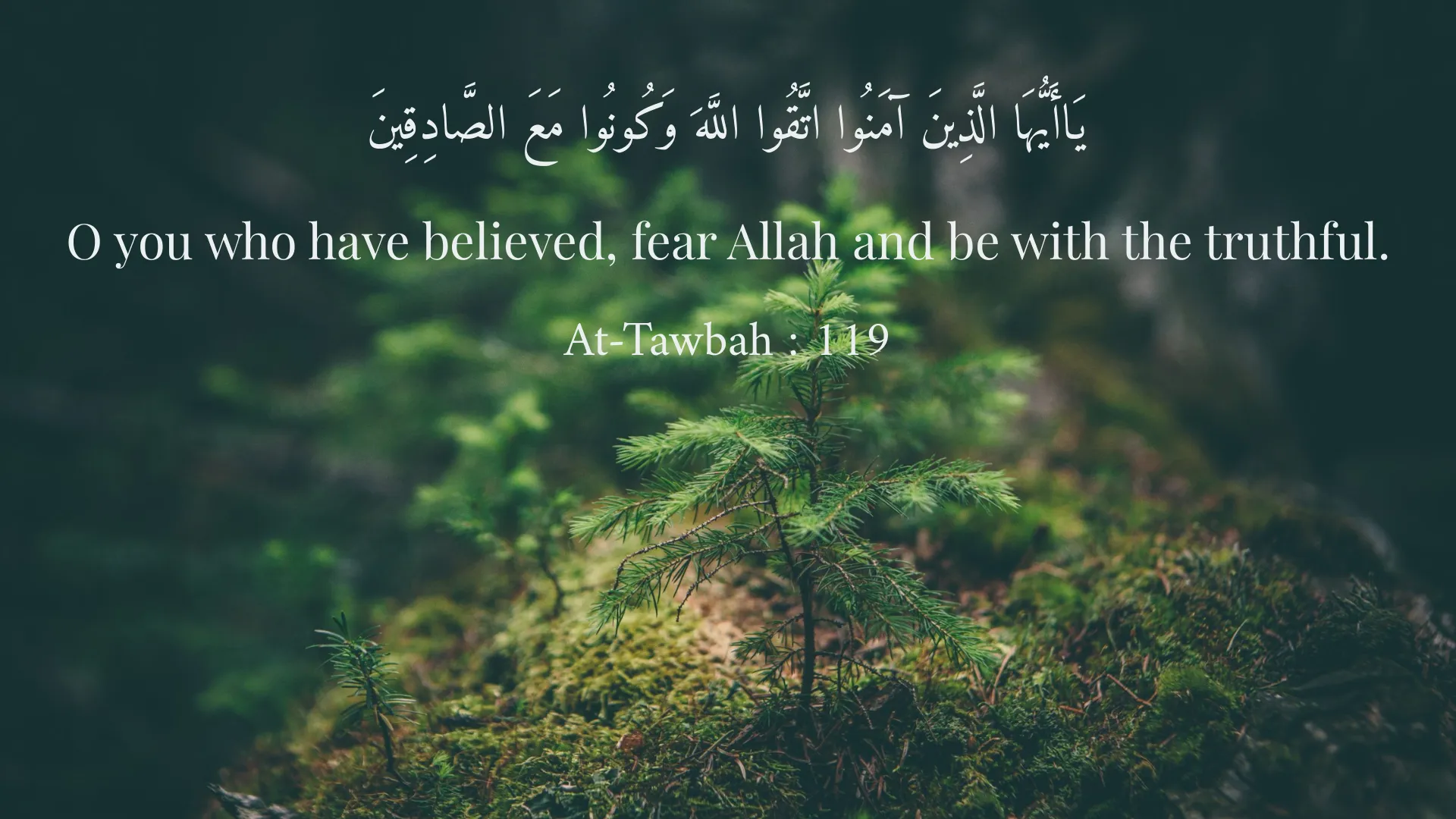
The Holy Quran, regarded as the final revelation from Allah to humanity, places a significant emphasis on the principles of truthfulness and honesty, which are foundational values within Islamic teachings. Throughout its verses, the Quran calls on believers to embody these virtues, showcasing their pivotal role in personal conduct as well as in the broader context of social interactions. This article delves into the importance of truthfulness as articulated in the Quran, examining various verses that highlight the significance of honesty and exploring its implications for both individuals and society as a whole. In Surah At-Tawbah, verse 119, Allah explicitly instructs, "O you who have believed, fear Allah and be with the truthful." This declaration serves as a powerful reminder that truthfulness is not merely a commendable attribute but a fundamental characteristic of those who profess faith in Allah. The call to 'fear Allah' encourages believers to internalize the gravity of honesty, as it directly correlates with their responsibility towards their Creator and fellow human beings. The Quran does not present truthfulness as an optional quality; rather, it is indicative of true belief. This verse underscores that the faithful are expected to align themselves with the truthful, thereby emphasizing that honesty transcends individual characteristics and extends into social responsibility. Additionally, in Surah Al-Ahzab, verse 70, Allah further reiterates the call for truthfulness by stating, "O you who have believed, fear Allah and speak the truth." This verse constructs a direct connection between the fear of Allah and the act of speaking the truth. It suggests that the commitment to honesty is not only a moral imperative but also a reflection of one's consciousness of God. Speaking the truth is presented as a cornerstone of faith, indicating that a believer's relationship with the divine and fellow human begins with honesty. This clear directive challenges individuals to uphold integrity in their speech and actions, reinforcing that truthfulness is integral to maintaining one's spiritual alignment. Another compelling illustration of the Quran's stance on truthfulness is found in Surah Al-Baqarah, verse 283, where Allah instructs, "And do not conceal testimony, for whoever conceals it - his heart is indeed sinful." This verse serves to highlight that truthfulness extends beyond personal honesty to encompass the responsibility of sharing pertinent information, especially when it can influence justice or fairness. Concealing testimony is condemned as an act that corrupts one’s heart, reinforcing why truthfulness is deemed a duty in Islam. This obligation indicates that believers must not only tell the truth when it is beneficial to them but must also strive to uphold honesty in all situations, even when it may result in personal disadvantage. The Quran introduces truthfulness as a social contract, whereby individuals contribute to a more honest and fair society. By eschewing dishonesty and deceit, believers foster an environment where trust can flourish. The implications of truthfulness are profound; when individuals commit to being honest, they not only build their character but also enhance their social relationships. Trust, a vital component of any community, is inherently linked to the practice of truthfulness. When people engage with one another transparently and honestly, they cultivate a sense of safety and assurance within social interactions, leading to stronger bonds and improved relationships. Moreover, the impact of truthfulness extends beyond mere interpersonal connections; it has significant repercussions within societal structures. In a society where truthfulness is upheld, peace and friendship thrive. Communities that prioritize honesty are likely to experience reduced conflicts, promoting a sense of unity and collaborative welfare. Furthermore, truthfulness plays a critical role in the functioning of justice systems. Legal frameworks are fundamentally built on the premise of honesty; testimonies and legal claims inherently depend on the truthfulness of individuals involved. When dishonesty infiltrates such systems, the consequences can be devastating, leading to injustice and social disarray. In daily life, the practice of truthfulness is an ongoing challenge that requires self-discipline and genuine commitment. It is essential to recognize that truthfulness does not merely refer to refraining from lying; it also encompasses consistency between one’s words and actions. Believers are encouraged to embody truthfulness in all aspects of their lives, advocating for genuine communication and ethical conduct. This practice begins at home, in educational settings, and in workplaces, where cultivating an atmosphere of trust and honesty can yield numerous benefits, such as increased collaboration and morale. When truthfulness is embraced as a societal norm, it empowers individuals to speak out against injustice and stand firm in their beliefs, further entrenching the values of integrity and ethical behavior within their communities. In conclusion, the Quran's emphasis on truthfulness and honesty emphasizes the significance of these values in forming the bedrock of individual character and societal relationship. Beginning with direct exhortations in various verses such as those in Surah At-Tawbah, Surah Al-Ahzab, and Surah Al-Baqarah, Allah calls on believers to perceive truthfulness as both personal and communal responsibility. The lessons embedded in the Quran encourage individuals not only to develop a sincere relationship with their Creator but also to foster healthy, trusting, and cohesive communities rooted in honesty. In a world inundated with challenges to truthfulness, the Quran's timeless teachings serve as a guiding light, urging believers to adhere to these principles and anchor their lives in the unwavering quest for truth.
Related Verses
يَاأَيُّهَا الَّذِينَ آمَنُوا اتَّقُوا اللَّهَ وَكُونُوا مَعَ الصَّادِقِينَ
O you who have believed, fear Allah and be with the truthful.
At-Tawbah : 119
يَاأَيُّهَا الَّذِينَ آمَنُوا اتَّقُوا اللَّهَ وَقُولُوا قَوْلًا سَدِيدًا
O you who have believed, fear Allah and speak the truth.
Al-Ahzab : 70
وَلَا تَكْتُمُوا الشَّهَادَةَ ۚ وَمَن يَكْتُمْهَا فَإِنَّهُ آثِمٌ قَلْبُهُ
And do not conceal testimony, for whoever conceals it - his heart is indeed sinful.
Al-Baqarah : 283
Short Story
One day, in a bustling market, a man named Hassan overheard two people discussing an unethical deal. He remembered the verses of the Quran and decided to approach them to explain the significance of truthfulness and how it could enhance their social interactions. With a friendly tone, he said, "Do you know that truthfulness is not only important in our faith but also fosters security and trust in society?" The two listened thoughtfully to his words and decided to commit to honesty in their future dealings. Hassan felt that his words had impacted them, and he ended the day with a sense of joy.