Quranic Answer
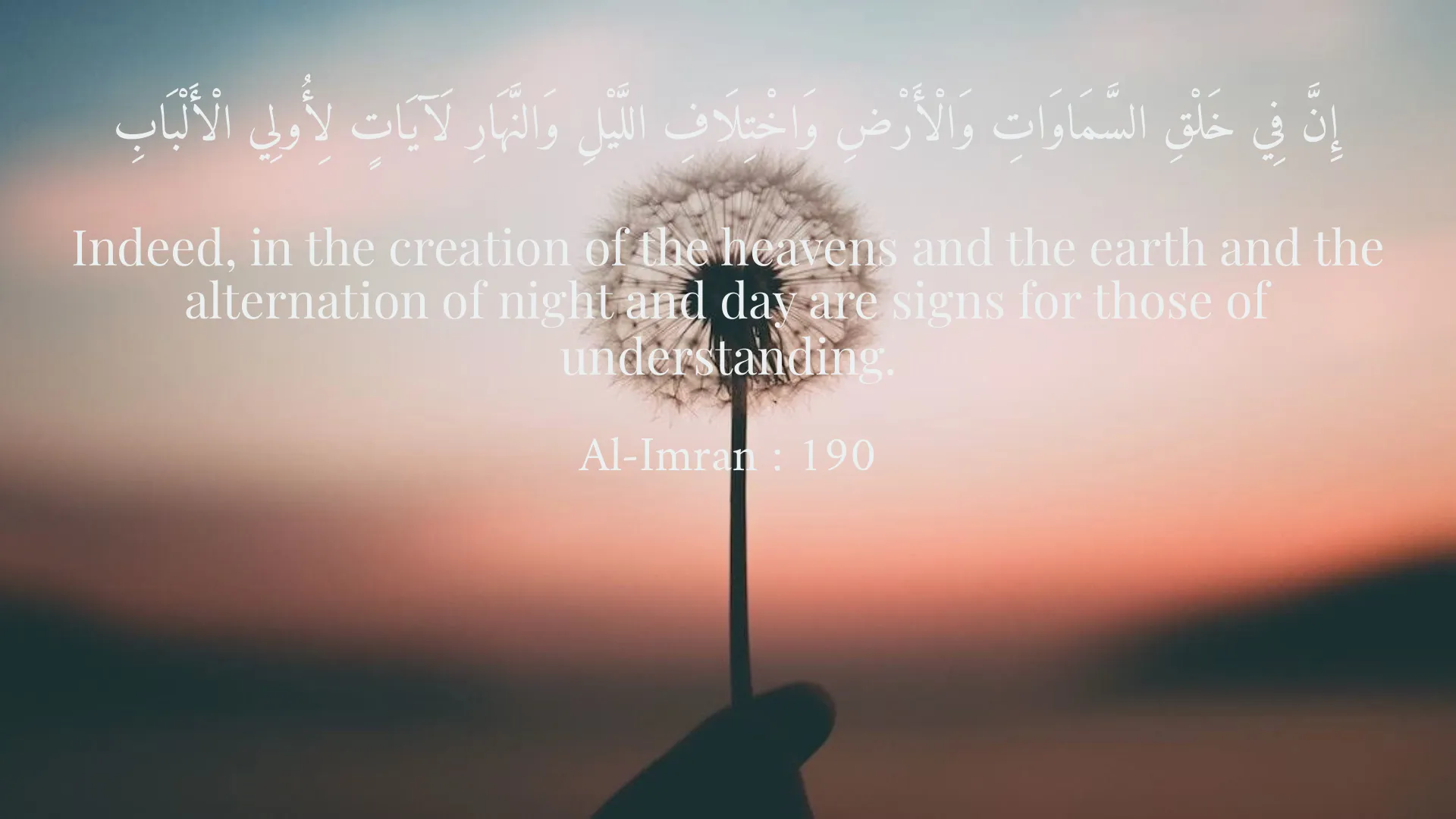
The Holy Quran, regarded as the divine scripture of Islam, explicitly invites human beings to engage in reflection and meditation. It encourages believers to delve deep into the signs scattered throughout creation and to ponder upon them with an understanding heart. This process of reflection is not merely an act of contemplation; rather, it is considered a vital obligation for every individual seeking to comprehend the nature of existence and their purpose within it. Each verse serves as a transformative tool that is designed to elevate one's consciousness and deepen the connection with the Creator. In Surah Al-Imran, verses 190-191, Allah states: "Indeed, in the creation of the heavens and the earth and the alternation of night and day are signs for those of understanding. Who remember Allah while standing or sitting or [lying] on their sides and give thought to the creation of the heavens and the earth, [saying], 'Our Lord, You did not create this aimlessly; exalted are You above such a thing. Then protect us from the punishment of the Fire.'" This powerful verse highlights the relationship between contemplation and the acknowledgment of divine creation. The Quranic invitation to reflect upon the cosmos is not a casual suggestion; it represents a crucial aspect of human duty, urging individuals to observe and appreciate the intricate workings of the universe. The act of reflection is emphasized in various Islam teachings, serving as a conduit through which believers can connect with the divine. Notably, the verse illustrates that signs of Allah are present in every corner of the universe, from the vast expanse of the heavens to the detail of the earth beneath our feet. This understanding propels an individual to recognize patterns, cycles, and the delicate balance of nature, ultimately leading to a profound awareness of the Creator's wisdom. The phrase "You did not create this aimlessly" serves as a reminder that creation is imbued with purpose, which in turn invites deeper deliberation on our existence and the responsibilities we carry. Additionally, Surah An-Nisa, verse 82, states: "Do they not reflect upon the Quran?" This rhetorical question further reinforces the significance of contemplation within the religion. It challenges readers to not only read the divine text but to immerse themselves in its meanings and implications. This verse indicates that reflection is inherent to the Quranic experience, underscoring that passive reading is insufficient. Instead, it invites a dynamic engagement with the text that encourages individuals to draw lessons, understand morals, and apply the knowledge gained to their lives. The Quran, therefore, serves as a guide that invites one to reflect on both the external universe and the internal self. Moreover, it implores believers to seek knowledge, to question, and to internalize the divine wisdom woven into its verses. Such reflective practice can lead to personal transformation, deeper faith, and heightened consciousness. As individuals embark on a journey of contemplation, they uncover layers of meaning that can reform their life perspectives, moral judgments, and understanding of the divine. Reflection, as taught in the Quran, extends beyond personal contemplation to communal and universal dimensions. It calls upon individuals to contribute to a collective understanding of existence, purpose, and the pressing issues facing humanity. The communal aspect of reflection leads to discussions, learning exchanges, and an ongoing dialog about faith and moral conduct. In an age where distractions abound, the Quran’s exhortation to reflect holds even greater relevance, encouraging believers to step back and contemplate the state of their lives and the world around them. The repetitive emphasis on reflection leads to crucial conclusions about the principles of faith. Understanding the divine truths through contemplation cultivates humility, gratitude, and a sense of responsibility. As individuals recognize the beauty of creation and the divine hand behind it, they develop a deeper appreciation for the blessings they receive and the moral obligations that arise from such knowledge. Thus, reflection becomes a vital aspect of worship, embodying the relationship between the worshiper and the Creator. Moreover, reflection and contemplation foster an environment of spiritual growth and resilience. In navigating life's challenges, believers can draw upon their reflective practice as a source of strength, gaining insights that guide their actions. The principles of patience, perseverance, and faith are strengthened through a reflective understanding of divine guidance found in the Quran. This framework illuminates the path followers must take, reminding them of their responsibilities toward themselves, others, and God. In conclusion, the Holy Quran places a significant emphasis on reflection and contemplation as essential duties for all human beings. Through inviting individuals to ponder upon the creation of the heavens and the earth, the alternation of night and day, and the divine signs presented in its verses, the Quran challenges believers to anchor their understanding in faith and divine truth. The reflective journey is foundational to personal and communal growth, urging followers to seek knowledge, appreciate creation, and embrace their spiritual responsibilities. Indeed, contemplation serves as a bridge connecting believers to their faith, illuminating their paths, and enriching their understanding of existence. In a world that often prioritizes haste over mindfulness, the Quran’s invitation to reflect remains timeless, urging humanity to slow down, observe, and engage with the deeper meanings of life.
Related Verses
إِنَّ فِي خَلْقِ السَّمَاوَاتِ وَالْأَرْضِ وَاخْتِلَافِ اللَّيْلِ وَالنَّهَارِ لَآيَاتٍ لِأُولِي الْأَلْبَابِ
Indeed, in the creation of the heavens and the earth and the alternation of night and day are signs for those of understanding.
Al-Imran : 190
أفلا يتدبرون القرآن؟
Do they not reflect upon the Quran?
An-Nisa : 82
Short Story
One day, a young man named Sohrab was sitting in a garden, reflecting on his life. He turned his attention to the verses of the Quran and realized that he should contemplate the signs of God in nature more than anything else. With this decision, he witnessed positive changes in his life and felt a greater sense of peace.