Quranic Answer
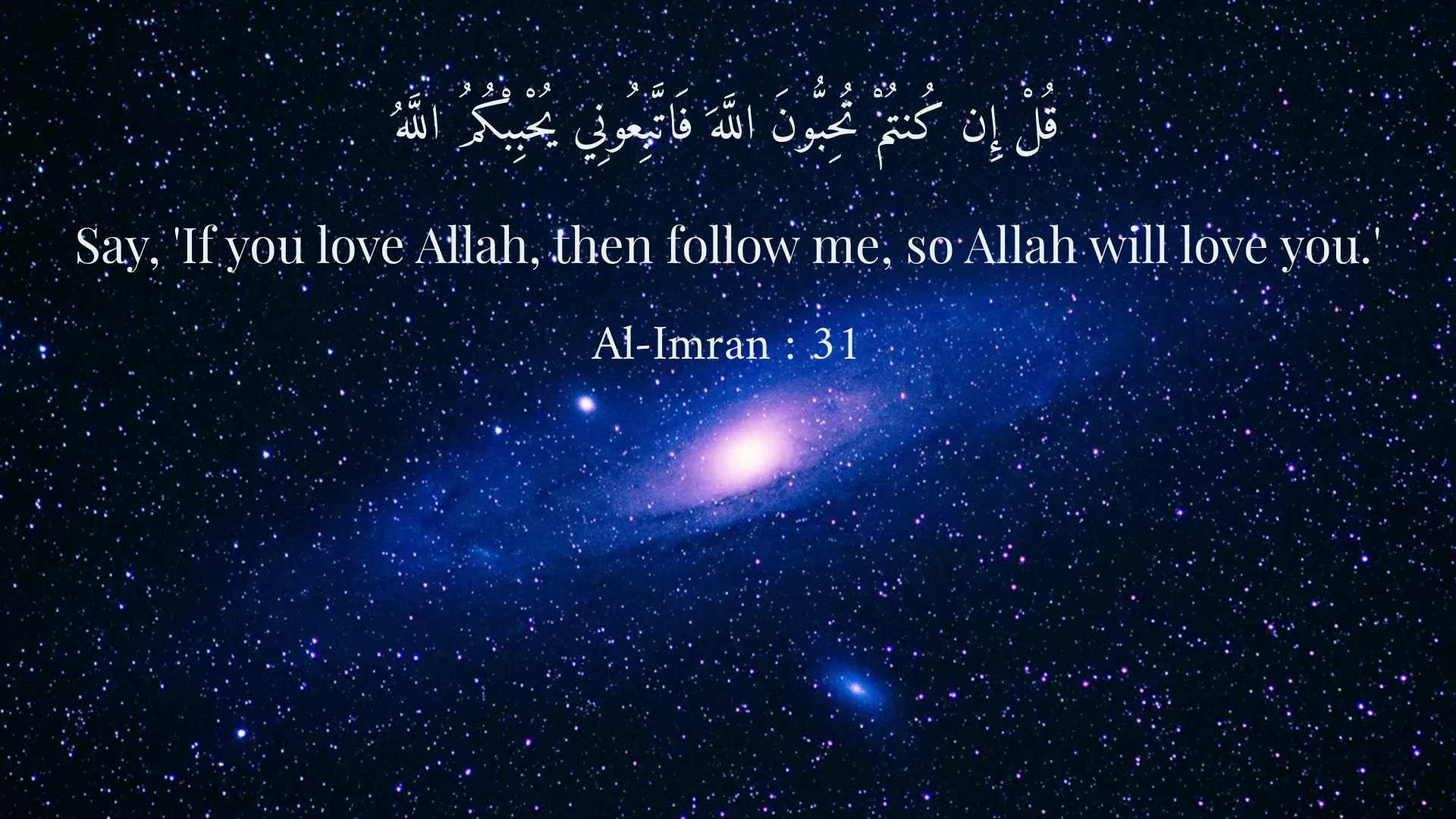
The Holy Quran, the divine scripture of Islam, unveils the profound dimensions of love and friendship through a multitude of verses. Central to this spiritual discourse is the concept of love for God and His Messenger, which serves as the cornerstone for building meaningful relationships among individuals. The importance of love, particularly as prescribed by Allah, cannot be overstated: it is a divine directive, a behavior that molds the interactions and foundational values in a Muslim's life. One of the most poignant references is in Surah Al-Imran, verse 31, where Allah states: "Say, 'If you love Allah, then follow me so that Allah will love you.'" This verse underscores a reciprocal relationship of love, wherein the act of loving and following the teachings of the Prophet Muhammad (peace be upon him) is paramount to garnering Allah's love. The relationship between divine love and human affection manifests clearly; it promotes the idea that genuine love for oneself and others is contingent upon one's commitment to faith and ethical conduct. To truly embrace the notion of self-love and, consequently, love for others, one must first engage in self-reflection and understand their inherent values. This self-awareness fosters a sense of dignity and respect that, in turn, informs how one interacts with themselves and the broader community. It resonates with the teachings of various prophetic traditions that encourage Muslims to appreciate oneself authentically while advocating for the well-being of others. Moreover, Surah Al-Ma'idah, verse 32 emphasizes the importance of preserving human life, illustrating the sanctity of existence: "Because of that, We decreed upon the Children of Israel that whoever kills a soul unless for a soul or for corruption [done] in the land—it is as if he had slain mankind entirely." This verse brings to light the critical need to respect and honour life, reinforcing that love, in its essence, is inextricably linked with kindness and compassion towards others. Understanding this principle allows for the cultivation of a societal framework where empathy and understanding flourish, leading to enhanced interpersonal relationships. Consequently, love within the Islamic framework transcends beyond romantic or superficial connections; it encapsulates a sense of community, co-existence, and supportiveness among individuals. By emphasizing this, the Quran subtly guides its followers toward cultivating healthy relationships through patience, forgiveness, and mutual respect. Absence of such qualities can lead to discord and division, which the Quran actively discourages. In enhancing the spirit and mind, self-love becomes a catalyst for nurturing one’s capacity to serve the community with peace and affection. By first accepting and loving oneself, individuals become better equipped to express love towards others. This is vital not only for personal growth but also for creating a more harmonious society. Love begets love; when one carries a gentle and loving disposition, it manifests positively in their interactions and influences others to act similarly. Furthermore, the Quran promotes the idea of solidarity among believers. In Surah Al-Hujurat, verse 10, Allah states: "Indeed, the believers are brothers. So make settlement between your brothers. And fear Allah that you may receive mercy." This powerful reminder encapsulates the essence of friendship in Islam, where believers are encouraged to mend their differences and extend compassion, reflecting the sacred bonds of brotherhood and sisterhood. The call for reconciliation highlights the necessity of maintaining love and goodwill, irrespective of the challenges that may arise. It is through striving for unity and empathy that communities can thrive, invariably leading to a more just and equitable society. The teachings of love extend to various relationships, including family, comradeship, and even within broader society. The Quran emphasizes the nurturing of familial bonds and connections, where love serves as the foundation for unity and support. The relationships within a family unit, characterized by love and care, serve as a blueprint for interactions outside the home. Hence, when love and respect form the core of familial relationships, individuals learn the significance of togetherness, compassion, and altruism, which they carry into other spheres of life. Another aspect of love in Islam involves the principle of justice. Love without justice may lead to one-sided relationships where the rights of either party are undermined. The Quran insists on fairness and justice in every interaction, offering a balanced approach toward love. This balance serves not only to fulfil personal desires but to achieve familial and communal peace. In Surah An-Nisa, verse 135, it states: "O you who have believed, be persistently standing firm in justice, witnesses in justice, even if it be against yourselves or parents and relatives." In conclusion, the Quran provides a holistic approach towards understanding love and friendship, encouraging believers to embark on a journey marked by self-awareness and ethical responsibility. Love for God, oneself, and subsequently for others becomes a multilayered endeavor supported by principles of respect, compassion, and justice. In a world increasingly fraught with discord, the teachings of the Quran remain timeless, calling for an elevation of moral values through love and mutual respect. Therefore, it is essential for followers to embody these teachings to build healthier relationships and a compassionate society. Ultimately, love, as depicted in the Holy Quran, is not merely an emotion; it is a fundamental virtue that binds humanity together, amplifying the call for peace and solidarity across all boundaries. This profound understanding of love and friendship encapsulated in the Quran serves as a guide for people seeking meaning, connection, and harmony in their lives.
Related Verses
قُلْ إِن كُنتُمْ تُحِبُّونَ اللَّهَ فَاتَّبِعُونِي يُحْبِبْكُمُ اللَّهُ
Say, 'If you love Allah, then follow me, so Allah will love you.'
Al-Imran : 31
مَن قَتَلَ نَفْسًا بِغَيْرِ نَفْسٍ أَوْ فَسَادٍ فِي الْأَرْضِ فَكَأَنَّمَا قَتَلَ النَّاسَ جَمِيعًا
Whoever kills a soul unless for a soul or for corruption made in the land—it is as if he had slain mankind entirely.
Al-Ma'idah : 32
Short Story
Once upon a time in a city, there lived a man who was always dissatisfied and sad. He never could love himself. One day, a friend said to him: 'Depending on what you think, your attitude changes! Love yourself!' After that, he tried to know himself better and accepted his flaws. He realized that when he loved himself, he could also show love to others. From that day on, his life changed in an amazing way.