Quranic Answer
The Quran, the holy scripture of Islam, is not merely a religious text, but a comprehensive guide that illuminates the path for humanity in various aspects of life. It encompasses a wide array of topics, including morality, social justice, personal conduct, and even the pursuit of knowledge. Among the significant themes presented in the Quran is its relentless emphasis on knowledge and learning, which stands as one of its core principles. The pursuit of knowledge is inherently valuable in Islam, informing not only personal development but also benefiting society at large. In the context of the modern world, technological advancements have become a cornerstone of human progress. The Quran encourages the pursuit of knowledge and innovation, encouraging believers to explore and utilize their intellect. This endeavor is corroborated by essential verses within the Quran. For instance, verse 31 of Surah Al-Ankabut explicitly articulates Allah's granting of knowledge and reasoning to humankind. 'And We have enjoined upon man, [care] for his parents. But if they strive to make you associate with Me that of which you have no knowledge, do not obey them. To Me is your return, and I will inform you about what you used to do.' This verse not only emphasizes the role of knowledge in distinguishing right from wrong but also highlights the importance of utilizing critical thinking in our commitments and responsibilities. Moreover, many verses in the Quran engage with the observation of natural phenomena, such as the creation of the heavens and the earth, the human body, and the natural world at large. These references emphasize the significance placed on knowledge, reflection, and inquiry, indicating that the pursuit of science and understanding the universe is highly valued. For example, in Surah Al-Imran, verse 190, it reads, 'Indeed, in the creation of the heavens and the earth and the alternation of the night and the day are signs for those of understanding.' Such verses remind humanity that engaging with the natural world through scientific inquiry is a pursuit aligned with divine instructions. Importantly, the Quran does not oppose technological advancements; rather, it encourages a rational and ethical application of them. The noble pursuit of science and technology should, therefore, be guided by the principles established within the Quran. This creates a framework where technological development can proceed while ensuring that ethical considerations remain at the forefront of innovation. In Surah An-Nur, verse 35, the Quran mentions 'Allah is the Light of the heavens and the earth,' emphasizing that divine wisdom and knowledge illuminates the path towards goodness and progress. The metaphor of light in this context symbolizes enlightenment, understanding, and guidance, asserting that knowledge leads to righteousness and constructive action. As we navigate through the challenges and opportunities posed by rapid technological evolution, we must strive to utilize these advancements in ways that resonate with the divine directives outlined in the Quran. This includes harnessing technology for humanitarian efforts, social justice, and improving the quality of life for all individuals. The sacred text urges us to actively serve humanity and lend aid to those in need. For instance, the Quran advises believers to engage in charitable acts and help those who are less fortunate, thus intertwining technological progress with altruism and compassion. Furthermore, the intersection of science, technology, and religious teachings can forge a greater understanding of our obligations towards each other as members of society. By approaching technological advancements through an Islamic lens, we can ensure that they contribute positively to the well-being of all. Incorporating ethical considerations into scientific research is paramount; this ensures that humanity benefits without compromising moral values. In various cultures and historical contexts, Muslims have made significant scientific contributions, from advancements in mathematics and medicine to innovations in engineering and the natural sciences. This rich legacy is a testament to the compatibility of Islam with the pursuit of knowledge and innovation. The ethos of learning and contributing to society can be traced back to the early Islamic Golden Age, which witnessed remarkable achievements by Muslim scholars who were deeply inspired by the Quranic call for knowledge. In conclusion, the Holy Quran unequivocally encourages the pursuit of science, knowledge, and progress, provided that these efforts are aimed at serving humanity. It guides its followers to embrace technology as a tool for betterment rather than a source of division or destruction. By doing so, we create pathways for a more connected world where technological advancements align with the principles of compassion, justice, and service to others. In these uncertain times, responding to the Quran’s emphasis on knowledge can empower individuals and communities to foster a future where science serves humanity, reflecting the spirit of cooperation and understanding that transcends religious and cultural boundaries. Ultimately, the Quran's enduring message remains centered around human dignity and the belief that knowledge is a means to attain positive transformation in society.
Related Verses
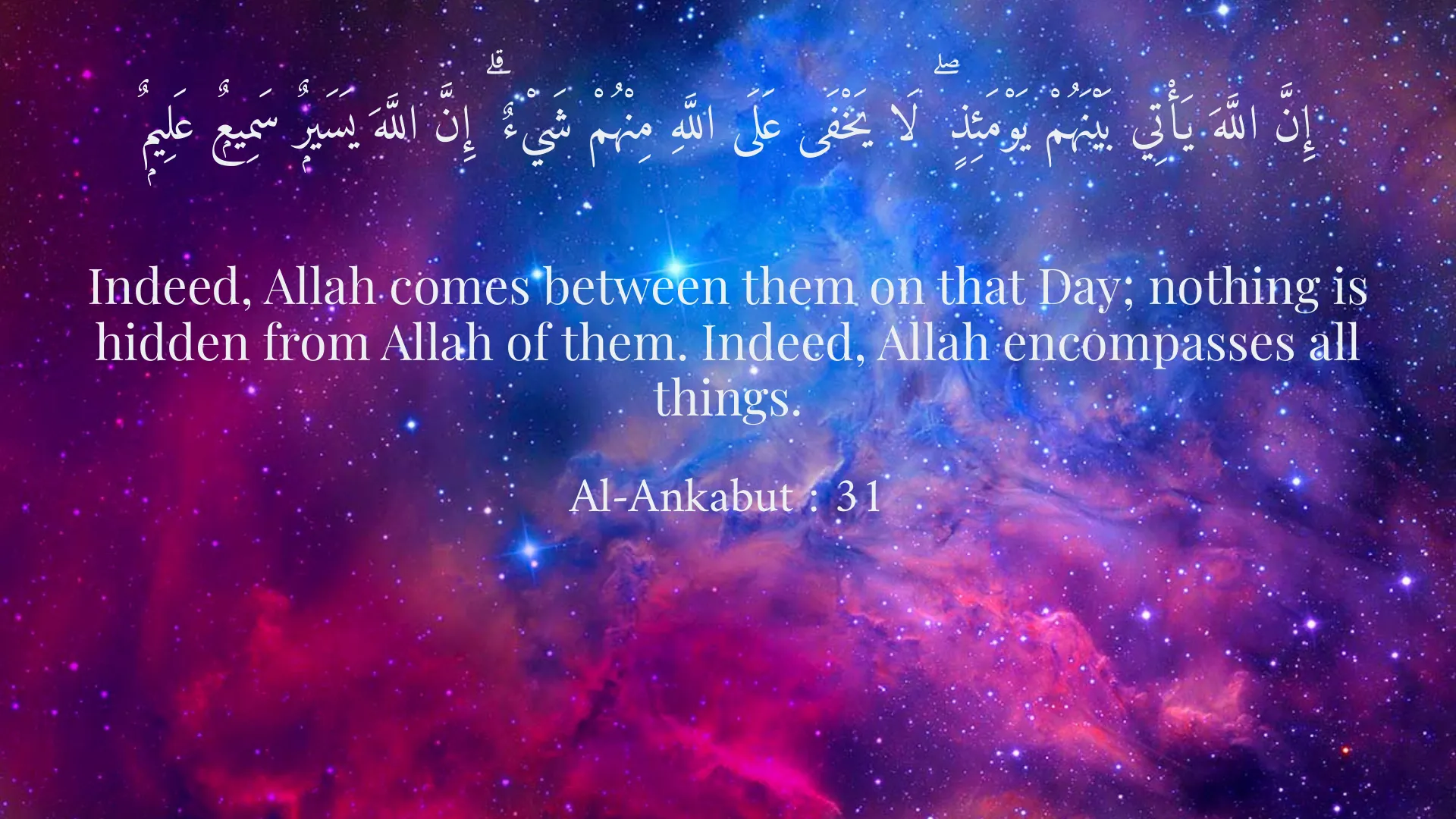
إِنَّ اللَّهَ يَأْتِي بَيْنَهُمْ يَوْمَئِذٍ ۖ لَا يَخْفَى عَلَى اللَّهِ مِنْهُمْ شَيْءٌ ۗ إِنَّ اللَّهَ يَسَيرٌۭ سَمِيعٌۭ عَلِيمٌۭ
Indeed, Allah comes between them on that Day; nothing is hidden from Allah of them. Indeed, Allah encompasses all things.
Al-Ankabut : 31
اللَّهُ نُورُ السَّمَاوَاتِ وَالْأَرْضِ ۚ مَثَلُ نُورِهِ كَمِشْكَاةٍ فِيهَا مِصْبَاحٌ ۖ الْمِصْبَاحُ فِي زُجَاجَةٍ ۖ الزُّجَاجَةُ كَأَنَّهَا كَوْكَبٌ دُرِّيٌّ يوقَدُ مِن شَجَرَةٍ مُّبارَكَةٍ زَيْتُونَةٍ لَّا شَرْقِيَّةٍ وَلَا غَرْبِيَّةٍ ۚ يَكَادُ زَيْتُهَا يُضِيءُ وَلَوْ لَمْ تَمْسَسْهُ نَارٌ ۚ نُورٌ عَلَى نُورٍ ۗ يَهْدِي اللَّهُ لِنُورِهِ مَن يَشَاءُ ۗ وَيَضْرِبُ اللَّهُ الْأَمْثَالَ لِلنَّاسِ ۗ وَاللَّهُ بِكُلِّ شَيْءٍ عَلِيمٌ
Allah is the Light of the heavens and the earth. The example of His light is like a niche within which is a lamp; the lamp is within glass; the glass as if it were a pearly [white] star, lit from [the oil of] a blessed olive tree, neither of the east nor of the west, whose oil would almost glow even if untouched by fire. Light upon light. Allah guides to His light whom He wills. And Allah presents examples for the people, and Allah is Knowing of all things.
An-Nur : 35
Short Story
Once upon a time, there was a man named Ali living in an old neighborhood. He was fascinated by new technologies and wondered how these advancements could impact his life. Upon studying the Quran, he realized the book emphasizes knowledge and learning, which could guide him in utilizing technology wisely. He decided to make the best use of technology and, in the end, contributed greatly to his community.