Quranic Answer
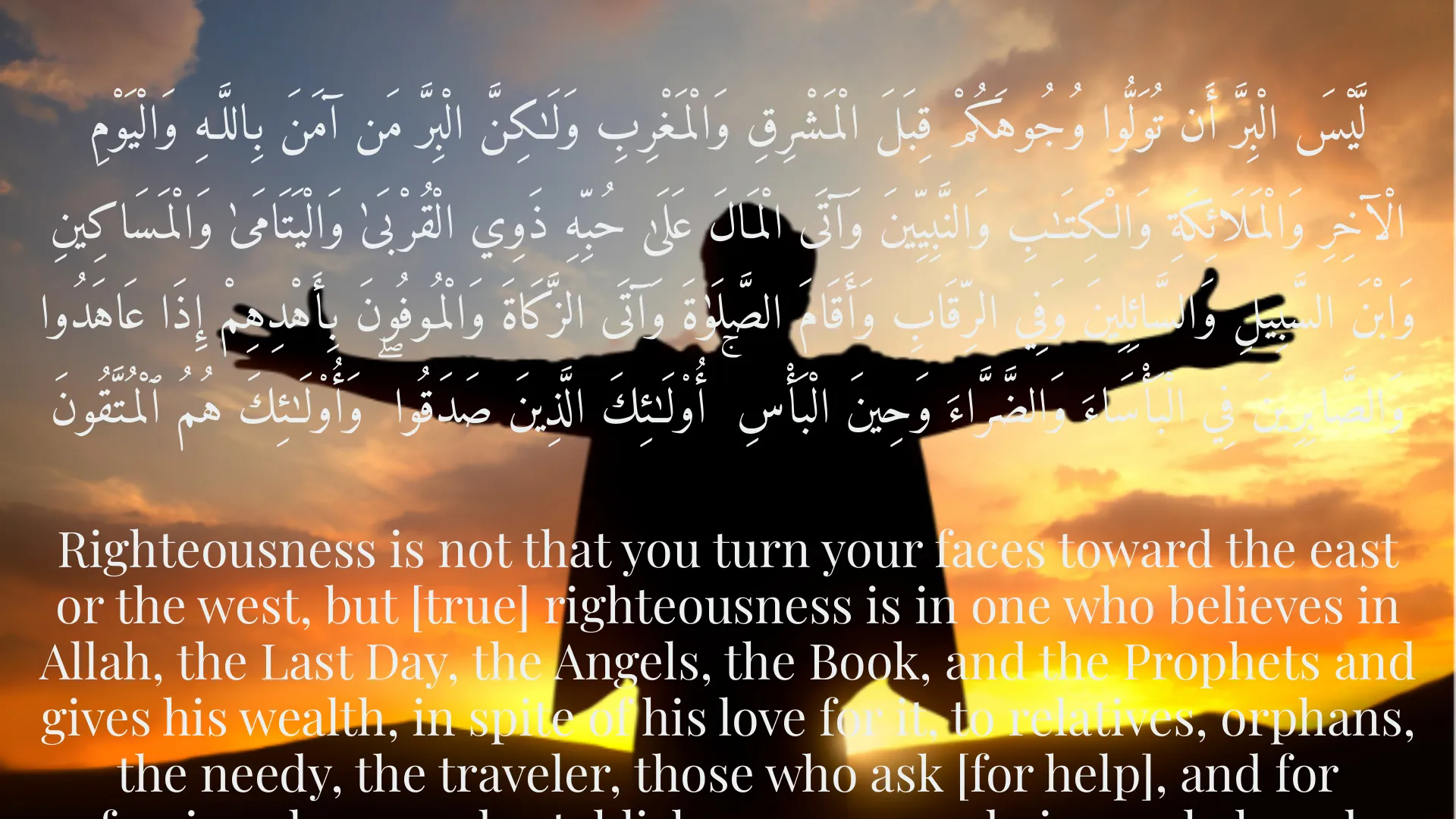
The Holy Quran, as the sacred text of Islam, profoundly addresses the socio-economic conditions and responsibilities associated with the lives of the poor and the needy. It's critical to understand that Islamic teachings urge believers to respond to poverty with empathy, compassion, and action. Among the many significant themes highlighted in the Quran, the economic situation of the less fortunate emerges as a matter of divine concern that the Islamic community must prioritize. In this article, we will explore various ways the Quran emphasizes the importance of charity, benevolence, and social equity, particularly focusing on the verses that illustrate these moral imperatives. One of the most poignant verses on charity is found in Surah Al-Baqarah (2:177), which states, "Righteousness is not that you turn your faces toward the east or the west, but [true] righteousness is in one who believes in Allah, the Last Day, the Angels, the Book, and the Prophets and gives his wealth, in spite of love for it, to relatives, orphans, the needy, the traveler, those who ask [for help], and for freeing slaves; [and who] establishes prayer and gives zakat; those who fulfill their promise when they promise; and [those who are] patient in poverty and hardship and during battle. Those are the ones who have been true, and it is those who are the righteous." This profound verse emphasizes that charitable giving is intrinsically linked with faith. Here, the Quran does not simply consider charity as an optional act of kindness; it elevates it to become one of the fundamental characteristics and obligations of a true believer. In addition to the emphasis on charity, the Quran categorically states in Surah Al-Ma'idah (5:55) that believers must engage in acts of social responsibility. The verse articulates, "Your ally is none but Allah and His Messenger and those who have believed - those who establish prayer and give zakat, and they bow [in worship]." This verse conveys a message that the bonds of faith and community are solidified by shared actions towards the financial empowerment of the needy. This illustrates that offering prayers is not sufficient on its own; rather, it is paired with active engagement in helping those who are less fortunate. Furthermore, the principle of kindness is reiterated in Surah Al-An'am (6:152), which states, "And do not approach the orphan's property except in a way that is best until he reaches maturity. And fulfill [every] commitment. Indeed, the commitment is ever [that about which one will be] questioned." The guidance here is clear—treating vulnerable groups, like orphans and the poor, with compassion and respect is essential for achieving social justice. This obligation reflects a holistic approach to managing wealth and social responsibilities, leading to a more equitable society. Additionally, the Quran promotes the concept of zakat—which is obligatory charitable giving—as a means to purify one’s wealth. Zakat is not merely a voluntary act; instead, it is designated as a religious duty mandated by Allah. In Surah Al-Tawbah (9:60), Allah illustrates the categories of individuals eligible to receive zakat, which includes the poor, the needy, and those in debt. This system not only aims to assist those who are less fortunate but is designed to create a balanced distribution of wealth throughout the community. In essence, the Quran reflects a continuous narrative that reinforces the significance of economic justice. Allah repeatedly speaks in favor of the needy and emphasizes that our prosperity ought to contribute to others' upliftment. Embracing these teachings is not merely a matter of personal generosity; it is a collective commitment to fostering spiritual and social cohesion through economic support. In practice, adhering to these teachings means we adopt attitudes of kindness and service within our communities. When individuals actively extend their resources to support the poor and needy, they create a culture of responsibility and empathy within society. The social spirit of cooperation and mutual assistance aligns perfectly with the Quranic vision of a flourishing community. In conclusion, the Holy Quran assigns a significant role to the economic well-being of the impoverished. It advocates for a society where the strong extend their support to the weak and all individuals contribute to the betterment of their communities. Through the promotion of zakat, kindness, and charity, the Islamic framework provides not only religious permissions but also divine encouragement to redefine our relationship with money and wealth. By internalizing these lessons and taking them to heart, communities can foster a culture of empowerment, equity, and solidarity for generations to come. Ultimately, the Quran reminds us that the path to true faith is reinforced by our commitment to the welfare of the poor and the needy, embodying the essence of compassion and justice in our daily lives.
Related Verses
لَّيْسَ الْبِرَّ أَن تُوَلُّوا وُجُوهَكُمْ قِبَلَ الْمَشْرِقِ وَالْمَغْرِبِ وَلَـٰكِنَّ الْبِرَّ مَن آمَنَ بِاللَّـهِ وَالْيَوْمِ الْآخِرِ وَالْمَلَائِكَةِ وَالْكِتَـٰبِ وَالنَّبِيِّينَ وَآتَى الْمَالَ عَلَىٰ حُبِّهِ ذَوِي الْقُرْبَىٰ وَالْيَتَامَىٰ وَالْمَسَاكِينِ وَابْنَ السَّبِيلِ وَالسَّائِلِينَ وَفِي الرِّقَابِ وَأَقَامَ الصَّلَوٰةَ وَآتَى الزَّكَاةَ وَالْمُوفُونَ بِأَهْدِهِمْ إِذَا عَاهَدُوا وَالصَّابِرِينَ فِي الْبَأْسَاءَ وَالضَّرَّاءَ وَحِينَ الْبَأْسِ ۚ أُو۟لَـٰئِكَ الَّذِينَ صَدَقُوا ۖ وَأُو۟لَـٰئِكَ هُمُ ٱلْمُتَّقُونَ
Righteousness is not that you turn your faces toward the east or the west, but [true] righteousness is in one who believes in Allah, the Last Day, the Angels, the Book, and the Prophets and gives his wealth, in spite of his love for it, to relatives, orphans, the needy, the traveler, those who ask [for help], and for freeing slaves and establishes prayer and gives zakah and those who fulfill their promise when they promise and when they are patient in poverty and hardship and during battle. Those are the ones who have been true, and it is those who are the righteous.
Al-Baqarah : 177
إِنَّمَا وَلِيُّكُمُ اللَّـهُ وَرَسُولُهُ وَالَّذِينَ آمَنُوا الَّذِينَ يُقِيمُونَ الصَّلَاةَ وَيُقِيمُونَ الزَّكَاةَ وَهُمْ رَاكِعُونَ
Your ally is none but Allah and His Messenger and those who have believed - those who establish prayer and give zakah, and they bow [in worship].
Al-Ma'idah : 55
وَلَا تَقْرَبُوا مَالَ الْيَتِيمِ إِلَّا بِالَّتِي هِيَ أَحْسَنُ حَتَّىٰ يَبْلُغَ أَشُدَّهُ ۚ وَأَوْفُوا بِالْعَهْدِ إِنَّ الْعَهْدَ كَانَ مَسْؤولًا
And do not approach the orphan's property except in a way that is best until he reaches maturity. And fulfill [every] commitment. Indeed, the covenant is ever [that about which one will be] questioned.
Al-An'am : 152
Short Story
Once upon a time in a city, there lived a poor man. He always struggled to make ends meet and faced difficult conditions. One day, a passerby heard his cries for help. When the passerby got closer, he saw the man sitting in a park praying. The passerby asked what was wrong, and the man shared his story of hardships and challenges. The passerby decided to help him and from that day on, he would bring food and money to him every week. This act not only improved the poor man's life but also lifted the passerby’s spirits. He realized that helping others not only assists them in living better but also brings joy and happiness to himself.