Quranic Answer
The Holy Quran, revered as the divine book of Islam, encodes profound teachings that frequently refer to the concept of protecting the Earth and underscores the importance of caring for nature. This is not merely an abstract idea or a moral suggestion; rather, it is couched in the responsibility imparted on humanity to preserve the environment and all creatures within it. One of the significant themes in Islamic teachings is the human obligation to maintain the delicate balance of nature and address environmental challenges effectively. The Quran categorically emphasizes that every creature, be it in the heavens or on Earth, has a pivotal role in the tapestry of creation. In Surah Al-An'am, verse 38, Allah states: "There is no creature on earth nor a bird that flies on its two wings, but they are communities like you." This verse serves as a poignant reminder that every being contributes to the ecological web of life. The implication here is unequivocal: humanity must act with care and consideration in its interactions with the environment. When any being suffers erosion or harm, it is not isolated; it disturbs the broader ecosystem, often leading to unforeseen consequences. Moreover, the importance of observing and contemplating creation is further reinforced in Surah Al-Baqarah, verse 164: "Indeed, in the creation of the heavens and the earth, and the alternation of the night and the day are signs for those of understanding." This verse invites humanity to reflect upon the intricate signs of creation, urging individuals to acknowledge the interconnectedness of all living things. It encourages deep contemplation, fostering a greater understanding of the Creator through observations of His creation. This perspective emphasizes that a sharp awareness of our environment can lead to better stewardship of nature's treasures. Furthermore, the Quran addresses consumerism and our relationship with natural resources in several verses, promoting moderation and care. In Surah Al-A'raf, verse 31, it is stated: "And eat and drink, but be not excessive; indeed, He likes not those who commit excess." This directive is clear: while engaging in the consumption of the bounties bestowed upon us by Allah, we must practice restraint. This teaching inherently discourages wastefulness and exploitation of resources, framing moderation as a principle of ethical and responsible living. Islam's perspective on environmental stewardship is not merely relegated to the pages of the Quran but is reflected in the life and teachings of the Prophet Muhammad (peace be upon him). He is remembered for his principle of gentleness toward all living beings and advocated for the responsible use of resources, warning against wanton destruction. For example, he famously taught: "If a Muslim plants a tree or sows seeds, and then a bird, or a person, or an animal eats from it, it is regarded as a charitable gift (sadaqah) for him." This hadith encapsulates the spirit of environmentalism in Islam and promotes a sense of community, targeting not just human sustenance but also the well-being of all creatures. The concept of environmental protection in Islam is further reinforced through notions of stewardship (Khilafah). Islamic teachings convey the idea that humans are considered caretakers of the Earth, entrusted with its protection and sustainability. This conviction carries immense responsibility; humans are expected to cultivate the land and ensure its well-being for future generations. This perspective cultivates a strong sense of accountability, urging Muslims to act in a way that aligns with the ecological dignity of the planet. In a broader context, the Quranic approach encourages a symbiosis between humanity and nature rather than a domineering relationship. It champions a worldview where diversity in the environment is not just recognized but celebrated as a reflection of Allah’s creativity. Every leaf, stream, animal, and mountain is part of an intricate design, with humanity tasked to respect and nurture it. Additionally, modern environmental challenges such as climate change, deforestation, pollution, and biodiversity loss are urgent calls to action that are echoed within the Islamic perspective. The Quran’s stance offers guidance on an appropriate response, urging followers to recognize the gravity of the situation and act diligently. Quranic teachings remind believers that negligence toward the environment serves not only as a disobedience to Allah’s directives but also as a betrayal of future generations who will inherit the consequences of the current age's decisions. The role of education and awareness in Islamic teachings cannot be overstated when addressing environmental concerns. Educational initiatives based on Islamic principles can empower communities to embrace eco-friendly practices and prioritize sustainability. Schools and community organizations can play a pivotal role in disseminating knowledge about environmental conservation and encourage grassroots movements in reforestation, waste reduction, recycling, and sustainable agriculture—all subjects that resonate deeply with Islamic values. In conclusion, the Quran positions environmental stewardship as an essential facet of faith for Muslims. The teachings contained within its verses provide a comprehensive framework for understanding our relationship with nature and highlight the interdependence of all living beings. It serves as a guiding principle for responsible living, urging humanity to act with gratitude, moderation, and respect for the bounties of Allah. These teachings transcend mere rituals, urging a practical application of faith in the care and preservation of the earth. The path forward is one of commitment; as stewards of the Earth, it is incumbent upon humanity to embrace its responsibility and seek solutions to ensure the sustainability of our planet for generations to come.
Related Verses
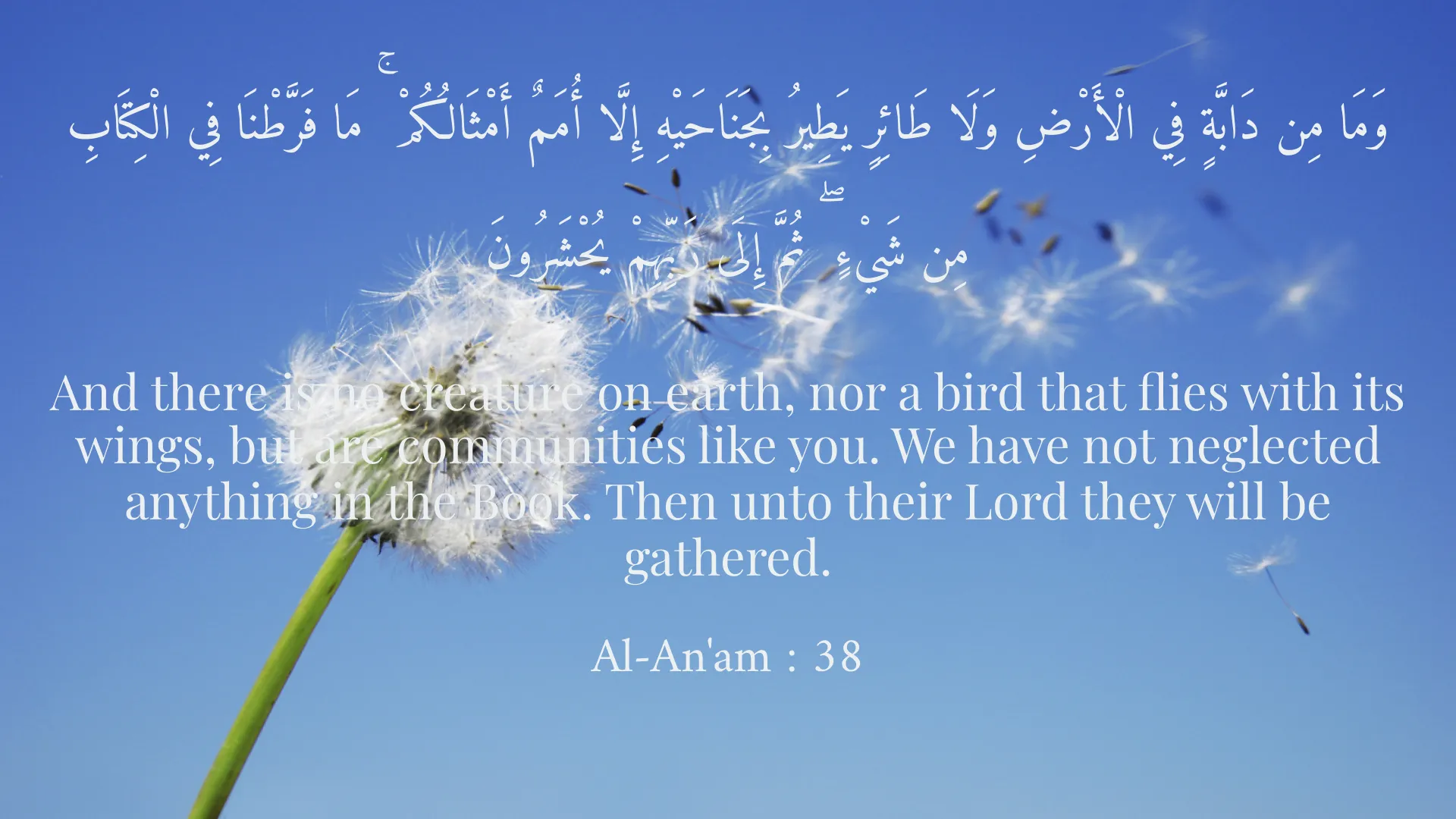
وَمَا مِن دَابَّةٍ فِي الْأَرْضِ وَلَا طَائِرٍ يَطِيرُ بِجَنَاحَيْهِ إِلَّا أُمَمٌ أَمْثَالُكُمْ ۚ مَا فَرَّطْنَا فِي الْكِتَابِ مِن شَيْءٍ ۖ ثُمَّ إِلَى رَبِّهِمْ يُحْشَرُونَ
And there is no creature on earth, nor a bird that flies with its wings, but are communities like you. We have not neglected anything in the Book. Then unto their Lord they will be gathered.
Al-An'am : 38
إِنَّ فِي خَلْقِ السَّمَاوَاتِ وَالْأَرْضِ وَاخْتِلَافِ اللَّيْلِ وَالنَّهَارِ لَآيَاتٍ لِأُولِي الْأَلْبَابِ
Indeed, in the creation of the heavens and the earth and the alternation of the night and the day are signs for those of understanding.
Al-Baqarah : 164
وَكُلُوا وَاشْرَبُوا وَلَا تُسْرِفُوا ۚ إِنَّهُ لَا يُحِبُّ الْمُسْرِفِينَ
And eat and drink, but be not excessive. Indeed, He likes not those who commit excess.
Al-A'raf : 31
Short Story
Once upon a time, there was a man named Hasan who was always concerned about natural resources and the environment. He would visit the park every day and try to collect trash. One day in the park, he saw a child happily playing with flowers. Hasan approached him and said, 'Look how beautiful the flowers are, and we must protect them.' The child asked, 'Why?' Hasan explained to him that the Quran reminds us that these creatures are signs of Allah, and we should care for them. That day, Hasan was able to plant the love for nature in the child's heart.