Quranic Answer
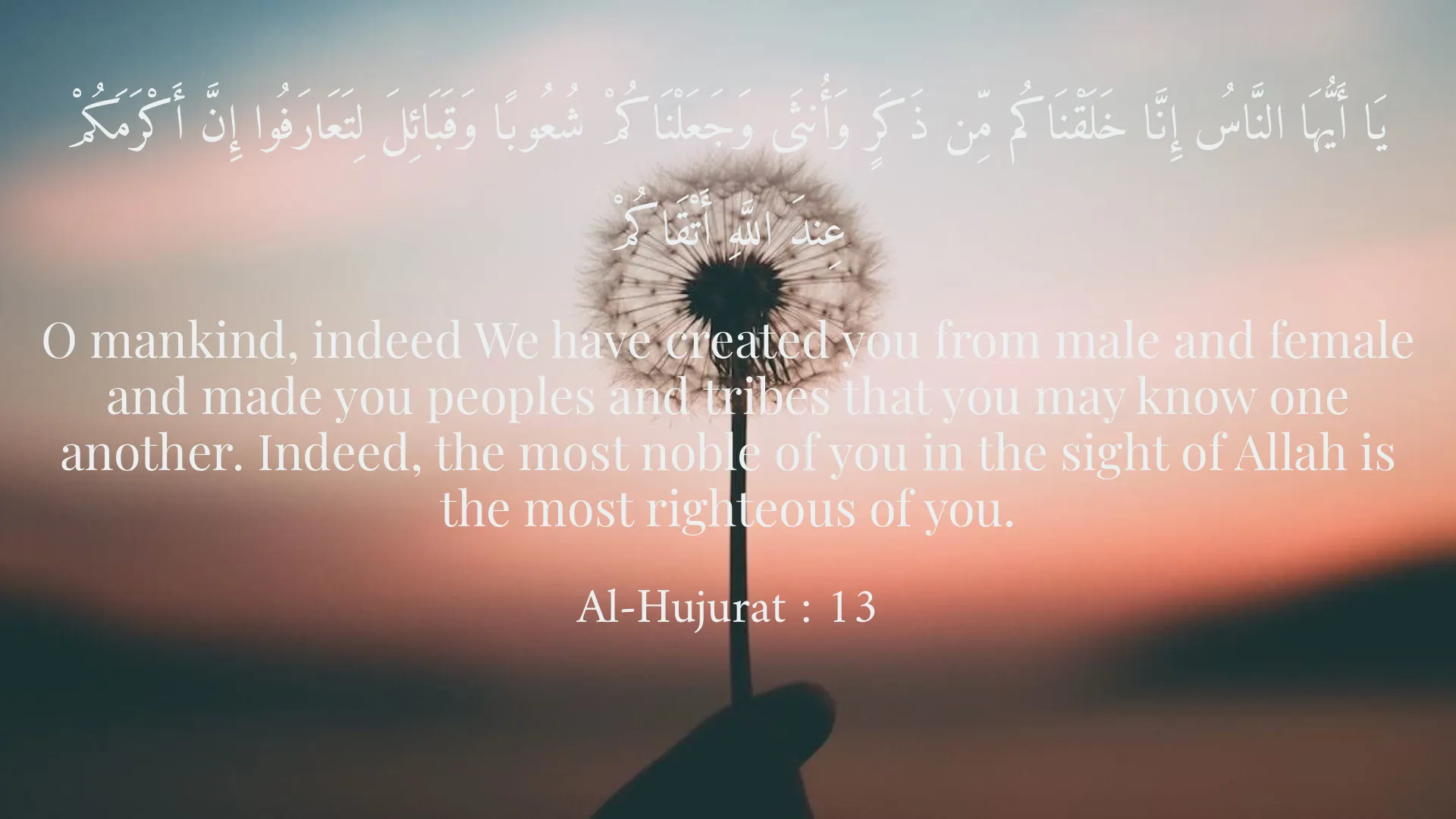
The Holy Quran is a profound and sacred text that serves as a guiding principle for billions of Muslims around the world. Its verses encompass a multitude of themes, including moral guidance, spirituality, law, and the essence of humanity. One of the most significant themes highlighted in the Quran is the concept of equality among all humans. The Quran clearly states that in the eyes of Allah, every individual is equal, regardless of their gender, race, or social standing. This essential truth is reiterated throughout various verses, emphasizing the importance of creating a society where justice and righteousness prevail over prejudices and inequalities. A notable reference to this theme is found in Surah Al-Hujurat, verse 13, where Allah proclaims: "O mankind, indeed We have created you from male and female and made you peoples and tribes that you may know one another. Indeed, the most noble of you in the sight of Allah is the most righteous of you." This verse profoundly conveys that the distinction between humans is not based on their gender or ethnic backgrounds, but instead lies in their piety and righteousness. By stating that humans were created from both male and female, the verse also reinforces the idea that gender should not dictate one's worth or status in society. This call for unity and equality transcends superficial differences and challenges societal norms that may prioritize one group over another. Continuing with this theme, Surah Aal-Imran, verse 195 states: "And I will not waste the work of any of you, whether male or female." This verse further underscores Allah's impartiality when considering human actions and deeds. It signifies that regardless of whether a person is a man or a woman, their efforts and contributions are valued equally. This divine affirmation not only fosters a sense of respect for one another but also highlights the critical importance of evaluating individuals based on the merit of their actions rather than their external characteristics. The principles of equality and justice articulated in the Quran urge Muslims to strive for a more egalitarian society. In many parts of the world, discrimination based on race, gender, or class continues to hinder the progress of communities. The Quran's teachings serve as a powerful reminder that such inequalities are not endorsed in Islam, and as believers, individuals are encouraged to work towards establishing a society that champions fairness, respect, and compassion for everyone. Moreover, the Quran's emphasis on moral virtues further strengthens the concept of equality. When individuals pursue righteousness and moral integrity, they contribute positively to their communities. The Quran promotes values such as honesty, kindness, humility, and empathy, which are fundamental to nurturing a cooperative and harmonious society. Therefore, righteousness, rather than societal constructs of superiority or privilege, becomes the yardstick by which one is measured in the eyes of Allah. The implications of these teachings extend beyond personal conduct to shape collective behavior. When a society is built upon the tenets of equality and mutual respect, individuals are likely to be more supportive of one another. This spirit of camaraderie fosters an environment where everyone can thrive without fear of judgment based on arbitrary characteristics such as color, lineage, or gender. By promoting such an ethos, the Quran lays the groundwork for a better world – one that prioritizes the well-being of all its members. Furthermore, the realization of human equality as espoused by the Quran has far-reaching implications for social justice movements and reform efforts. Throughout history, religious texts have inspired individuals and groups to advocate for change and to challenge oppressive systems. The verses in the Quran serve a similar purpose, calling upon believers to recognize their collective responsibility to dismantle ineffective norms and to fight for the rights of the marginalized and disenfranchised. In today's world, where issues of inequality persist, the Quran urges Muslims to be agents of change. The teachings emphasize that promoting equality is not just a moral obligation but also a path toward a more fulfilling spiritual life. The Quran invites individuals to harness their potential and influence in ways that effect positive change in the lives of others. In conclusion, the Holy Quran serves as a timeless reminder of the intrinsic equality of all human beings. It disavows all societal constructs of superiority based on gender, race, or lineage, emphasizing instead the importance of piety and moral integrity. By promoting the values of mutual support, respect, and justice, the Quran advocates for the creation of a more equitable society. Through the lens of these teachings, individuals are inspired to work toward a world characterized by fairness and compassion, reflecting the true essence of humanity as envisioned in divine guidance. Thus, the Quran’s message fosters the establishment of a better and just society, consistent with its aim of nurturing moral virtues and equality among all individuals.
Related Verses
يَا أَيُّهَا النَّاسُ إِنَّا خَلَقْنَاكُم مِّن ذَكَرٍ وَأُنثَى وَجَعَلْنَاكُمْ شُعُوبًا وَقَبَائِلَ لِتَعَارَفُوا إِنَّ أَكْرَمَكُمْ عِندَ اللَّهِ أَتْقَاكُمْ
O mankind, indeed We have created you from male and female and made you peoples and tribes that you may know one another. Indeed, the most noble of you in the sight of Allah is the most righteous of you.
Al-Hujurat : 13
إِنِّي لَا أُضِيعُ عَمَلَ عَامِلٍ مِّنكُمْ مِن ذَكَرٍ أَوْ أُنثَىٰ بَعْضُكُم مِّن بَعْضٍ ۖ فَالَّذِينَ هَاجَرُوا وَأُخْرِجُوا مِن دِيَارِهِمْ وَأُوذُوا فِي سَبِيلِي وَقَاتَلُوا وَقُتِلُوا لَأُكَفِّرَنَّ عَنْهُمْ سَيِّئاتِهِمْ وَلَأَدْخِلَنَّهُمْ جنّاتٍ تَجْرِي مِن تَحْتِهَا الْأَنْهَارُ
Indeed, I will not waste the work of any of you, whether male or female. Some of you are from others. So those who have emigrated and were driven out from their homes and endured harm in My cause and fought and were killed - I will surely remove from them their misdeeds and admit them into gardens beneath which rivers flow.
Aal-Imran : 195
Short Story
Once upon a time, there was a man named Ali who pondered what mattered most in life. He decided that all humans are equal and that no one should seek superiority over another. One day, he met a poor man in the mountains surrounding his city and decided to help him. Ali learned from this experience that aiding others and striving for equality are among the most significant human endeavors. From that day on, he treated all people with respect and filled his life with friendship and love.