Quranic Answer
The Holy Quran, as a divine guide, does not solely address individual life or contemporary issues. Instead, it provides a comprehensive and expansive view of existence and human responsibilities. In this context, the concept of intergenerational responsibility, although not explicitly stated as a direct term in the Quran, is deeply interwoven into its teachings and verses. The Quran holds humans accountable not only to themselves and to God but also to society, nature, and future generations. This responsibility is underpinned by strong ethical and practical foundations, encompassing the preservation and transmission of spiritual and material heritage to successive generations. 1. Humanity as Khalifah (Steward) and Trustee of the Earth: One of the most fundamental Quranic concepts that shapes intergenerational responsibility is humanity's role as "Khalifah," or God's vicegerent on Earth. In Surah Al-Baqarah, verse 30, Allah states: "And [mention, O Muhammad], when your Lord said to the angels, 'Indeed, I will make upon the earth a successive authority (Khalifah)." This stewardship does not imply absolute dominion but rather a duty to maintain, develop, and preserve the balance of the Earth. The responsibility of Khilafah includes safeguarding natural resources, preventing corruption and degradation, and ensuring sustainability for future generations. This means that we are trustees of earthly resources, not their absolute owners, and we must manage them in a way that meets our needs while also ensuring the possibility of life and well-being for those who come after us. This responsibility extends beyond the present time, encompassing the health of the environment, water and soil resources, and all divine bounties necessary for future generations. 2. Nurturing Righteous Generations and Transmitting the Legacy of Faith: The Quran places great emphasis on the importance of raising righteous and virtuous children. The purpose of this upbringing is not merely individual growth but the cultivation of a generation capable of bearing the divine trust and transmitting spiritual, ethical, and social values to subsequent generations. The prayers mentioned in the Quran, spoken by prophets and righteous servants, attest to this. For instance, in Surah Al-Furqan, verse 74, we read: "And those who say, 'Our Lord, grant us from our spouses and our offspring comfort to our eyes and make us an example for the righteous.'" This verse shows that believers desire offspring who are not only righteous themselves but also serve as role models for others and for future generations. This upbringing includes teaching religion, ethics, knowledge, and skills that society needs for progress and prosperity. Our responsibility towards our children is not solely to provide for their material needs but to guide them towards a life built on piety and knowledge, enabling them, in turn, to pass on this heritage to their successors. 3. Prohibition of Corruption and Degradation on Earth: The Quran strictly prohibits any form of corruption and degradation on Earth. Corruption can include environmental destruction, oppression of people, mismanagement of resources, or any act that jeopardizes the balance and well-being of society. In Surah Al-A'raf, verse 56, it states: "And do not cause corruption upon the earth after its reformation." This prohibition has an intergenerational dimension because the corruption committed today will have detrimental consequences that persist for future generations. Deforestation, water pollution, depletion of underground resources, and the creation of social injustices are all examples of corruption that leave an undesirable legacy for future generations. Therefore, our responsibility is to refrain from any action that harms the Earth and its current and future inhabitants, and to strive for its development and rectification. 4. Learning Lessons from History and the Fate of Past Generations: The Quran narrates many stories of previous nations and peoples, not merely for entertainment, but for drawing lessons. In Surah Yusuf, verse 111, we read: "There was certainly in their stories a lesson for those of understanding." This drawing of lessons is a form of intergenerational responsibility, where the present generation learns from the experiences, successes, and mistakes of past generations to build a better future for themselves and for those who will follow. This includes preserving history, good traditions, and scientific and cultural achievements accumulated by previous generations. On the other hand, we must avoid repeating the mistakes and deviations that led to the destruction or punishment of earlier nations. This historical approach teaches us that every action we take today can shape the destiny of future generations. 5. The Concept of Legacy and Lasting Good Deeds (Baqiyat Salihat): Although the specific term "intergenerational responsibility" may not be directly found in the Quran, the broader concept of "Baqiyat Salihat" (lasting good deeds) and the emphasis on a virtuous legacy and "Waqf" (endowment) in Islamic tradition perfectly encapsulate this idea. The Holy Quran emphasizes the importance of righteous deeds whose benefits are widespread and enduring. These actions include building mosques, schools, hospitals, planting trees, or even writing beneficial books and raising scholars and influential individuals whose benefits reach society and future generations even after one's death. These are all manifestations of an individual's responsibility towards the future, which is highly valued in the Quran. Conclusion: Considering the points mentioned above, it can be concluded that the Holy Quran, through concepts such as humanity's stewardship of the Earth, the upbringing of righteous generations, the prohibition of corruption, learning from history, and emphasis on lasting good deeds, sows the seeds of intergenerational responsibility in the hearts of believers. This responsibility transcends personal and short-term gain, guiding humanity towards a long-term and comprehensive outlook that ensures well-being and prosperity for all generations, present and future. In essence, the Quran asks believers to play a constructive role not only for their own worldly life and afterlife but also for the world of future generations. This comprehensive perspective forms the basis of a purposeful and constructive life in Islamic society. This view teaches us that every decision and action we take today will not only affect our own lives but will also profoundly impact the destiny of our children and grandchildren. Therefore, it is imperative that we act with a long-term vision and a full sense of responsibility towards the future in all aspects of our lives.
Related Verses
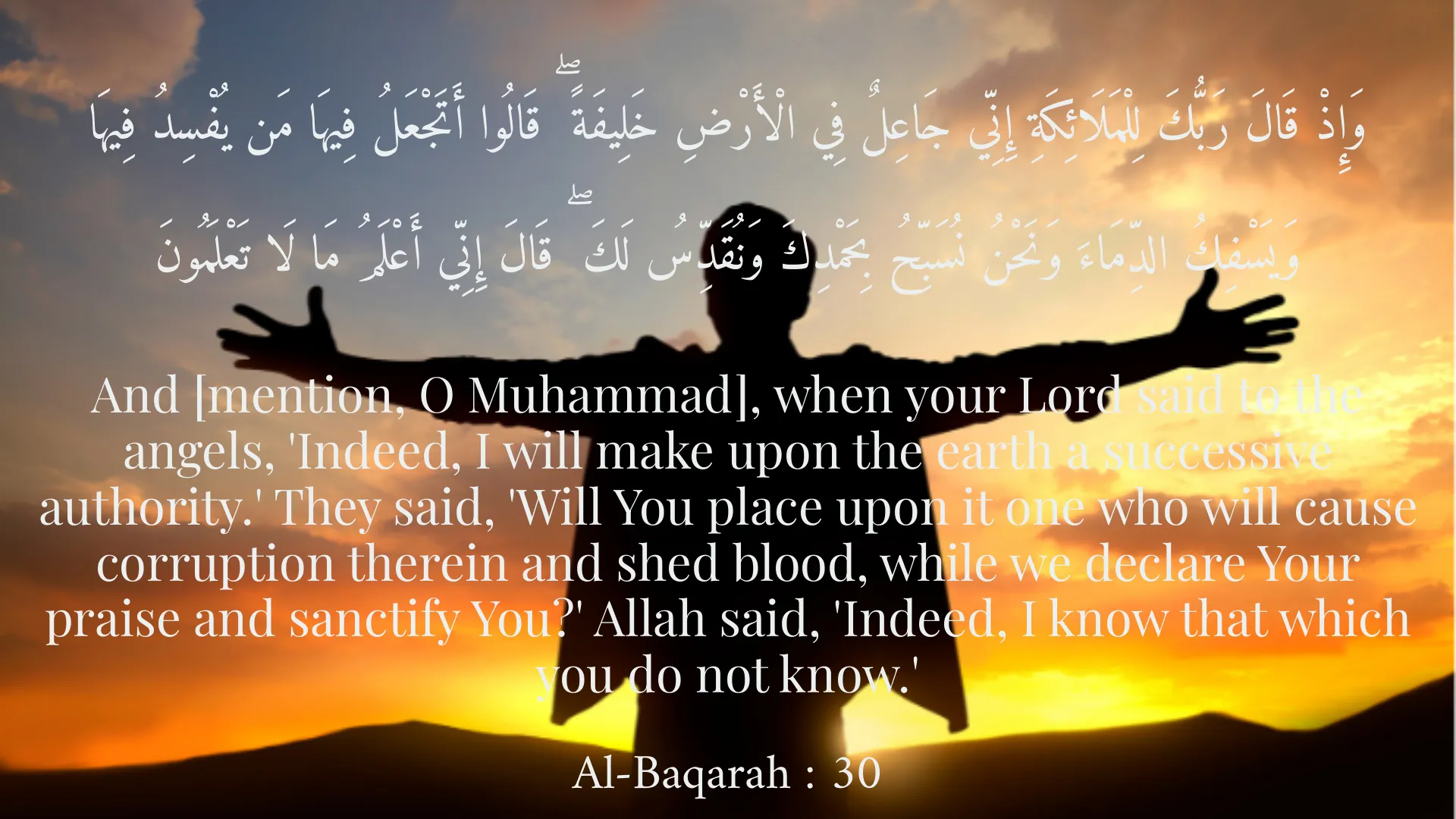
وَإِذْ قَالَ رَبُّكَ لِلْمَلَائِكَةِ إِنِّي جَاعِلٌ فِي الْأَرْضِ خَلِيفَةً ۖ قَالُوا أَتَجْعَلُ فِيهَا مَن يُفْسِدُ فِيهَا وَيَسْفِكُ الدِّمَاءَ وَنَحْنُ نُسَبِّحُ بِحَمْدِكَ وَنُقَدِّسُ لَكَ ۖ قَالَ إِنِّي أَعْلَمُ مَا لَا تَعْلَمُونَ
And [mention, O Muhammad], when your Lord said to the angels, 'Indeed, I will make upon the earth a successive authority.' They said, 'Will You place upon it one who will cause corruption therein and shed blood, while we declare Your praise and sanctify You?' Allah said, 'Indeed, I know that which you do not know.'
Al-Baqarah : 30
وَالَّذِينَ يَقُولُونَ رَبَّنَا هَبْ لَنَا مِنْ أَزْوَاجِنَا وَذُرِّيَّاتِنَا قُرَّةَ أَعْيُنٍ وَاجْعَلْنَا لِلْمُتَّقِينَ إِمَامًا
And those who say, 'Our Lord, grant us from our spouses and our offspring comfort to our eyes and make us an example for the righteous.'
Al-Furqan : 74
وَلَا تُفْسِدُوا فِي الْأَرْضِ بَعْدَ إِصْلَاحِهَا وَادْعُوهُ خَوْفًا وَطَمَعًا ۚ إِنَّ رَحْمَتَ اللَّهِ قَرِيبٌ مِّنَ الْمُحْسِنِينَ
And cause not corruption upon the earth after its reformation. And invoke Him in fear and aspiration. Indeed, the mercy of Allah is near to the doers of good.
Al-A'raf : 56
لَقَدْ كَانَ فِي قَصَصِهِمْ عِبْرَةٌ لِّأُولِي الْأَلْبَابِ ۗ مَا كَانَ حَدِيثًا يُفْتَرَىٰ وَلَٰكِن تَصْدِيقَ الَّذِي بَيْنَ يَدَيْهِ وَتَفْصِيلَ كُلِّ شَيْءٍ وَهُدًى وَرَحْمَةً لِّقَوْمٍ يُؤْمِنُونَ
There was certainly in their stories a lesson for those of understanding. Never was it a narration invented, but [it is] a confirmation of what was before it and a detailed explanation of all things and guidance and mercy for a people who believe.
Yusuf : 111
Short Story
They asked a wise man, 'Why do you plant trees whose fruits you will not live to taste?' The wise man, with a smile of wisdom, replied: 'Those before us planted, and we ate; so let us plant, that those after us may eat.' These brief words held a world of profound insight: that every generation is responsible towards the next, and must leave behind a good legacy of deeds, knowledge, and prosperity for them. Saadi, the eloquent poet, also states in his Bustan: 'A man of good name never dies; Dead is he whose name is not mentioned with goodness.' This saying reminds us that true immortality lies in actions whose benefits extend to others, and these benefits sometimes nourish generations long after we are gone. So let us strive to plant seeds whose shade and fruit will endure for our descendants forever.