Quranic Answer
Love and affection are two of the most profound emotions experienced by human beings, shaping relationships in intricate ways. While the Holy Quran does not explicitly address love in all its nuances, it lays down fundamental principles that guide believers toward understanding and practicing true love - a love rooted in faith, connection with God, and compassion for His creations. The Quran's teachings regarding love are known to intertwine emotional, spiritual, and ethical dimensions, reflecting a holistic approach to the concept. At the core of Quranic teachings is the notion that true love encompasses not only the affection we harbor for our family and friends but also, and perhaps more importantly, our love for Allah and His Messenger, Prophet Muhammad (Peace Be Upon Him). This relationship of love serves to elevate the believer’s heart and directs their actions in accordance with divine guidance. One of the fundamental verses that encapsulate this is found in Surah Al-Imran, verse 31, where Allah commands, "Say, 'If you truly love Allah, then follow me, so Allah will love you and forgive you your sins.' And Allah is Forgiving and Merciful." This verse presents a profound point: true love for God cannot exist in isolation; it demands an active commitment to following Prophet Muhammad's teachings and commandments. Furthermore, this love is reciprocal. When a believer embraces the teachings of the Prophet, they aren’t just complying with prescribed norms; they are actively participating in a loving relationship with the Divine. The love for God leads to His love for the individual, which is a powerful affirmation of the individual's worth in the eyes of the Creator. This cycle of love creates a sense of belonging and purpose, impacting the overall character of the believer as they strive to cultivate goodness within themselves and extend it to others. The Quran strengthens this concept of love, prioritizing compassion and kindness towards fellow human beings. In Surah An-Nisa, verse 36, Allah commands, "And worship Allah and do not associate anything with Him, and to parents, do good, and to relatives, orphans, the needy, the near neighbor, the neighbor farther away, the companion at your side, the companion along the way, and those whom your right hand possesses. Indeed, Allah does not like those who are self-deluding and boastful." This verse urges believers to demonstrate love and kindness towards multiple groups, emphasizing the interconnectedness of love towards God and in human relationships. The call to honor one’s parents and relatives ties into a broader Islamic ethos of maintaining strong family bonds and communal ties. Family, in many cultures, is perceived as the primary source of emotional support and affection, but it is also a sphere where individuals can practice patience, sacrifice, and altruism—qualities that embody true love. As individuals engage in acts of kindness and support towards their loved ones, they fulfill their duty to uphold love as defined in the Quran. Beyond familial ties, the Quran extends the concept of love to broader social dimensions, encouraging believers to show compassion to the vulnerable groups mentioned in the verse—orphans and the needy. This directive shapes the social fabric of Islamic communities, fostering a spirit of mutual responsibility and care which is crucial for the nurturing of society. One can argue that this love manifests in the practice of charity (Zakat), a pillar of Islam that demands believers to support those in need. In this context, love transcends personal relationships, becoming a communal obligation. Moreover, the Quran’s emphasis on sincerity and good deeds acts as a framework through which love can be expressed and experienced. In Surah Al-Baqarah, verse 177, Allah defines righteousness not solely through ritual acts of worship but through faith, doing good, and being mindful of God in every aspect of life. Righteousness, coupled with pure intentions, acts as a catalyst for love to flourish—both towards God and humanity. When individuals embody sincerity in their actions, the essence of love is conveyed through tangible efforts to uplift those around them, creating an atmosphere of respect and support. Additionally, the Quran acknowledges the existence of challenges and adversities that individuals face in life. True love is unwavering and resilient, sustaining individuals even in turbulent times. The Quran teaches that love must withstand the tests of hardship, thereby purifying the hearts of believers. It invites individuals to find solace and strength in their relationship with God, which ultimately guides their interactions with others. In the journey of life, maintaining love for God and acting with compassion towards people can become a source of strength and resilience. The concept of love in the Quran is a reminder that love for God leads to love for humanity, nurturing a harmonious living environment. It steers believers towards embodying principles of kindness, empathy, and altruism that resonate deeply in the human experience. In a world often marred by division and discord, these principles offer pathways to coalesce communities through mutual understanding and support, advocating that the essence of pure love is fundamentally about giving and receiving compassion, not only toward family or friends but transcending beyond these relations to the larger society. Ultimately, love according to the Quran emerges as a multilayered and profound concept, where the love directed towards God reflects and enhances the love believers hold for His creation. It's a poignant reminder that pure love springs from understanding and adhering to moral principles while fostering authentic connections with those around us. True love is thus a journey of spiritual elevation and emotional generosity—a journey that leads believers closer to fulfillment and unity in a world that stands in need of connection and care.
Related Verses
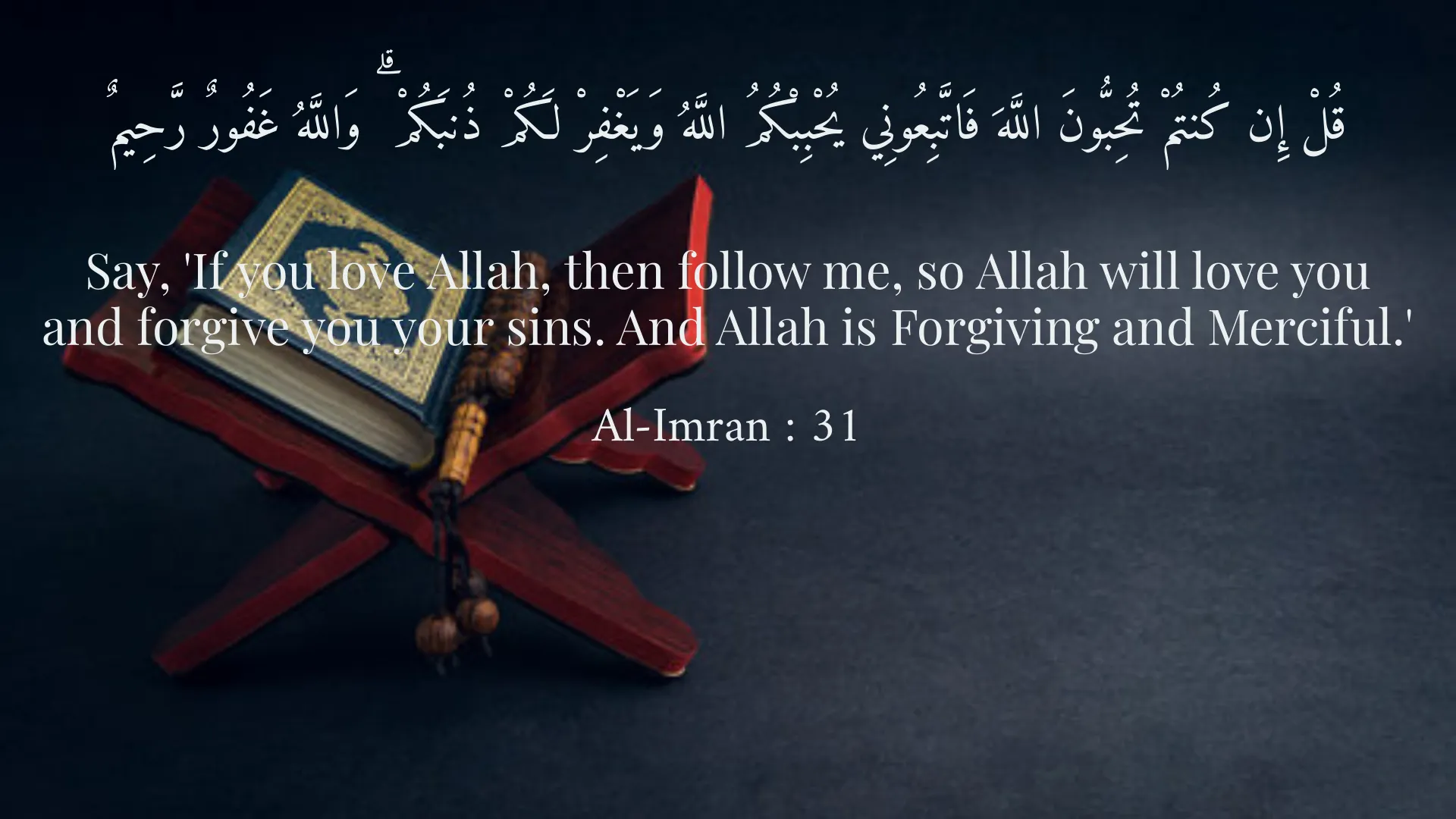
قُلْ إِن كُنتُمْ تُحِبُّونَ اللَّهَ فَاتَّبِعُونِي يُحْبِبْكُمُ اللَّهُ وَيَغْفِرْ لَكُمْ ذُنبَكُمْ ۗ وَاللَّهُ غَفُورٌ رَّحِيمٌ
Say, 'If you love Allah, then follow me, so Allah will love you and forgive you your sins. And Allah is Forgiving and Merciful.'
Al-Imran : 31
وَاعْبُدُوا اللَّهَ وَلَا تُشْرِكُوا بِهِ شَيْئًا وَبِالْوَالِدَيْنِ إِحْسَانًا وَبِذِي الْقُرْبَى وَالْيَتَامَى وَالْمَسَاكِينِ وَالْجارِ ذِي الْقُرْبَى وَالجارِ الْجُنُبِ وَالصَّاحِبِ بِالْجُنُبِ وَابْنِ السَّبِيلِ وَمَا مَلَكَتْ أَيْمَانُكُمْ ۗ إِنَّ اللَّهَ لَا يُحِبُّ مَنْ كَانَ مُخَتالًا فَخُورًا
And worship Allah and do not associate anything with Him, and to parents, good treatment, and to relatives, orphans, the needy, the near neighbor, the neighbor farther away, the companion at your side, and the traveler, and those whom your right hands possess. Indeed, Allah does not like those who are self-deluding and boastful.
An-Nisa : 36
Short Story
Once upon a time, there was a man named Amir who was torn between loving God and loving humans in his life. Alongside his daily work, he always tried to show affection to his family, but deep down he knew that true love is sanctified only through friendship with God and faith in Him. One day, he visited a park and saw a child playing without paying attention to his parents. He approached the child and gently told him to pray for his parents and always love them. By doing this, Amir felt a sense of joy and realized that true love not only towards God but also to humanity could provide peace.