Quranic Answer
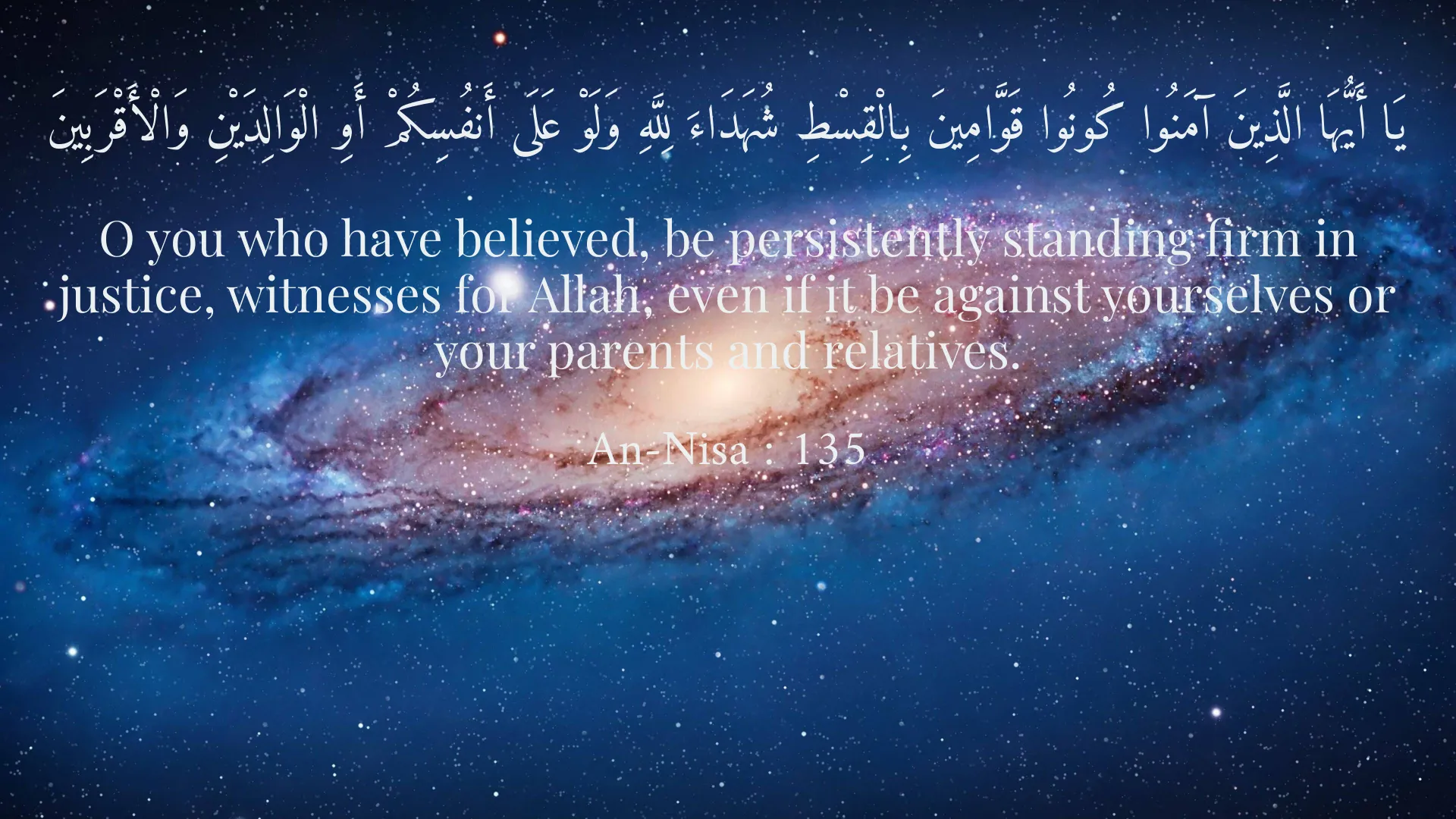
The concept of justice and fairness occupies a significant position in the teachings of Islam as espoused in the Holy Quran. Numerous verses in this sacred text offer insights and directives regarding the establishment of social justice, which constitutes the bedrock of a righteous society. Among these verses, Surah An-Nisa, verse 135 stands out prominently: 'O you who have believed, be persistently standing firm in justice, witnesses for Allah, even if it be against yourselves or your parents and relatives.' This verse serves as a profound reminder that the pursuit of justice and fairness should be uncompromised and absolute, even when it challenges personal interests or those of one’s family and friends. The essence of this directive underscores the critical role that justice plays in fostering a just and equitable society, categorized as social justice in contemporary discourse. Islam places an immense emphasis on the principle of justice, which is regarded as a fundamental virtue. The Quran not only urges individuals to uphold justice but stresses the importance of being a witness to truth and fairness, even when it conflicts with personal loyalties. This can be seen as a form of personal sacrifice, as it necessitates the prioritization of truth and righteousness over familial ties. Such principles compel believers to act in accordance with justice, regardless of the context or surrounding pressures. This marks a significant departure from the often prevailing human instincts to protect one's interests, especially when those interests are intertwined with familial or social relationships. In this way, social justice in Islam calls upon individuals to elevate the collective good above personal gain. Another key verse that reinforces the call for justice is found in Surah Al-Ma'idah, verse 8, where Allah states: 'Be persistently standing firm for justice.' This command further elucidates that justice is not an optional or occasional endeavor; rather, it is a perpetual and steadfast commitment that Muslims must observe in every facet of their lives. The inclusion of the phrase 'persistently standing firm' indicates that justice should be an enduring principle guiding the actions and decisions of believers. The life of Prophet Muhammad (PBUH) serves as a remarkable embodiment of these teachings. The Prophet’s actions and decisions were consistently rooted in the principles of fairness and justice. His interactions with individuals from all walks of life, irrespective of their social status or background, showcased his unwavering commitment to uphold the rights of the marginalized and downtrodden. He engaged with the rich and powerful, as well as the poor and disenfranchised, advocating for equitable treatment and fair dealings at all times. Numerous stories from the Hadith reveal how the Prophet championed social justice, demonstrating this profoundly important attribute not merely through words but through practical implementation in his daily life. Indeed, justice in Islam transcends the mere absence of oppression; it is about actively working to ensure that the rights of all individuals are recognized and respected. Islamic traditions indicate that justice is a catalyst for societal progress, contributing significantly to harmony and stability within the community. When justice prevails, individuals experience a sense of belonging and safety, fostering an environment conducive to cooperation, trust, and mutual support. Conversely, a lack of justice can lead to conflict, resentment, and division, ultimately destabilizing the very fabric of society. Moreover, the principles of justice and fairness outlined in the Quran serve to educate followers about the necessity of empathy and compassion. A just society requires individuals to recognize and understand the hardships and struggles faced by others, thus cultivating a sense of social responsibility. By advocating for those who are oppressed or marginalized, individuals embody the true spirit of social justice as envisioned in Islam. Those who are privileged must use their advantages to uplift those who are disadvantaged, reflecting the essence of altruism deeply rooted in Islamic teachings. In a broader context, the societal implications of achieving justice extend beyond individual relationships; they have a profound impact on social cohesion. When a society prides itself on establishing systems and structures that prioritize justice and fairness, it naturally fosters an environment where individuals can thrive and prosper. This harmonious existence, forged through equitable treatment and mutual respect, lays the groundwork for progress and development, both socially and economically. Equally important is the notion that justice is not limited to individuals alone; it must also be observed by authorities and institutions. Governments and lawmakers are entrusted with the responsibility of creating and enforcing just laws, ensuring that justice is upheld for all citizens without discrimination. A judicial system grounded in justice and fairness is crucial for maintaining order and peace within society. In contemporary times, the echoes of these age-old teachings remain relevant. As societies grapple with issues of inequality, discrimination, injustice, and corruption, the Quranic emphasis on social justice serves as a guiding light. The global community is increasingly acknowledging the importance of equal rights and social equity; hence, the principles outlined in the Quran find resonance even in discussions surrounding modern social justice movements. In summary, the Holy Quran's directives surrounding justice and fairness lay the foundation for a comprehensive understanding of social justice within Islam. Verses such as those in Surah An-Nisa and Surah Al-Ma'idah emphasize that the pursuit of justice is a relentless commitment that transcends personal interests. The life of the Prophet Muhammad (PBUH) exemplifies the practical application of these principles, showcasing that justice is vital for both individual fulfillment and societal advancement. The teachings of Islam encourage believers to become advocates for justice, fostering a community founded on mutual respect, empathy, and cooperation. As such, the quest for social justice remains an ongoing endeavor, one that resonates profoundly within the Islamic faith and continues to inspire efforts towards a fairer and more equitable world.
Related Verses
يَا أَيُّهَا الَّذِينَ آمَنُوا كُونُوا قَوَّامِينَ بِالْقِسْطِ شُهَدَاءَ لِلَّهِ وَلَوْ عَلَى أَنفُسِكُمْ أَوِ الْوَالِدَيْنِ وَالْأَقْرَبِينَ
O you who have believed, be persistently standing firm in justice, witnesses for Allah, even if it be against yourselves or your parents and relatives.
An-Nisa : 135
يَا أَيُّهَا الَّذِينَ آمَنُوا كُونُوا قَوَّامِينَ لِلَّهِ شُهَدَاءَ بِالْقِسْطِ
O you who have believed, be persistently standing firm for justice.
Al-Ma'idah : 8
Short Story
One day, a man named Hassan was at the market and witnessed injustice against a poor individual. He recalled the verses of the Quran and realized he must stand against oppression. With all his strength, he defended that person and ultimately restored justice. His act inspired others and strengthened the sense of social solidarity within the community.