Quranic Answer
The Holy Quran, as the divine guide, clearly and profoundly emphasizes the immense power and significance of forgiveness in all aspects of human life, especially in the crucial task of mending and rebuilding relationships. In Islam, forgiveness is not merely an ethical recommendation; it is a fundamental principle and an essential prerequisite for achieving individual well-being and societal harmony. Allah Almighty Himself is described throughout the Quran with attributes like 'Al-Ghafur' (The Oft-Forgiving), 'Ar-Rahim' (The Most Merciful), and 'Al-Afuw' (The Pardoner), thereby teaching humanity that generosity and overlooking faults are divine qualities that believers should strive to embody. One of the most central points in this regard is Surah An-Nur, verse 22, which states: “And let not those among you who are blessed with graces and abundance swear not to give to their kin, the poor, and those who migrated in the cause of Allah. Let them pardon and overlook. Would you not like that Allah should forgive you? And Allah is Forgiving and Merciful.” This verse unequivocally advises those endowed with wealth and privilege not to cease their charitable acts towards their relatives or the needy, even if they have been wronged or offended by them. Instead, they are instructed to pardon and overlook. The rhetorical question, “Would you not like that Allah should forgive you?” is deeply impactful, teaching us that if we seek divine forgiveness, we must ourselves be forgiving. This verse directly addresses the concept of rebuilding relationships, as overlooking others' mistakes and continuing to do good to them, even after experiencing hurt, is a powerful way to heal rifts and revive bonds. Furthermore, the Quran offers a golden formula for transforming enmity into friendship in Surah Fussilat, verse 34: “And not equal are the good deed and the bad. Repel [evil] by that which is better; then verily he between whom and you was enmity will become as though he was a devoted friend.” This verse encourages us to repel evil with that which is better. This implies that when faced with someone who has wronged us or with whom our relationship has soured, instead of retaliating or fostering resentment, we should respond with kindness, forgiveness, and benevolence. The astonishing outcome of this approach is the transformation of an enemy into a devoted friend. This demonstrates that active forgiveness, combined with good conduct, can heal even the deepest wounds in relationships and not only rebuild connections but make them significantly stronger than before. Additionally, Surah Ash-Shura, verse 43, states: “But whoever is patient and forgives – indeed, that is of the matters [requiring] determination.” This verse identifies patience and forgiveness as acts requiring strong will and resolve. True forgiveness is not easy; it demands courage, self-restraint, and foresight. By stating that forgiveness is among 'matters of determination,' the Quran highlights its magnitude and difficulty, promising immense reward for it. This act signifies the inner strength of the forgiving individual, who can break free from the endless cycle of resentment and vengeance, choosing instead the path of peace and reconciliation. Consequently, such an approach not only brings inner peace to the individual but also provides the other party with an opportunity to rectify their mistake and rebuild the relationship on a fresh foundation of respect and understanding. The implications of forgiveness in relationships are far-reaching. When one forgives, they effectively lift the heavy burden of resentment, anger, and bitterness from their shoulders. This internal liberation creates the necessary space for logical and positive thinking about the other person. Forgiveness does not mean condoning injustice but rather releasing the right to vengeance and opening the doors of communication for a better future. This is particularly crucial in family, marital, and friendly relationships, where misunderstandings and grievances can quickly escalate into formidable barriers. Forgiveness demolishes these walls, paving the way for dialogue, mutual understanding, and problem-solving. The Quran also emphasizes restraining anger and pardoning people, as stated in Surah Ali 'Imran, verse 134: “who restrain anger and who pardon the people – and Allah loves the doers of good.” This verse praises those who control their anger and forgive others, affirming that Allah loves those who do good. This quality plays a vital role, especially in relationships prone to friction and conflict. Suppressing anger and then choosing to forgive not only prevents the escalation of disputes but also demonstrates a level of psychological and spiritual maturity that can save relationships from destruction and establish new foundations for trust and empathy. In summary, the Holy Quran regards forgiveness not just as a personal virtue but as a powerful and divine strategy for preserving and rebuilding human relationships. These teachings instruct us that by embracing this principle, we can transform our individual and social lives, spread peace and tranquility in hearts and communities, and establish lasting relationships based on mutual love and respect. Forgiveness is a light that dispels the darkness of resentment and enmity, paving the way for stronger, more blessed human bonds.
Related Verses
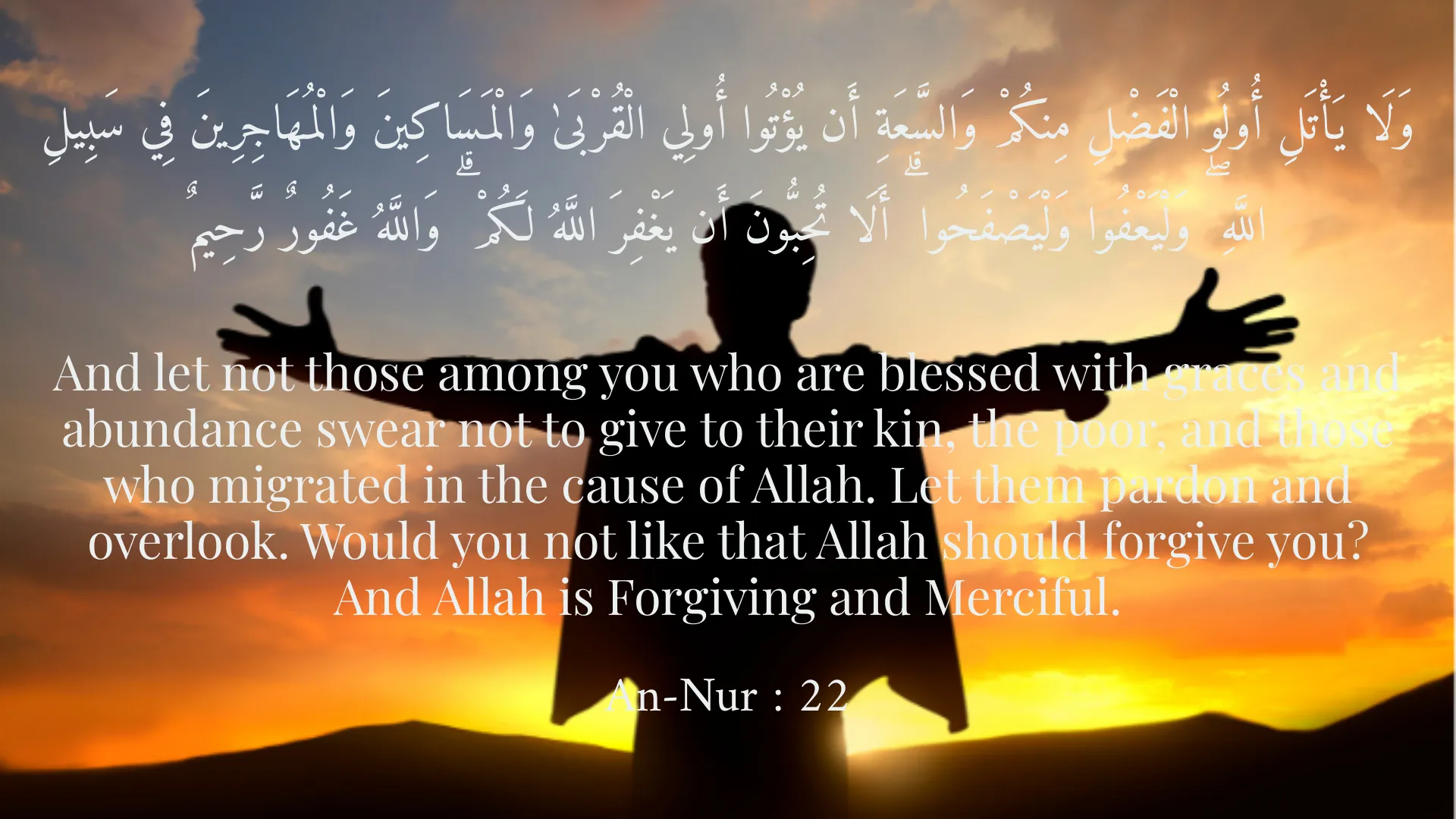
وَلَا يَأْتَلِ أُولُو الْفَضْلِ مِنكُمْ وَالسَّعَةِ أَن يُؤْتُوا أُولِي الْقُرْبَىٰ وَالْمَسَاكِينَ وَالْمُهَاجِرِينَ فِي سَبِيلِ اللَّهِ ۖ وَلْيَعْفُوا وَلْيَصْفَحُوا ۗ أَلَا تُحِبُّونَ أَن يَغْفِرَ اللَّهُ لَكُمْ ۗ وَاللَّهُ غَفُورٌ رَّحِيمٌ
And let not those among you who are blessed with graces and abundance swear not to give to their kin, the poor, and those who migrated in the cause of Allah. Let them pardon and overlook. Would you not like that Allah should forgive you? And Allah is Forgiving and Merciful.
An-Nur : 22
وَلَمَن صَبَرَ وَغَفَرَ إِنَّ ذَٰلِكَ لَمِنْ عَزْمِ الْأُمُورِ
But whoever is patient and forgives - indeed, that is of the matters [requiring] determination.
Ash-Shura : 43
وَلَا تَسْتَوِي الْحَسَنَةُ وَلَا السَّيِّئَةُ ۚ ادْفَعْ بِالَّتِي هِيَ أَحْسَنُ فَإِذَا الَّذِي بَيْنَكَ وَبَيْنَهُ عَدَاوَةٌ كَأَنَّهُ وَلِيٌّ حَمِيمٌ
And not equal are the good deed and the bad. Repel [evil] by that which is better; then verily he between whom and you was enmity will become as though he was a devoted friend.
Fussilat : 34
Short Story
It is said that in ancient times, there was a just king known for his generosity and forgiveness. One of his subjects, out of ignorance and arrogance, spoke words that displeased the king. Those around expected the king to severely punish him. But the king, with a smile that reflected his inner peace, said: “I am a king, and it is befitting for the great to forgive, not to seek revenge. For vengeance is the work of the weak, and grudges bring nothing but alienation and enmity.” He not only forgave the man but also asked him to assist in state affairs. The man, remorseful for his actions and astonished by the king's forgiveness, became one of the king's most loyal companions until the end of his life, and a strong relationship based on loyalty and respect formed between them. Saadi wisely said: “Whoever nurses grudges, hurts his own heart; and if someone wrongs you, respond to him with kindness.” This story illustrates how an act of forgiveness can create strong bonds and loyalty instead of enmity, drawing hearts closer.