Quranic Answer
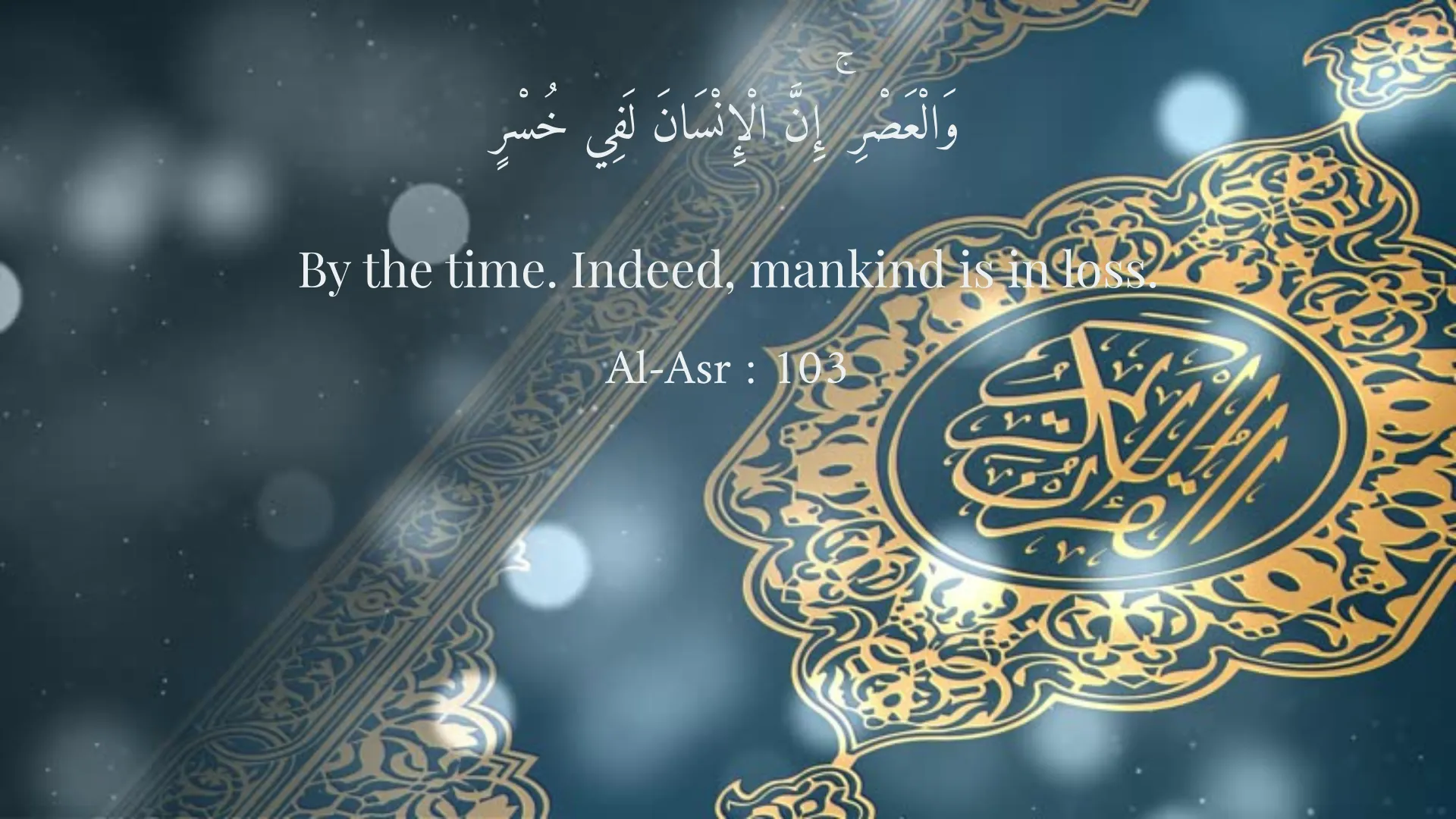
The Holy Quran is a profound scriptural guide that not only delineates moral and ethical paths for humanity but also emphasizes the crucial importance of time in human life. Time, often perceived as an abstract concept, is perceived through tangible experiences and serves as a backdrop against which life’s events unfold. The Quran’s perspective on time further elevates its significance, instilling a sense of urgency in utilizing it effectively. One of the most poignant verses that encapsulate this notion is found in Surah Al-Asr, verse 103, which states: "By the time. Indeed, mankind is in loss." This verse succinctly conveys a powerful message – all of humanity is embroiled in loss except for those who choose to believe, engage in righteous deeds, and counsel one another towards truth and patience. To explore the implications of this verse, it becomes crucial to analyze its components. The phrase "by the time" is not merely an introduction; it acts as an oath that highlights the importance and essence of time itself. This oath emphasizes that time holds a vital place in human existence and can determine the trajectory of our lives. The subsequent mention of how mankind is in loss underscores a universal truth that is reflected in the everyday lives of individuals across cultures and ages. The Quran stresses that human beings frequently squander valuable time on trivial pursuits, neglecting the true essence of life, which is to worship and serve a higher purpose. The notion of being in loss signifies a profound and existential state where individuals can forfeit the potential for spiritual growth, fulfillment, and divine proximity. Yet, the Quran offers a pathway to salvation from this state of loss – by believing in Allah, performing righteous deeds, and encouraging others on the path of truth and patience. Therefore, the notion of correct time usage becomes intertwined with faith, morality, and community responsibility. The Quran recognizes that time is not just fleeting; it is an opportunity, a divine gift that must be revered and utilized wisely. In this regard, time can be likened to a precious capital, analogous to financial investments – it should be allocated carefully, nurturing endeavors that yield spiritual dividends. Just as one wouldn't squander their money recklessly, similarly, the Quran urges believers to consciously invest their time into actions that are pleasing to Allah. Further reinforcing the concept of time and life as a test, Surah Al-Mu'minun, verse 115, asserts that this worldly life is a transient journey towards Eternity: "Did you think that We created you for nothing and that you would not be returned to Us?" This verse serves as a reminder that every moment lived is an opportunity to draw closer to the Divine. Therefore, the true value of time, as depicted in the Quran, transcends mere calculation of hours; it is about cultivating a conscious awareness of how one utilizes each fleeting moment to augment their faith and service. Consequently, the Quran’s perspective on the value of time urges believers to embrace an intentional lifestyle. Each hour, minute, and second should be viewed as sacred and invested wisely through acts of worship, charitable deeds, and efforts to spread goodness. The idea of guarding against negligence becomes increasingly critical here. Negligence often leads to procrastination, distraction, and a disconnection from the core tenets of faith, causing individuals to drift away from the path of righteousness. Time, therefore, is illustrated in the Quran as a double-edged sword – it possesses the potential for immense reward if utilized wisely, and it simultaneously carries the weight of regret if wasted. The daily challenges of life, distractions, and worldly pursuits often lead individuals to become engrossed in trivial matters, hence neglecting their primary purpose of existence. Islam encourages its followers to remain vigilant and constantly assess how their actions populate their timelines. Moreover, this idea of valuing time resonates deeply within the Islamic community. It encourages a mindset that fosters productivity, accountability, and a sense of communal responsibility. Muslims are encouraged to remind one another of the importance of time and sincerity in faith and action. The sacredness of time propels believers toward a collective awareness of their duties to not only themselves but to their families, communities, and ultimately, Allah. The topic of time usage also finds relevance in the modern age, where the fast-paced life and constant distractions of technology can lead to increased negligence and the erroneous belief that there is always time to rectify one’s actions. This erroneous mindset can be deceptive; it can create a false sense of security that diverts attention from the importance of immediate action and the resolve to turn towards righteous practices. In conclusion, the Holy Quran offers profound insights into the value of time and its judicious usage. It asserts that time must not merely be acknowledged but actively respected and utilized through faith, righteous deeds, and mutual encouragement towards goodness. The pressing reality that time, once spent, cannot be regained warrants a conscientious approach among individuals. Recognizing the significance of time becomes essential, allowing believers not only to navigate through life's trials but also to draw closer to Allah through meaningful action. This perception of time as divine capital ultimately empowers Muslims, instilling a deep sense of purpose and urgency in each moment lived. Thus, the value of time, as prescribed by the Quran, remains one of the foundational principles that resonate strongly in the lives of believers, encouraging them to weave a tapestry of faith with each passing second.
Related Verses
وَالْعَصْرِ ۚ إِنَّ الْإِنْسَانَ لَفِي خُسْرٍ
By the time. Indeed, mankind is in loss.
Al-Asr : 103
أَفَحَسِبْتُمْ أَنْمَا خَلَقْنَاكُمْ عَبَثًا وَأَنَّكُمْ إِلَيْنَا لَا تُرْجَعُونَ
Did you think that We created you in vain and that you would not be brought back to Us?
Al-Mu'minun : 115
Short Story
Once upon a time, a man named Sohrab wandered through the streets seeking the truth about time. He decided to spend a few minutes each day contemplating the past and the future. After a while, he realized that the truth of time lies in the present moments. By studying the verses of the Quran, he concluded that he should make the best use of every moment of his life and step towards closeness to Allah. After this decision, Sohrab's life changed, and he found true peace.