Quranic Answer
The Holy Quran, the central religious text of Islam, serves as a guide for believers in various aspects of life, including the intricate matters of interpersonal relationships and communication. Among the various social vices admonished in the Holy Quran is gossip, which can be defined as speaking ill or spreading rumors about others, often in their absence. The repercussions of gossip extend beyond mere social faux pas; they can lead to significant spiritual, social, and psychological implications for both the person engaging in the gossip and those who fall victim to it. This essay explores the Quranic perspective on gossip, its harmful consequences, and the importance of adopting virtuous communication in our daily lives. At the heart of this discussion is Surah Al-Hujurat, verse 12, where Allah specifically addresses the believers regarding the dangers of negative assumptions and gossip. The verse reads: "O you who have believed, avoid much [negative] assumption. Indeed, some assumption is sin. And do not spy or backbite each other. Would one of you like to eat the flesh of his brother while he is dead?" This vivid metaphor encapsulates the gravity of gossip, suggesting that indulging in it is akin to committing an appalling act. By comparing gossip to cannibalism, a horrific act, the Quran unequivocally presents gossip as a vilification of one’s character and dignity. The warning against suspicion is equally significant. Often, gossip is rooted in assumptions drawn from incomplete or biased information. The phrase 'much [negative] assumption' in the verse points to the potential sin that arises from forming judgments without evidence. This lack of certainty fosters an environment where mistrust thrives, relationships deteriorate, and community cohesion disintegrates. Notably, this verse urges a conscious effort among believers to refrain from assuming the worst in one another, thus promoting an atmosphere of mutual respect and understanding. Moreover, Surah Luqman, verse 18, further emphasizes the importance of being mindful in one’s speech. The verse encourages individuals to 'avoid disgraceful behavior' and fosters a sense of respect for others in all forms of communication. This directive reinforces the notion that gossip diminishes not only the dignity of the gossip subject but also the moral standing of the person engaging in such behavior. Consequently, both speaker and listener find themselves entangled in a web of negativity, tarnishing their own character and potentially breaking bonds of friendship and trust. The consequences of gossip, as highlighted by these verses, are manifold. Firstly, on a psychological level, engaging in gossip can lead to feelings of guilt and shame. The Quran vividly illustrates the moral degradation that accompanies such behavior; thus, the act of gossiping can erode one’s self-esteem. This internal conflict can manifest in various ways, leading to increased anxiety, stress, and a broader sense of moral disillusionment. Socially, gossip can fracture relationships and breed division within communities. In a society characterized by mutual trust and respect, gossip fosters animosity and suspicion. Friendships can be irreparably harmed, and family bonds can be strained, leading to conflicts that can span generations. The ripple effect of gossip not only impacts immediate relationships, but it can also extend to the larger community, creating an environment charged with distrust and hostility. Furthermore, gossip often serves as a breeding ground for larger societal issues such as bullying and harassment. Victims of gossip may find themselves ostracized or marginalized due to false narratives circulated about them. This aligns with a broader concern regarding the ethical implications of speech within any social setting. The Quran’s stringent stance against gossip urges believers to uphold ethical communication, highlighting that our words carry weight and can either uplift or destroy. In terms of personal development, the Quran encourages adherents to cultivate virtuous morals and ethical behavior. Abstaining from gossip signifies a commitment to integrity and self-discipline, traits that are foundational to the Islamic faith. By choosing to speak upliftingly and respectfully about one another, individuals reinforce their character and promote a positive culture within their communities. The teachings of the Quran serve as a timeless reminder of the consequences of our words and actions. Followers are implored to adopt moral principles that reflect respect, dignity, and compassion towards others. The rejection of gossip is not solely about adhering to religious norms; it is also about fostering a culture of love and understanding within relationships. In conclusion, the Holy Quran offers profound insights into the detrimental nature of gossip, which affects both the individual and the collective society. The warnings presented in Surah Al-Hujurat and Surah Luqman advocate for a conscientious approach to communication, emphasizing the importance of avoiding negative assumptions and maintaining respect for others. By adhering to these principles, believers can cultivate a harmonious and respectful community that reflects the core tenets of Islam. Ultimately, abandoning gossip and embracing virtuous speech embodies one of the fundamental principles of a meaningful and morally responsible life.
Related Verses
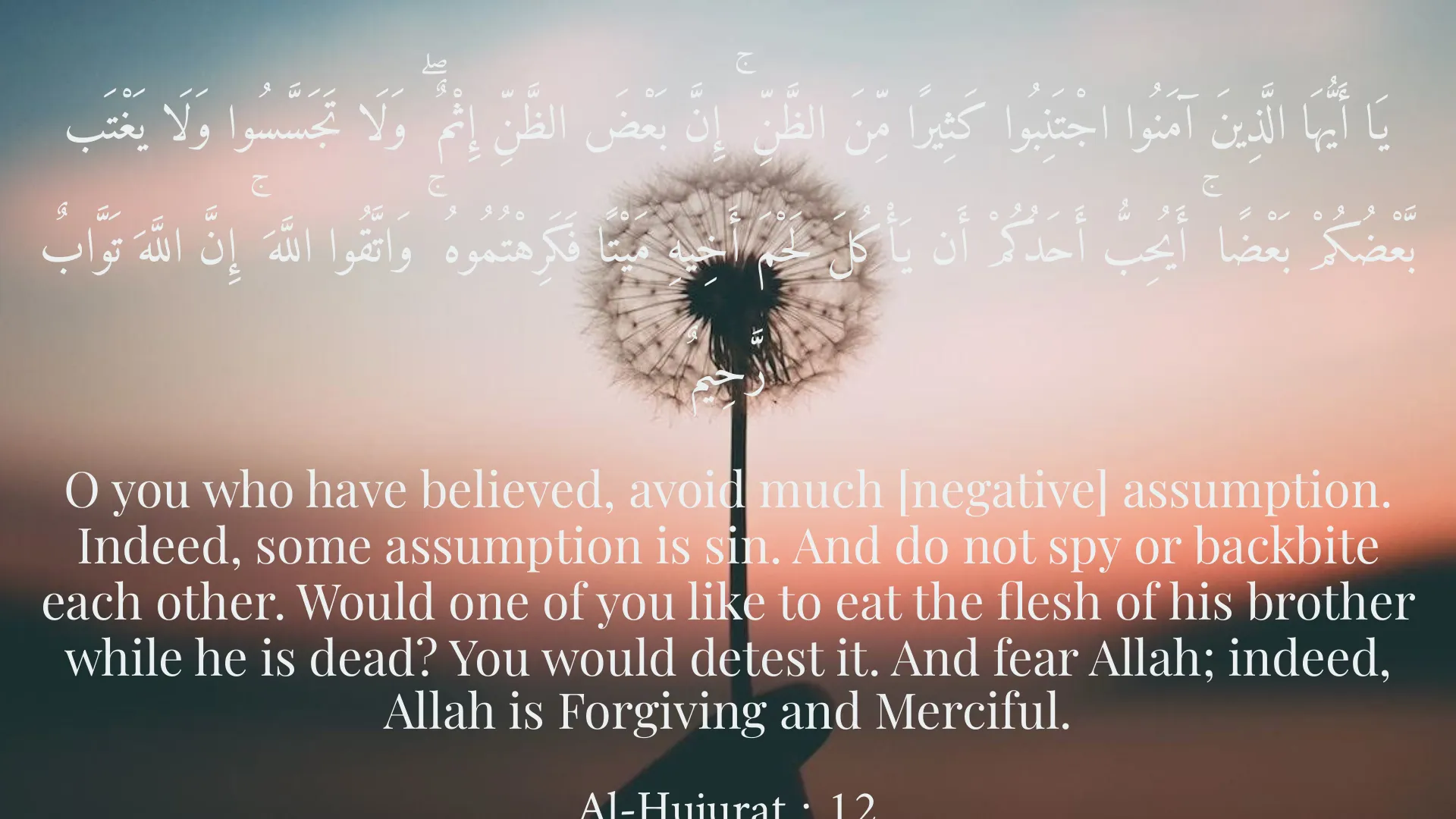
يَا أَيُّهَا الَّذِينَ آمَنُوا اجْتَنِبُوا كَثِيرًا مِّنَ الظَّنِّ ۚ إِنَّ بَعْضَ الظَّنِّ إِثْمٌ ۖ وَلَا تَجَسَّسُوا وَلَا يَغْتَب بَّعْضُكُمْ بَعْضًا ۚ أَيُحِبُّ أَحَدُكُمْ أَن يَأْكُلَ لَحْمَ أَخِيهِ مَيْتًا فَكَرِهْتُمُوهُ ۚ وَاتَّقُوا اللَّهَ ۚ إِنَّ اللَّهَ تَوَّابٌ رَّحِيمٌ
O you who have believed, avoid much [negative] assumption. Indeed, some assumption is sin. And do not spy or backbite each other. Would one of you like to eat the flesh of his brother while he is dead? You would detest it. And fear Allah; indeed, Allah is Forgiving and Merciful.
Al-Hujurat : 12
وَلَا تُصَعِّرْ خَدَّكَ لِلنَّاسِ وَلَا تَمْشِ فِي الْأَرْضِ مَرَحًا ۖ إِنَّ اللَّهَ لَا يُحِبُّ كُلَّ مُخْتَالٍ فَخُورٍ
And do not turn your cheek [in contempt] toward people and do not walk through the earth exultantly. Indeed, Allah does not like every pretender and boaster.
Luqman : 18
Short Story
One day, a man lived in a neighborhood where he constantly criticized others. One of his close friends said to him, "Why do you always speak ill of others?" He replied, "Because I want to correct them!" His friend cleverly suggested, "It’s better to recognize and speak of their virtues instead of their faults." From that day, the man decided to replace gossip with kindness and assistance to others. Gradually, his life changed, and he became more beloved.