Quranic Answer
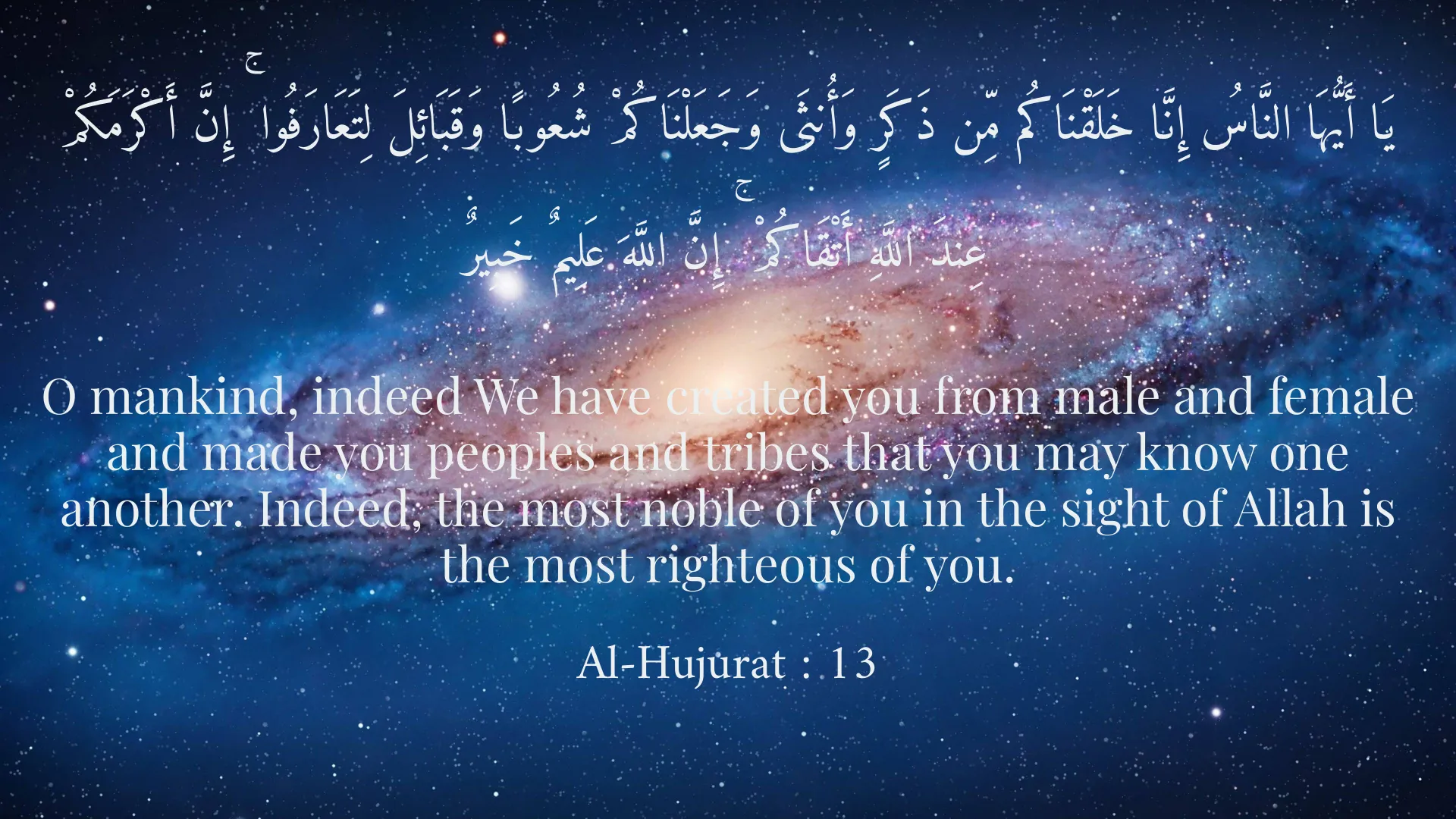
### The Divine Affirmation of Human Equality in the Holy Quran The Holy Quran, regarded as the ultimate source of guidance for billions of Muslims around the world, delivers profound messages that call for universal values, justice, and equality. Among its essential teachings is the affirmation of equality among all human beings. The Quran, through various verses, unequivocally articulates that distinctions based on race, gender, or social status are not indicators of worth or superiority, but rather, what truly distinguishes individuals is their piety and righteousness. #### Surah Al-Hujarat: A Clear Declaration of Equality Surah Al-Hujarat, verse 13 is a cornerstone reference on this topic: "O mankind, indeed We have created you from male and female and made you peoples and tribes that you may know one another. Indeed, the most noble of you in the sight of Allah is the most righteous of you." This verse encapsulates the essence of human equality. It vividly asserts that humanity originated from a single source: male and female. This divine creation narrative eliminates any justification for superiority based on gender, pointing instead to the intrinsic value in diversity. In saying, "that you may know one another," the verse encourages an appreciation of diversity and cultural differences, suggesting that it is through the understanding and respect of one another that society can thrive. Importantly, the criteria for nobility before Allah flips conventional social hierarchies on their head. It is not wealth, lineage, or race that holds merit in the eyes of Allah; rather, it is righteousness that elevates individuals. This revolutionary perspective establishes a prophetic tone that resonates with the fight against discrimination and oppression. #### Surah Al-Imran: A Testament to Equal Value of Deeds Further emphasizing the principle of equality, Surah Al-Imran, verse 195 declares: "And whatever good deeds they do, male or female, and is a believer, those will enter Paradise..." This declaration conveys that the rewards for good deeds and faith are equally accessible to both genders. The verse reflects that each individual's actions, purely based on their goodness and sincerity in faith, will determine their fate in the afterlife, thereby eradicating any sense of superiority derived from gender or social identity. The inclusivity of this verse underscores a fundamental tenet of Islam: all good deeds, irrespective of the doer’s gender, are seen through the same lens of reward by Allah. It inspires an egalitarian culture that transcends traditional societal structures, promoting the idea that individuals should strive for righteous deeds rather than compete in areas of superficial measure. #### The Universal Call to Responsibility in Surah Al-An’am Additionally, Surah Al-An'am, verse 165 states: "And He has made you successors upon the earth..." Here, the Quran reiterates another significant aspect of equality: the role of humanity as stewards of the earth. This stewardship is a responsibility entrusted to all people, implying that everyone has the duty to care for creation and to treat fellow beings with dignity and respect. This verse not only defines a universal role for humanity in their interaction with the world and each other, but it also fosters a sense of collective responsibility that unites diverse groups towards a common noble cause. The notion of being ‘successors’ underlines the importance of cooperation, harmony, and mutual respect, as each group or tribe contributes to the collective wellbeing of humanity. #### The Condemnation of Discrimination Throughout the Quran, themes of equity and fairness are prevalent. Discrimination based on race, ethnicity, or religion is categorically refuted within the Islamic teachings. The Quran’s repeated calls for social justice and harmony reinforce the imperative of treating every individual with respect. This is particularly important in a world often characterized by divisions and strife. Islam’s condemnation of racism and discrimination is not merely theoretical; it is an active call for social reform and community building. By instilling a sense of equality through divine wisdom, the Quran serves as a powerful tool against the prejudices and inequalities that often plague societies. #### Implications for Modern Society In the contemporary context, the messages of equality embedded within the Quran hold profound implications. As societies wrestle with issues of racism, sexism, and religious intolerance, revisiting these Quranic messages offers both a moral compass and a foundation for building inclusive communities. It enables Muslims and indeed people of all backgrounds to draw upon divine guidance to foster environments that celebrate diversity and promote understanding. In educational spheres, workplaces, and community relations, the teachings of the Quran can serve as a reminder of our shared humanity. By advocating for justice, equity, and mutual respect, the Quran inspires a global movement towards acceptance and unity, countering the trends of division that are increasingly visible in today’s world. #### Conclusion In summary, the Holy Quran stands as a remarkable testament to the equality of human beings, breaking boundaries of race, gender, and ethnicity. Its verses advocate for righteousness as the ultimate measure of an individual’s worth in the sight of Allah. By urging humanity to understand and respect each other, the Quran fosters a powerful framework for social justice and harmony. As we continue navigating the complexities of our contemporary world, these messages remain vital, guiding us towards a more equitable future where all individuals are valued regardless of their background or identity.
Related Verses
يَا أَيُّهَا النَّاسُ إِنَّا خَلَقْنَاكُم مِّن ذَكَرٍ وَأُنثَى وَجَعَلْنَاكُمْ شُعُوبًا وَقَبَائِلَ لِتَعَارَفُوا ۚ إِنَّ أَكْرَمَكُمْ عِندَ اللَّهِ أَتْقَاكُمْ ۚ إِنَّ اللَّهَ عَلِيمٌ خَبِيرٌ
O mankind, indeed We have created you from male and female and made you peoples and tribes that you may know one another. Indeed, the most noble of you in the sight of Allah is the most righteous of you.
Al-Hujurat : 13
وَمَا عَمِلَ مِنْ عَمَلٍ صَالِحٍ مِّن ذَكَرٍ أَوْ أُنثَى وَهُوَ مُؤْمِنٌ فَأُو۟لَـٰئِكَ يَدْخُلُونَ الْجَنَّةَ
And whatever good deeds they do, male or female, and is a believer, those will enter Paradise.
Al-Imran : 195
وَإِذَا قَالَ رَبُّكَ لِلْمَلَائِكَةِ إِنِّي جَاعِلٌ فِي الْأَرْضِ خَلِيفَةً ۖ قَالُوا أَتَجْعَلُ فِيهَا مَن يُفْسِدُ فِيهَا وَيَسْفِكُ الدِّمَاءَ وَنَحْنُ نُسَبِّحُ بِحَمْدِكَ وَنُقَدِّسُ لَكَ قَالَ إِنِّي أَعْلَمُ مَا لَا تَعْلَمُونَ
And [mention] when your Lord said to the angels, 'Indeed, I will make upon the earth a successive authority.' They said, 'Will You put therein one who causes corruption therein and sheds blood, while we declare Your praise and sanctify You?' Allah said, 'Indeed, I know that which you do not know.'
Al-An'am : 165
Short Story
One day, a poor man named Ali was wandering in the market looking for work. He observed that some people disrespected others and expressed differences between races using derogatory words. Ali wondered why human beings should be judged based on the color of their skin or their ethnicity. He remembered the Quranic verses that state that all humans are created from one mother and father, emphasizing that in the end, we should all be equal. He decided that in his interactions with others, he would always keep respect in mind and see everyone as equal. Over time, he would say to people, 'We are all equal before Allah, and it is only piety that defines us.' Gradually, this message spread in his community, and respect and equality flourished among the people.