Quranic Answer
In the Holy Quran, the concept of blessings and the bounties that Allah grants to His servants is a significant topic, resonating through various verses and teachings that define the core of a believer's life. This divine narrative portrays a profound relationship between the actions of individuals, their intentions, and the subsequent rewards bestowed by Allah. At the heart of this relationship lies the principles of work and effort in daily life, underscoring the importance of personal commitment and responsibility towards gaining Allah's pleasure and blessings. The Quran intricately weaves together the ideas of labor and divine bounty, illustrating that human effort is not merely an end in itself but a means through which one can access the abundant mercies of the Creator. For instance, in Surah Al-Baqarah, verse 261, Allah states: "The example of those who spend their wealth in the way of Allah is like a seed of grain that sprouts into seven spikes; in every spike there are a hundred grains. Allah multiplies His rewards for whom He wills." This profound analogy emphasizes the exponential blessings associated with spending and working in the cause of God. When one invests their time, wealth, and energy in virtuous acts, the return transcends the initial effort, manifesting in manifold blessings that not only enhance the life of the believer but also contribute positively to the society at large. The Quranic verse embodies a world view that encourages individuals to strive for higher purposes through constructive actions. The image of the seed, a natural element, is a powerful metaphor reflecting growth, potential, and the idea that great achievements often start from small beginnings. When individuals contribute to the welfare of others or engage in acts of charity, they can expect their endeavors to bear fruit—both in this life and the Hereafter. Hence, the act of spending wealth in the way of Allah becomes a vital avenue through which individuals can cultivate both spiritual and material prosperity. Furthermore, the Quran does not shy away from addressing the challenges associated with material possessions and progeny. In Surah Al-Anfal, verse 28, Allah says: "And know that your properties and your children are but a trial, and that Allah has with Him a great reward." This verse further elucidates the theme of trials and tribulations that accompany the blessings of wealth and offspring. It underscores that these blessings also come with responsibilities and tests of faith. Riches and children, while often viewed as symbols of success, are also presented as divine tests that require individuals to maintain their integrity, humility, and adherence to Allah's commands. In this context, one must ponder: how can one navigate the trials associated with these blessings? The Quran guides its followers through the principle of maintaining a deep connection with Allah, ensuring that while they engage in the world of materiality, their focus remains on righteousness, gratitude, and humility. It becomes critical to approach wealth and familial responsibilities with the understanding that they are tools that can be used for greater good, not merely possessions to be hoarded. In addition to the aforementioned verses, numerous Hadiths echo the theme of hard work and divine mercy. The Messenger of Allah, Muhammad (peace be upon him), emphasized the virtues of labor and the dignity inherent in striving for one's sustenance. He stated, "No one eats better food than that which he has earned by his own labor." This highlights the honorable nature of work and emphasizes that effort is a means of fostering a more profound sense of self-worth and connection to Allah. Moreover, the Quran provides compelling reasons why engaging in productive work leads to divine blessings. In Surah Al-Mulk, Allah reminds believers that He is the creator of sustenance, inviting them to consider His creation's wonders and their own roles within it. This cosmic perspective serves to inspire individuals, driving them to exert effort and seek knowledge—two elements that are pivotal in the pursuit of success. The pursuit of knowledge is particularly stressed in the traditions of the Prophet, who is reported to have said, "Seeking knowledge is an obligation upon every Muslim." By prioritizing education and diligent work, believers align themselves with Allah's will, thus further facilitating the flow of blessings into their lives. Ultimately, the relationship between hard work, intention, and divine blessings emphasizes the holistic nature of a Muslim's journey through life. A steadfast connection to Allah, characterized by sincerity and pure intentions, dictates the course of one's endeavors. When individuals work hard with pure intentions—whether in their professional life, community, or personal development—they not only set the stage for tangible successes but also cultivate a rich spiritual life filled with divine blessings. In conclusion, the Quran serves as a profound source of guidance for understanding the dynamics of blessings, work, and personal responsibility. The verses and teachings explored highlight that every act done with a pure heart and intention leads to multiplied blessings, granting individuals both earthly rewards and eternal significance. By embedding these principles into their lives and recognizing the trials that accompany blessings as opportunities for growth, believers are encouraged to constantly strive for excellence in their endeavors while fostering a sincere relationship with Allah. Through this lens of understanding, work transcends the mere act of labor; it becomes a sacred platform for nurturing faith, gaining reward, and manifesting the blessings of Allah in one's everyday life.
Related Verses
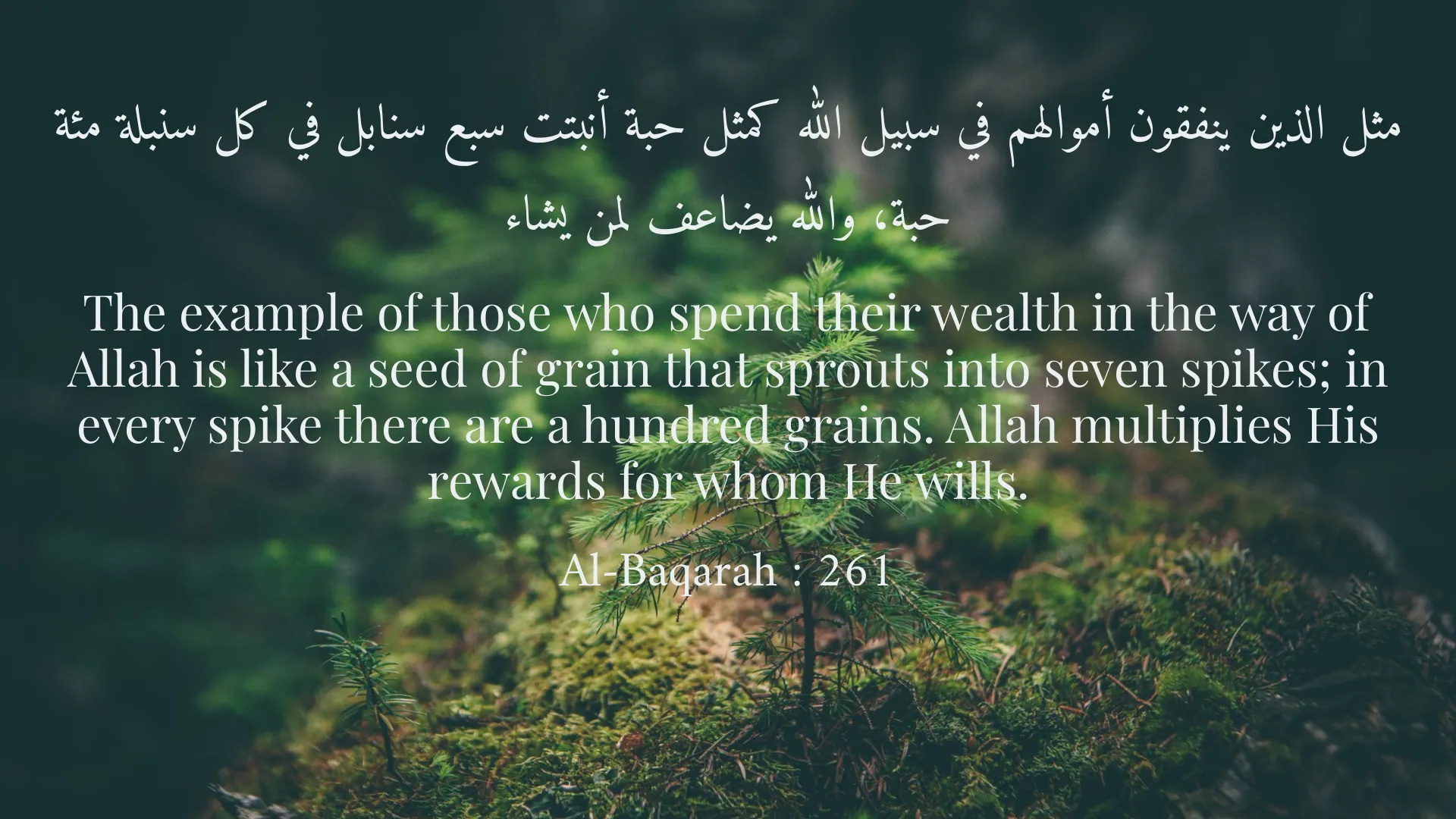
مثل الذين ينفقون أموالهم في سبيل الله كمثل حبة أنبتت سبع سنابل في كل سنبلة مئة حبة، والله يضاعف لمن يشاء
The example of those who spend their wealth in the way of Allah is like a seed of grain that sprouts into seven spikes; in every spike there are a hundred grains. Allah multiplies His rewards for whom He wills.
Al-Baqarah : 261
وَاعْلَمُوا أَنَّمَا أَمْوَالُكُمْ وَأَوْلَادُكُمْ فِتْنَةٌ ۖ وَأَنَّ اللَّهَ عَنده أَجْرٌ عَظِيمٌ
And know that your properties and your children are but a trial, and that Allah has with Him a great reward.
Al-Anfal : 28
Short Story
One day, Ali was busy working on his farm and pondering over the blessings he has in life. He remembered the verses of the Quran that stated that his effort in the path of God not only blesses his work but also serves as an investment in the Hereafter. Ali decided to be more active in good deeds and helping others, and over time, he noticed that his farm yielded more produce, and his spirit became calmer.