Quranic Answer
The Holy Quran, regarded as the ultimate guide for Muslims, is replete with wisdom that addresses various aspects of life, including the theme of friendship and companionship. It emphasizes the importance of surrounding oneself with righteous and virtuous individuals while cautioning against forming alliances with those whose intentions may be corrupt or malevolent. This article delves into specific verses from the Quran that convey these teachings, illustrating the significance of discerning relationships and the consequences they can have on an individual's faith and moral integrity. ### The Nature of Friendship in the Quran Friendship is often regarded as a vital aspect of human experience, and the Quran acknowledges this reality. However, it provides its followers with guidelines on the types of friendships they should cultivate. The nature of friendship, as described in the Quran, goes beyond mere social interaction; it is a bond that affects one's inner self and spiritual journey. ### Warning Against Unlawful Alliances In Surah Al-Ma'idah, verse 51, Allah warns believers: "O you who have believed, do not take the Jews and the Christians as allies. They are allies of one another." This verse has been the subject of extensive interpretation, emphasizing the idea that forming deep alliances with those who do not share one's faith can lead to detrimental consequences. The warning is not merely against specific individuals or groups; it transcends religious affiliation to highlight the importance of shared values and principles in friendships. Associating with those who are on a different path concerning faith and ethics can lead one away from the teachings of Islam and towards paths that may compromise their beliefs. This theme of caution encourages believers to be mindful of who they choose to engage with on a personal level. ### The Consequences of Malicious Associations Furthermore, the Quran does not shy away from elucidating the repercussions of associating with individuals who harbor malicious intentions. In Surah Al-Baqarah, verse 254, it states: "O you who have believed, do not consume one another's wealth unjustly or send it [in bribery] to the rulers in order that [they might aid] you [to] consume a portion of the wealth of the people in sin, while you know [it is unlawful]." This verse not only cautions against dishonest dealings but also underscores the intricate connection between one’s friendships and moral decisions. Engaging with those who perpetuate injustice can entrap individuals into unethical behavior, leading to further moral decay. It illustrates that friendships can either uplift one's spirit and virtue or drag them down into acts that are considered sinful. Such relationships may seem socially comfortable or profitable in the short term; however, they ultimately threaten the spiritual well-being of the believer. ### The Regret of Bad Companionship In Surah Al-Furqan, verse 27, Allah depicts a poignant scene from the Day of Judgment. It highlights the regrets individuals may have for their past associations with bad friends: "And the Day the wrongdoer bites on his nails, he will say: 'Oh, I wish I had taken with the Messenger a way.'" This verse serves as a reminder that the consequences of one's choices in companionship extend beyond this life, leading to reflection and remorse in the hereafter. This vivid imagery is a powerful tool in Islam, urging believers to reflect on their relationships in the present and to anticipate possible regrets they may face in the future due to the choices they make today. Bad companionship can lead to long-lasting regrets and a disconnection from the teachings of the Quran, ultimately affecting one's place on the Day of Judgment. ### Choosing Companions Wisely As the Quran emphasizes, the choice of companions is of paramount importance. Friends often serve as mirrors to our own behaviors and beliefs. Hence, in choosing companions, it is crucial for believers to align themselves with those who uplift their spirituality, encourage righteous deeds, and instill a sense of accountability. The teachings of the Quran encourage believers to cultivate relationships grounded in righteousness, compassion, and shared values. Those with whom we associate can have a profound impact on our faith, our choices, and our destinies. Therefore, believers should engage in self-reflection and take into account the qualities and intentions of those who enter their lives. ### Nurturing Positive Relationships In a world filled with distractions and varying belief systems, it is imperative that believers foster environments that are conducive to their spiritual growth. One way to do this is by surrounding oneself with individuals who pursue knowledge, exemplify honesty, and uphold justice in their dealings. Such friendships will not only provide comfort but also serve as a source of motivation to remain steadfast on the right path. The importance of positive relationships is also echoed in various Hadiths of the Prophet Muhammad (peace be upon him), which speak of the virtues of good company and friendship. For example, it is narrated that the Prophet said, "The example of a good companion and a bad companion is like that of the seller of musk and the blacksmith. From the seller of musk, you will either buy musk or enjoy its fragrance; as for the blacksmith, he will either burn your clothes or you will find a bad odor." This Hadith illustrates the transformative power of companionship and the importance of being in the presence of individuals who elevate one's status rather than detract from it. ### Conclusion In conclusion, the Quran's guidance on friendship and companionship is clear and poignant. It advocates for forming associations with those who share similar ethical principles and spiritual values while cautioning against forging ties with individuals whose intentions are not aligned with the path of truth. Believers must stay vigilant in choosing their companions, as these choices have significant consequences, both in this life and in the afterlife. By adhering to the teachings outlined in the Quran, individuals can cultivate meaningful and positive relationships, steering clear of associations that may lead to regret and degradation of faith. Ultimately, the quest for companionship should be rooted in righteousness, integrity, and a shared commitment to truth.
Related Verses
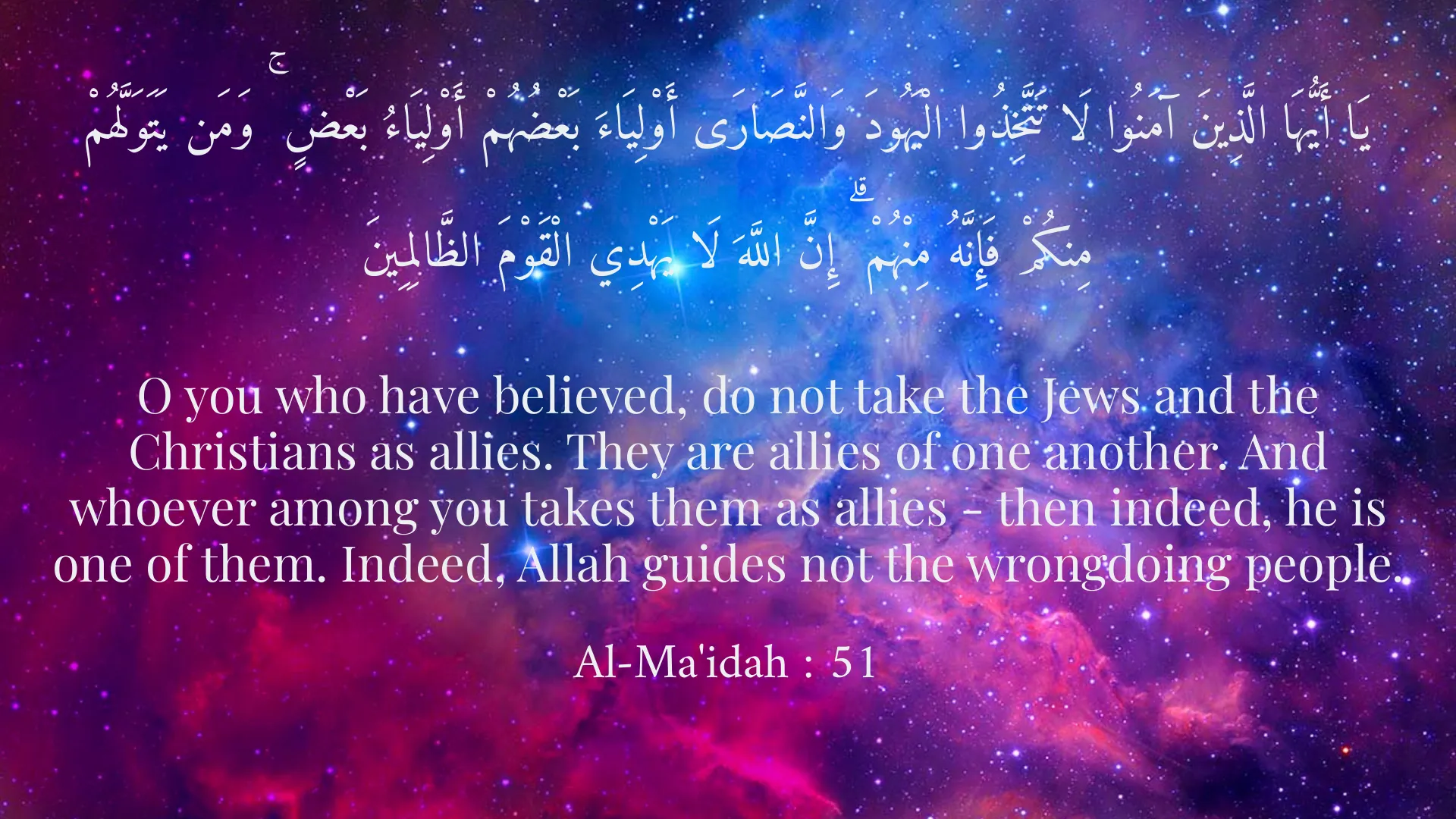
يَا أَيُّهَا الَّذِينَ آمَنُوا لَا تَتَّخِذُوا الْيَهُودَ وَالنَّصَارَى أَوْلِيَاءَ بَعْضُهُمْ أَوْلِيَاءُ بَعْضٍ ۚ وَمَن يَتَوَلَّهُمْ مِنكُمْ فَإِنَّهُ مِنْهُمْ ۗ إِنَّ اللَّهَ لَا يَهْدِي الْقَوْمَ الظَّالِمِينَ
O you who have believed, do not take the Jews and the Christians as allies. They are allies of one another. And whoever among you takes them as allies - then indeed, he is one of them. Indeed, Allah guides not the wrongdoing people.
Al-Ma'idah : 51
يَاأَيُّهَا الَّذِينَ آمَنُوا لَا تَأْكُلُوا أَمْوَٰلَكُمْ بَيْنَكُمْ بِالْبَاطِلِ إِلَّا أَن تَكُونَ تِجَارَةً عَنْ تَرَاضٍ مِّنكُمْ ۚ وَلَا تَقْتُلُوا أَنفُسَكُمْ ۚ إِنَّ اللَّهَ كَانَ بِكُمْ رَحِيمًا
O you who have believed, do not consume one another's wealth unjustly or send it [in bribery] to the rulers in order that [they might aid] you [to] consume a portion of the wealth of the people in sin, while you know [it is unlawful].
Al-Baqarah : 254
وَيَوْمَ يَعَضُّ الظَّالِمُ عَلَى يَدَيْهِ يَقُولُ يَٰلَيْتَنِي اتَّخَذْتُ مَعَ الرَّسُولِ سَبِيلًا
And the Day the wrongdoer bites his hands, he will say, 'Oh, I wish I had taken with the Messenger a way.'
Al-Furqan : 27
Short Story
One day, a young man named Ali was discussing with his friends. He was worried about befriending individuals who did not believe in knowledge and faith. One of his friends said, 'Don't worry; they are people too.' However, Ali recalled the verses of the Quran and responded, 'Allah has warned us in His book that bad friends can lead us astray.' He decided to choose friends who prioritized faith and ethics.