Quranic Answer
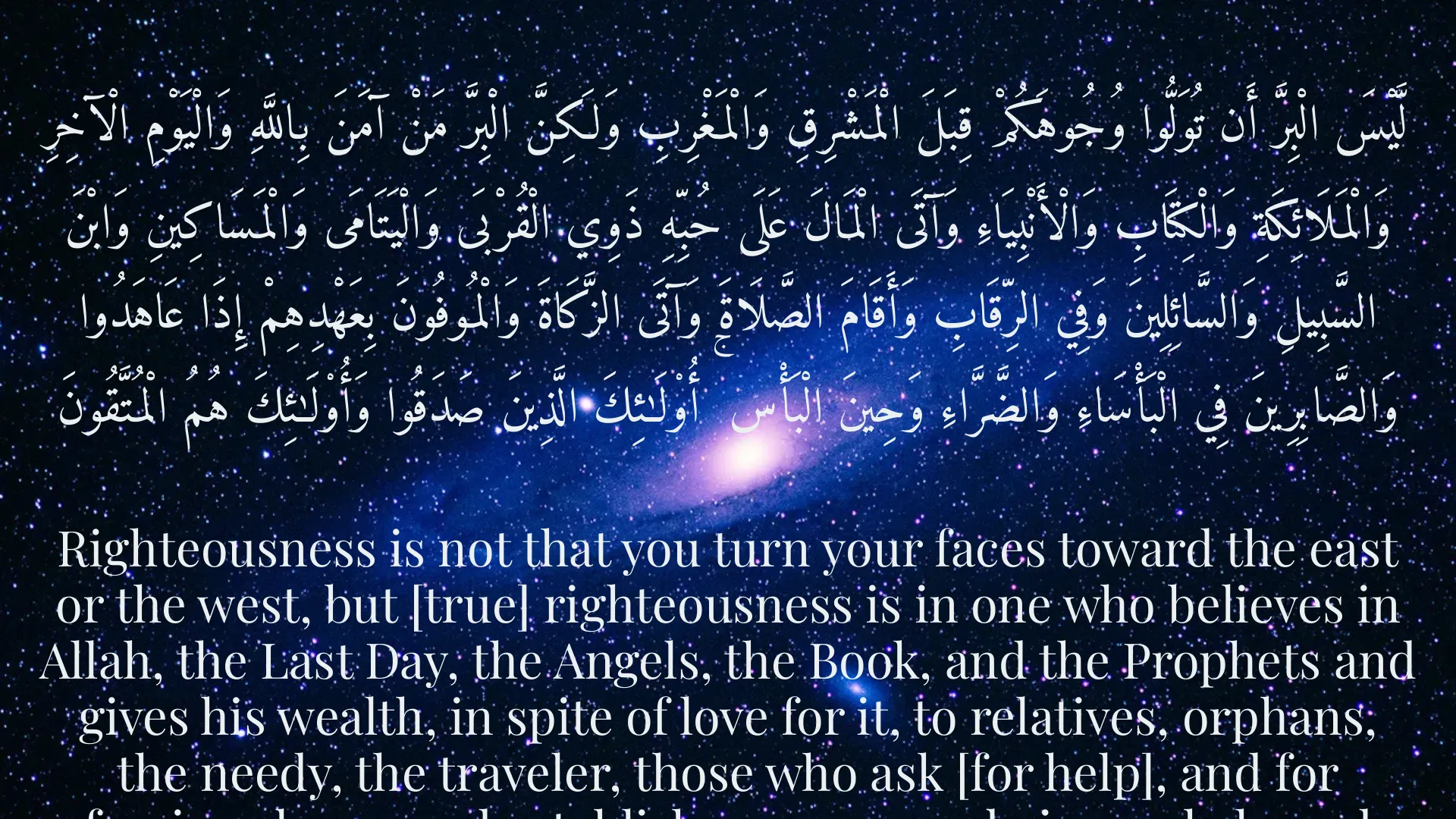
Honesty is an essential ethical principle that forms the backbone of trust and integrity in human interactions. Its relevance is profoundly emphasized in many religious texts, including the Holy Quran. In a world rife with deception and dishonesty, the teachings of Islam remind us of the fundamental importance of honesty and the positive effects it can have on both individuals and society as a whole. Through various verses in the Quran, the concept of honesty is intricately linked to righteousness, faith, community, and personal fulfillment. The significance of honesty is aptly encapsulated in Surah Al-Baqarah, verse 177, where Allah outlines the essence of true righteousness. The verse states: "Righteousness is not that you turn your faces toward the east or the west, but [true] righteousness is in one who believes in Allah, the Last Day, the Angels, the Book, and the Prophets and gives his wealth, in spite of love for it, to relatives, orphans, the needy, the traveler, those who ask [for help], and for freeing slaves; and establishes prayer and gives zakah; and those who fulfill their promise when they promise; and [those who are] patient in poverty and hardship and during battle. Those are the ones who have been true, and it is those who are the righteous." This verse emphasizes not only the importance of belief in God but also the manifestation of that belief through various acts of goodness and honesty. It explicitly mentions the necessity of fulfilling promises, which signifies that honesty encompasses reliability and trustworthiness. A person who is honest does not merely abstain from lying; they embody their values through actions that reflect integrity and truth. In a society where trust forms the basis of healthy relationships, the practice of honesty can lead to more cohesive and resilient communities. Additionally, the Quran addresses the importance of speaking the truth in Surah Al-Ahzab, verse 70, which states: "O you who have believed, fear Allah and speak words of appropriate justice." This verse reinforces that honesty should permeate both speech and action. Speaking the truth is not simply about refraining from deceit; it is about promoting justice and fairness in all aspects of life. The call to honesty extends beyond personal relationships—it encourages believers to uphold justice in societal structures and relationships, making it a cornerstone of Islamic ethics. Honesty is an essential trait for both personal and spiritual growth. Individuals are encouraged to cultivate their spirit and strengthen their faith in God, which naturally leads one to embrace truthfulness in their lives. The pursuit of honesty involves self-discipline and commitment. One practical way to adhere to this principle is to guard one's tongue and exercise control over one's speech. This means avoiding falsehood and refraining from gossip or dishonesty, which can damage relationships and trust. Moreover, honesty plays a critical role in developing strong relationships within families, friendships, and communities. When individuals commit to honesty, the resulting trust allows people to connect on deeper levels. It fosters an environment in which cooperation and understanding thrive, problems are resolved amicably, and conflicts are diminished. By being honest and transparent, individuals set a positive example for those around them, especially younger generations. In contrast, dishonesty leads to a multitude of negative consequences, both on personal and societal levels. It breeds mistrust, fosters suspicion, and can result in the breakdown of relationships. When dishonesty becomes a recurrent pattern, it damages reputations and destroys credibility, making it difficult for individuals to engage meaningfully with others. In a broader perspective, dishonesty can contribute to systemic corruption, injustice, and societal dysfunction. Therefore, promoting honesty is not just about individual morals, but about creating an ethical foundation within communities that can support collective growth and prosperity. Furthermore, honesty aligns closely with the values of accountability and responsibility. Adhering to one’s commitments and being truthful in one’s interactions means taking ownership of one’s actions, whether they lead to successes or failures. This is particularly relevant in professional environments, where ethical integrity is paramount. Employers and colleagues alike value honesty as it contributes to a culture of respect, collaboration, and productivity. Employers who are honest in their dealings attract honest employees, resulting in a dynamic workforce built on mutual trust. In today’s fast-paced and often competitive world, individuals are frequently faced with ethical dilemmas that test their commitment to honesty. The pressure to succeed can tempt individuals to engage in dishonest behavior, whether through fraud, deceit, or misrepresentation. However, the teachings of Islam unequivocally guide us toward integrity and transparency, urging believers to resist such temptations. By remembering the Quranic teachings and the example set by the Prophet Muhammad (PBUH), who embodied honesty in his life and interactions, individuals can navigate challenges with a strong moral compass. Additionally, honesty fosters a sense of self-respect and dignity. When individuals practice honesty, they cultivate a sense of internal peace and confidence. Knowing that one has acted truthfully not only in words, but also in deeds, allows for a greater sense of fulfillment and self-worth. This inward coherence reflects outwardly as well, positively impacting relationships and community interactions. In conclusion, honesty is a multifaceted ethical principle deeply embedded in the teachings of the Holy Quran. As outlined in various verses, honesty entails more than just refraining from lies; it involves the embodiment of truthfulness in actions and words, fulfilling promises, and advocating for justice. Upholding honesty can lead to individual growth and stronger community bonds, while dishonesty can erode trust, destroy relationships, and cause societal harm. By consciously choosing to embrace honesty and align actions with this fundamental principle, individuals not only honor their faith but also contribute to the cultivation of a more just and harmonious society. The path of honesty requires self-regulation, commitment, and strength of character, yet it is ultimately rewarding and essential for a fulfilling and righteous life.
Related Verses
لَّيْسَ الْبِرَّ أَن تُوَلُّوا وُجُوهَكُمْ قِبَلَ الْمَشْرِقِ وَالْمَغْرِبِ وَلَكِنَّ الْبِرَّ مَنْ آمَنَ بِاللَّهِ وَالْيَوْمِ الْآخِرِ وَالْمَلَائِكَةِ وَالْكِتَابِ وَالْأَنْبِيَاءِ وَآتَى الْمَالَ عَلَى حُبِّهِ ذَوِي الْقُرْبَى وَالْيَتَامَى وَالْمَسَاكِينِ وَابْنَ السَّبِيلِ وَالسَّائِلِينَ وَفِي الرِّقَابِ وَأَقَامَ الصَّلَاةَ وَآتَى الزَّكَاةَ وَالْمُوفُونَ بِعَهْدِهِمْ إِذَا عَاهَدُوا وَالصَّابِرِينَ فِي الْبَأْسَاءِ وَالضَّرَّاءِ وَحِينَ الْبَأْسِ ۚ أُو۟لَـٰئِكَ الَّذِينَ صَدَقُوا وَأُو۟لَـٰئِكَ هُمُ الْمُتَّقُونَ
Righteousness is not that you turn your faces toward the east or the west, but [true] righteousness is in one who believes in Allah, the Last Day, the Angels, the Book, and the Prophets and gives his wealth, in spite of love for it, to relatives, orphans, the needy, the traveler, those who ask [for help], and for freeing slaves; and establishes prayer and gives zakah; and those who fulfill their promise when they promise; and [those who are] patient in poverty and hardship and during battle. Those are the ones who have been true, and it is those who are the righteous.
Al-Baqarah : 177
يَا أَيُّهَا الَّذِينَ آمَنُوا اتَّقُوا اللَّهَ وَقُولُوا قَوْلًا سَدِيدًا
O you who have believed, fear Allah and speak words of appropriate justice.
Al-Ahzab : 70
Short Story
One day, two friends were sitting in the neighborhood square discussing their lives. One said, 'I always try to speak the truth, even if it puts me in danger.' The other, surprised, asked, 'Why?' His friend replied, 'Because I know honesty builds trust, and in the long run, it shapes a better life for me!' They realized that honesty is a reflection of one's true character.