Quranic Answer
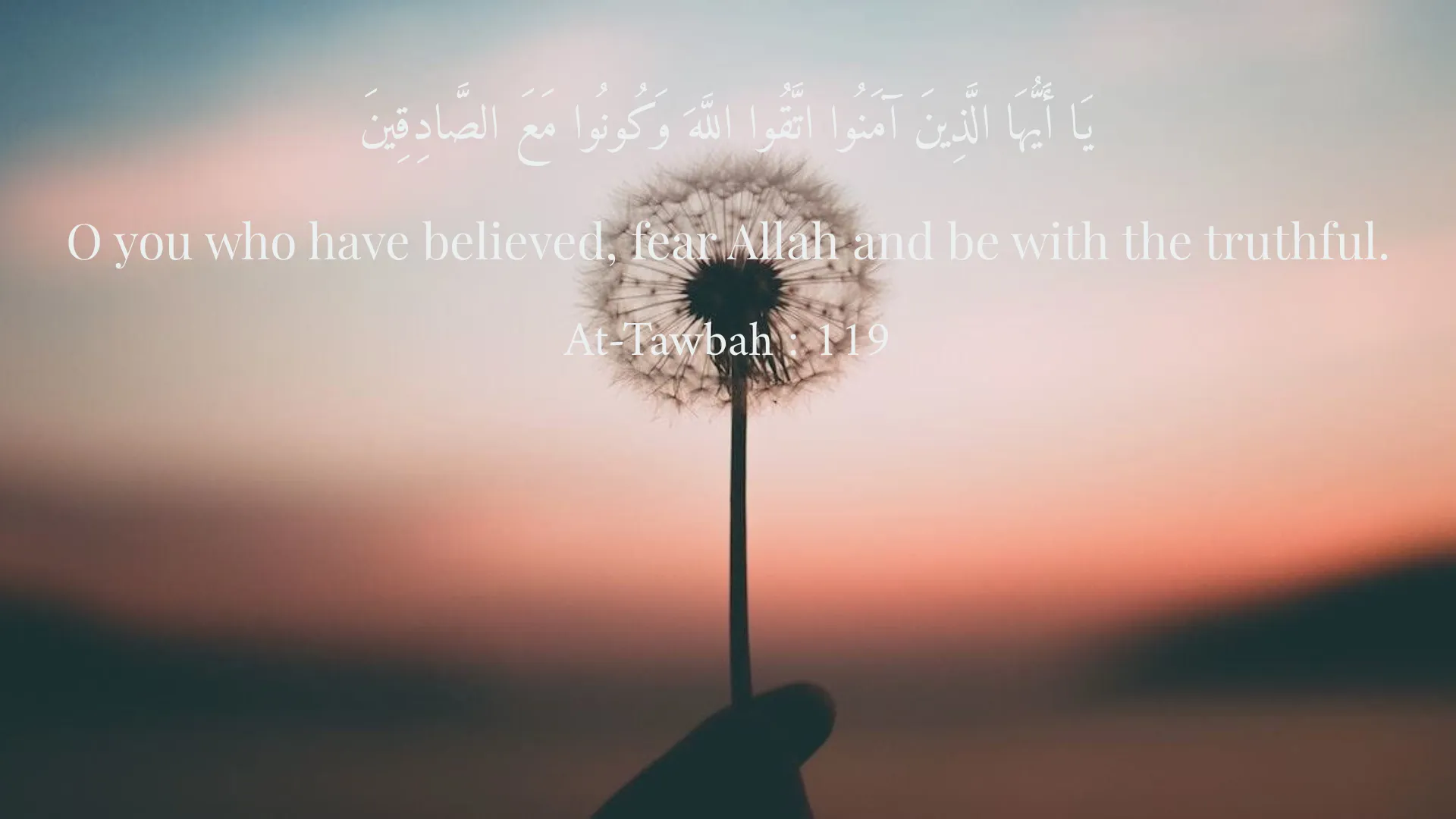
Being truthful is one of the most important characteristics of human beings, a trait that is universally valued across cultures and religions. One of the most profound and compelling articulations of the importance of truthfulness is found in the Holy Quran, the central religious text of Islam. The Quran serves not only as a spiritual guide but also as a manual for harmonious living. Its emphasis on truth and integrity resonates in the hearts of millions, guiding them towards a path of honesty and transparency in all aspects of life. In Surah At-Tawbah, verse 119, Allah instructs believers, saying: 'O you who have believed, fear Allah and be with the truthful.' This exhortation is pivotal, urging Muslims to align their lives with the principle of truth. It underscores the belief that one's faith in God should translate into ethical behavior; truthfulness is not merely an option but an essential requirement of the faith. To 'fear Allah' encapsulates the idea of awareness and consciousness of God in all actions, which naturally guides believers towards honesty. Being truthful is intricately linked to the concept of integrity. When individuals commit to honesty, they cultivate an environment where trust can flourish. The bond created through trust forms the foundation of healthy relationships, whether they are familial, social, or professional. For instance, in a family setting, truthfulness enables open communication, fosters understanding, and nurtures love, while in professional scenarios, it establishes reliability and enhances teamwork. The absence of honesty, on the other hand, can lead to misunderstandings, broken relationships, and a general atmosphere of deceit, which can be incredibly harmful. Moreover, another compelling reminder of the significance of honesty in the Quran can be found in Surah Al-Imran, verse 161, where God advises: 'Never lie to yourself or others, as lying leads to misery and the loss of trust.' This profound statement not only warns believers of the dangers of dishonesty but emphasizes the internal conflict that arises when one is not truthful. Lying creates a schism between one's public persona and internal reality, leading to feelings of guilt, anxiety, and despair. Such emotional turmoil detracts from personal peace and can adversely affect interactions with others. The Quran does not merely caution against dishonesty; it empowers individuals to prioritize truthfulness as a key component of their lives. By committing to make honesty a central focus, individuals can navigate life's complexities with clarity and purpose. This can be particularly challenging in situations where candor could lead to discomfort or conflict. However, it's important to recognize that the short-term pain of truth-telling can often prevent long-term hurt caused by deceit. The act of being truthful fosters resilience and strength, instilling a sense of capacity to face challenges head-on rather than cowering behind lies. Courage is a vital virtue that accompanies truthfulness. Each individual possesses the strength to live authentically; it often requires bravery to speak the truth in difficult situations. Addressing the discomfort that may arise during these moments is crucial. Embracing honesty—with compassion and understanding towards oneself and others—can lead to transformative connections. Additionally, honesty has a ripple effect; when one individual chooses to be truthful, it encourages others to do the same, creating a wave of honesty that permeates greater circles and fosters a culture of trust. Furthermore, the impact of truthfulness extends far beyond individual interactions; it influences larger societal dynamics as well. When communities are rooted in honesty, they are better equipped to address social injustices, inequalities, and corruption. Truth-telling can emerge as a critical tool in advocating for those whose voices may have been silenced. Strengthening the collective commitment to truth not only builds trust among community members but also galvanizes efforts towards social justice, empowerment, and progress. In a world that can sometimes favor convenience and comfort over truth, remaining steadfast in honesty may pose challenges. Yet, it is essential to remind ourselves that truth is like a compass; it guides the way even through turbulent waters. The commitment to be truthful necessitates introspection and constant reaffirmation of one's values. Additionally, surrounded by a society that often encourages dissimulation, it might be helpful to seek out resources or communities that honor and uphold the principle of honesty, reinforcing the belief that truth leads to liberation and fulfillment. In summary, being truthful stands as one of the cornerstones of ethical living, as seminally emphasized in the Holy Quran. As believers work to embody the values of honesty and integrity, they not only nurture their personal growth but also contribute to the collective welfare of their communities. By remaining committed to truthfulness in all situations—despite potential discomfort—individuals pave the way towards peace, trust, and an authentic life. As we reflect on our behavior and interactions, let us remember that truth is not merely a moral choice but a vital beacon that illuminates the path to a just and compassionate world. The Quran’s guidance serves as not only a spiritual anchor but also as a prescriptive framework for living life with integrity, ultimately leading to a fulfilled and harmonious existence.
Related Verses
يَا أَيُّهَا الَّذِينَ آمَنُوا اتَّقُوا اللَّهَ وَكُونُوا مَعَ الصَّادِقِينَ
O you who have believed, fear Allah and be with the truthful.
At-Tawbah : 119
وَمَا كَانَ لِنَبِيٍّ أَنْ يَغُلَّ ۚ وَمَن يَغْلُلْ يَأْتِ مَا غَلَّ يَوْمَ الْقِيَامَةِ
And it is not for a prophet to act unfaithfully. And whoever betrays, will bring what he has betrayed on the Day of Resurrection.
Al-Imran : 161
Short Story
Once upon a time, a man named Sajad sat with his friends, discussing the importance of truthfulness. Sajad recalled the verses of the Quran and said, 'Truthfulness is one of the keys to peace.' He decided to get closer to this principle every day and strive to be truthful not just in his words, but also in his actions. Gradually, his friends were inspired by him, and together they moved toward being more truthful.