Quranic Answer
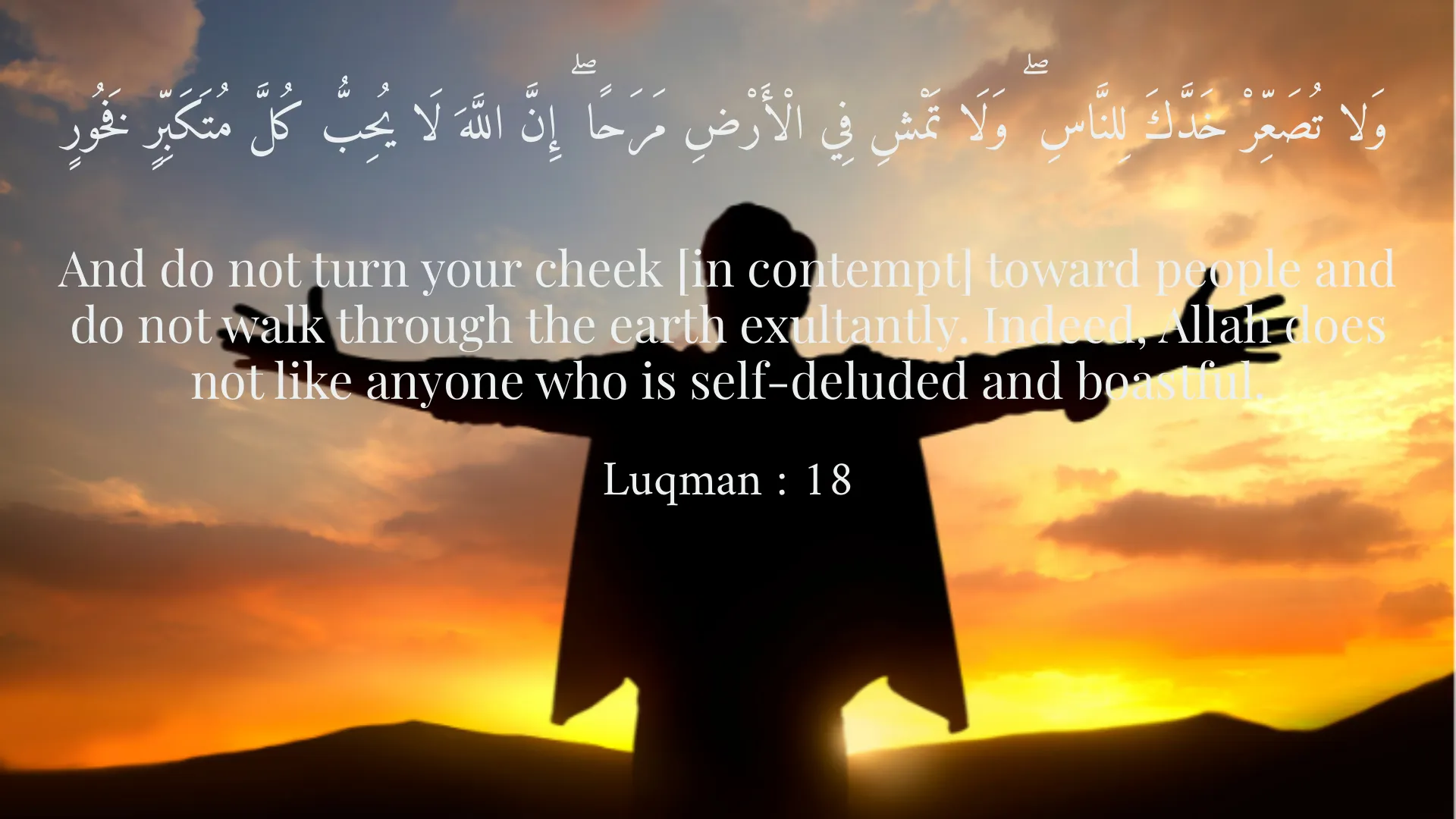
In the Holy Quran, arrogance and pride are recognized as undesirable traits that should be avoided. These negative characteristics can create a barrier between individuals and Allah, as they lead to the assumption of superiority over others and foster an ungrateful attitude towards the blessings that Allah has bestowed upon us. The Quran emphasizes humility and the importance of recognizing the inherent equality of all humans before their Creator. This notion is crucial in understanding how arrogance and pride are viewed in the teachings of Islam. An example of this can be found in Surah Luqman, verse 18, where Allah states: "And do not turn your cheek [in contempt] toward people and do not walk through the earth exultantly. Indeed, Allah does not like anyone who is self-deluded and boastful." This profound verse serves as a reminder for us to avoid seeing ourselves as superior to others. Instead, it calls for humility and modesty in our interactions within society. The act of turning away from people in disdain not only demonstrates arrogance but also disrespect. Walking through the world with an air of superiority disregards the collaborative nature of humanity, where mutual respect and understanding should prevail. Additionally, the Quran often describes the characteristics of righteous individuals. In Surah Al-Furqan, verse 63, Allah describes His obedient servants: "And the servants of the Most Merciful are those who walk upon the earth humbly, and when the ignorant address them [harshly], they say [words of] peace." This verse beautifully encapsulates the idea of humility while highlighting how the righteous choose to respond to ignorance. Instead of retaliating with anger or disdain, they respond with dignity and peace, which speaks volumes about their character. The Quran urges us to recognize that our worth is not determined by material possessions, social status, or personal achievements. Instead, true worth is derived from our faith, humility, and ability to treat others with kindness and respect. We are all equal in front of Allah, who created us and knows our hearts better than we do. This understanding can greatly aid in steering clear from harboring any arrogant feelings. One way to cultivate a mindset of humility is through the consistent remembrance of Allah. Engaging in dhikr, or the remembrance of God, reminds us of our humble origins and the greatness of Allah. When we contemplate Allah’s infinite wisdom and power, it becomes increasingly difficult to maintain a sense of self-importance. By recognizing our selves as mere creations of Allah, we can acknowledge our limitations, fostering humility and leading us to view others as equals. Performing good deeds and serving others is another avenue through which we can develop humility and modesty. By contributing positively to society, helping those in need, and engaging in acts of kindness, we shift our focus away from ourselves and redirect our attention to the betterment of others. This service-oriented mindset aligns with Islamic teachings and helps protect us against the vices of pride and arrogance. Moreover, the Islamic tradition places a great emphasis on community support and nurturing relationships. By engaging with others, listening to their stories, and empathizing with their struggles, we become more cognizant of the common challenges faced by humanity. This sense of community encourages humility and deters any inclination towards arrogance. Critical reflection is another essential aspect of eliminating arrogance from our lives. It is important to assess our attitudes, behaviors, and thoughts in light of Islamic teachings. Regularly reflecting on our intentions can help ensure they remain pure and rooted in humility. A simple prayer for guidance in becoming a better person can act as a powerful tool in this reflective process. The Prophet Muhammad (peace be upon him) serves as a prime example of humility in action. Despite being the leader of the Muslims and revered by many, he exhibited an incredible sense of modesty. He lived a simple life, interacted compassionately with everyone from the richest to the poorest, and always emphasized the importance of humility in his teachings. Following his example can help us steer clear of prideful behaviors and adopt an attitude of servitude to others. Being aware of the dangers of arrogance and pride also prepares us for effective social dialogue. When we approach conversations with humility, we create an environment conducive to understanding and respect. This not only benefits individual relationships but also fosters a sense of community where everyone feels valued and heard. Lastly, our remembrance of Allah and acknowledgement of His boundless mercy should keep us aware of our flaws and weaknesses. No one is perfect, and being aware of our shortcomings can further instill a sense of humility in our hearts. Islam teaches that we are all flawed individuals striving to better ourselves, and this understanding of our common humanity serves to build harmony and bridge any divides we might have with others. In conclusion, the Holy Quran provides clear guidance on the avoidance of arrogance and pride. By adhering to its teachings and embracing the messages of humility, we can cultivate a life that honors Allah’s creation and values the dignity of every individual. Through remembrance of Allah, the performance of good deeds, critical reflection, and by following the example set by the Prophet Muhammad (peace be upon him), we can steer our hearts away from pride and towards a life filled with humility, gratitude, and compassion for all. These teachings are not just remnants of ancient texts; they serve as essential pillars for building a just and harmonious society, and exemplify the very essence of our faith.
Related Verses
وَلا تُصَعِّرْ خَدَّكَ لِلنَّاسِ ۖ وَلَا تَمْشِ فِي الْأَرْضِ مَرَحًا ۖ إِنَّ اللَّهَ لَا يُحِبُّ كُلَّ مُتَكَبِّرٍ فَخُورٍ
And do not turn your cheek [in contempt] toward people and do not walk through the earth exultantly. Indeed, Allah does not like anyone who is self-deluded and boastful.
Luqman : 18
وَعبَادُ الرَّحْمَـٰنِ الَّذِينَ يَمْشُونَ عَلَى الْأَرْضِ هَوْنًا وَإِذَا خَاطَبَهُمُ الْجَاهِلُونَ قَالُوا سَلَامًا
And the servants of the Most Merciful are those who walk upon the earth humbly, and when the ignorant address them [harshly], they say [words of] peace.
Al-Furqan : 63
Short Story
Once upon a time, a young man named Saeed was facing difficulties in his life. He felt that everything belonged to him and he was very proud. However, one day, he met a group of poor people and saw their struggles firsthand. This experience profoundly affected him and made him look within himself. He realized that he needed to focus on humility and helping others. From that day on, Saeed transformed his life and devoted himself to serving others. He realized that true happiness lies in serving others and distancing oneself from arrogance and pride.