Quranic Answer
Benevolence: A Fundamental Human Trait in the Light of the Holy Quran Benevolence, characterized by love and kindness towards others, stands as one of the most significant human traits emphasized in the Holy Quran. In a world that often appears harsh and indifferent, the Quran provides a beacon of hope and guidance through its teachings on benevolence. It calls upon believers to embody the spirit of compassion, charity, and goodwill toward all humanity. This article delves into the importance of benevolence as depicted in various verses of the Quran, exploring its implications and applications in our daily lives. One of the key verses that highlight the significance of collective benevolence is found in Surah Al-Imran, verse 104, where Allah commands: 'Let there be from among you a group that invites to goodness and enjoins what is right and forbids what is wrong.' This verse serves as a foundational principle reminding us that it is not enough for individuals to embody goodness in isolation; rather, there exists a communal responsibility. The emphasis on a collective movement towards goodness underlines the importance of encouraging one another to engage in righteous actions and to abstain from immoral behavior. This notion of community plays a pivotal role in fostering a culture of benevolence, as it encourages individuals to support one another in their pursuits of goodness. In extending this understanding further, it is essential to reflect on Surah Al-Baqarah, verse 267, which states: 'O you who have believed, spend from the good things which you have earned and from that which We have produced for you from the earth.' Here, Allah not only recognizes the significance of wealth and material possessions but also emphasizes the importance of utilizing these resources benevolently. The call to share 'good things' highlights that our earnings and resources are blessings that should be used for the benefit of others. This perspective challenges us to reassess our attitudes towards wealth—encouraging us to view our possessions not merely as individual gains but as opportunities to uplift those around us. Benevolence, therefore, transcends mere financial assistance. It embodies a holistic approach to life, incorporating emotional, physical, and spiritual support to others. For instance, individuals facing financial hardships are a reminder of our duty to lend our hands unconditionally. In a time when economic difficulties can cloud the spirits of many, those who are able to extend help should do so with sincerity and empathy. Such acts of kindness not only alleviate immediate suffering but also illustrate the depth of communal ties, reinforcing the collective spirit that sustains societies. As individuals, we can bear witness to the fact that once a helping hand is extended, it opens the door for others to do the same, thereby fostering a continuous cycle of benevolence and support throughout a community. The Quran also highlights the importance of good deeds in all aspects of life. Surah Al-Mu'minun, verse 96 articulates this profoundly: 'Repel evil with that which is best.' This imperative signifies that our responses to others—be it in joy or hardship—should be rooted in positivity and fairness. Through this verse, we are reminded that our approach to conflict should not be retaliatory but rather constructive. The act of engaging with others by repelling negativity with goodness is not just a moral option but a divine directive that aims at nurturing harmonious relationships. Moreover, benevolence can be exhibited in numerous ways beyond financial means. For instance, consider offering comfort to someone going through a difficult time or providing emotional support to friends and family who need it. Simply being present for others during their struggles can go a long way in showcasing our benevolent nature. A listening ear, a compassionate heart, or even a simple act of kindness can transform a person’s day, reminding them that they are not alone in their challenges. In this respect, establishing good relationships with others and sharing our resources and talents become not only acts of kindness but reflections of our innate humanity. Furthermore, the character of benevolence can be expanded to include forgiveness and understanding. In our interactions, moments of conflict or misunderstanding may arise. Choosing to forgive and moving forward constructively is a powerful testament to the benevolent character one strives to achieve. Such actions highlight a commitment to maintaining peace and goodwill, essential components for any thriving community. Importantly, it is crucial to recognize that benevolence is not always a grand gesture; rather, it can reside in the small, everyday acts of kindness that we may take for granted. Holding doors open, offering a smile to a stranger, or volunteering our time for community service can all reflect the benevolent spirit that the Quran encourages. These small actions may seem insignificant in isolation, but they collectively foster a culture of care and support—a vital fabric for any society. Benevolence, as a fundamental human trait highlighted in the Quran, teaches us about the beauty of giving and the strength found in community. The divine message resonates through the ages, urging individuals to adopt an attitude of kindness and compassion. As we strive to adopt these teachings in our lives, we not only enhance our spiritual well-being but also contribute to building a more compassionate and understanding world. In conclusion, the call for benevolence in the Quran serves as a reminder of our responsibilities towards one another. By embodying the principles laid out in these holy verses, we are encouraged to create a more supportive and loving society. Through actions big and small, our collective efforts can nurture a community founded on compassion and benevolence. Let us carry these teachings into our daily lives, inviting goodness, enjoining what is right, and repelling evil with all the best within us.
Related Verses
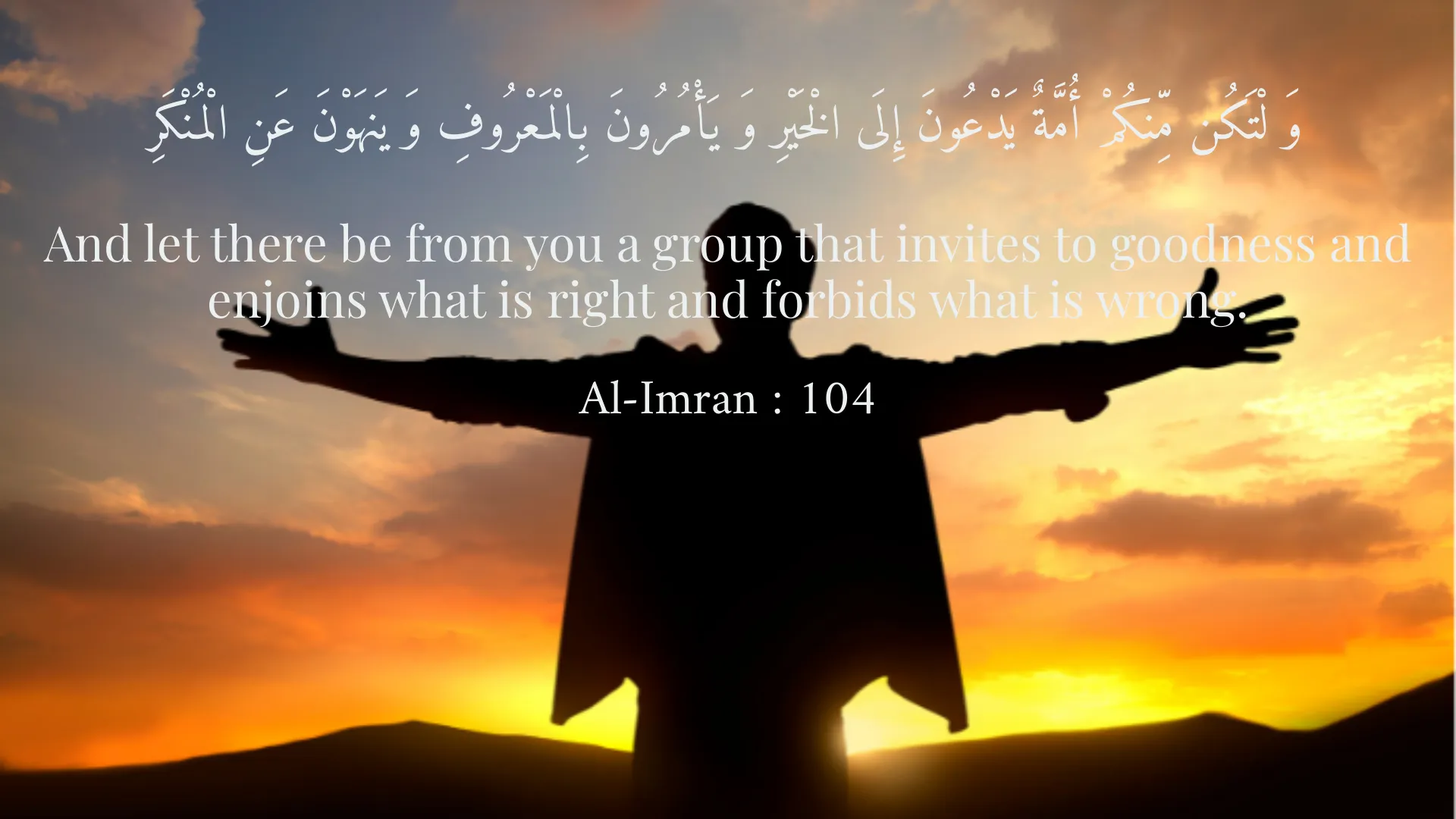
وَ لْتَكُن مِّنكُمْ أُمَّةٌ يَدْعُونَ إِلَى الْخَيْرِ وَ يَأْمُرُونَ بِالْمَعْرُوفِ وَ يَنهَوْنَ عَنِ الْمُنْكَرِ
And let there be from you a group that invites to goodness and enjoins what is right and forbids what is wrong.
Al-Imran : 104
يَا أَيُّهَا الَّذِينَ آمَنُوا أَنفِقُوا مِن طَيِّبَاتِ مَا كَسَبْتُمْ وَ مِمَّا أَخْرَجْنَا لَكُم مِّنَ الْأَرْضِ
O you who have believed, spend from the good things which you have earned and from that which We have produced for you from the earth.
Al-Baqarah : 267
فَادْفَعْ بِالَّتِي هِيَ أَحْسَنُ السَّيِّئَةَ
Repel evil with that which is best.
Al-Mu'minun : 96
Short Story
Once upon a time, a boy named Sajad lived in his neighborhood. He always helped others, and when he saw a neighbor in trouble, he made every effort to assist them. One day, his neighbor, due to illness, couldn't go to work, and Sajad decided to help them financially. This act brought hope and motivation to his neighbor, allowing them to continue their path to recovery. Through this, Sajad deeply understood the essence of benevolence and realized that helping others can truly change their lives.