Quranic Answer
Title: The Virtue of Generosity in the Quran: A Pathway to Spiritual Fulfillment Generosity is one of the most admired traits emphasized in the Quran, serving as a fundamental principle of charity and kindness within Islamic teachings. The sacred texts unveil generosity not merely as a moral obligation but as a profound act which fosters personal growth, community well-being, and divine blessings. In exploring the significance of generosity, we delve into its Islamic foundations, its profound implications for individual lives and communities, and practical ways that one can embrace this noble trait. The Quran articulates the importance of generosity through various verses, mirroring the essence of giving and sharing in the context of faith. In Surah Al-Imran, verse 92, Allah states, 'Never will you attain good until you spend in the way of what you love.' This powerful statement conveys a deep truth: true generosity is not measured by the mere act of giving, but rather by the willingness to part with one’s beloved possessions. It speaks to the selflessness required to share what is significant to us, urging believers to reflect on their priorities and values. This verse calls upon followers to develop a deeper understanding of what it means to give from the heart and to sacrifice for the well-being of others. Moreover, in Surah Al-Baqarah, verse 261, Allah provides a vivid metaphor of a seed that grows into seven ears, with each ear yielding a hundred grains. This imagery beautifully illustrates the immense rewards that come from acts of generosity, where a single, intentional act of giving can multiply and reap unforeseen benefits. The underlying message of such metaphors is clear: generosity does not lead to loss; rather, it acts as a catalyst for bountiful blessings, both in this life and the hereafter. To truly embody the spirit of generosity, it is essential to cultivate a sincere intention to help others. This internal aspiration sets the foundation for the practice of generosity. Without pure intentions, the act of giving loses its essence and becomes a superficial gesture. Therefore, it is crucial that individuals reflect upon their motives—doing good for the sake of Allah gives the act of generosity its true worth. When this intent blossoms in one’s heart, it naturally inclines one to assist others and share what they possess, leading to a fulfilling and enriched spirit. One of the most accessible areas to exercise generosity is with family and close friends. Small acts of kindness, such as providing support during difficult times or sharing resources, can have a significant positive impact. It is in these intimate circles that the seeds of generosity can be planted and nurtured. For instance, helping a family member in need by offering financial assistance, lending a hand with household tasks, or simply being present during tough moments creates a ripple effect of goodwill. The smallest gestures often carry profound meanings, inspiring others to pay it forward. Furthermore, generosity extends beyond familial bonds and friendships; it encompasses the broader community as well. Through charitable acts—donating time, skills, or financial resources to those in need within one’s community—individuals can contribute to societal well-being. There are countless organizations and initiatives aimed at helping the underprivileged, where participation not only embodies the spirit of generosity but also enhances social responsibility. Proactively engaging in community service, volunteering at shelters, or organizing fundraising events all serve as effective means to embrace this noble principle. Of equal importance is the acknowledgment of the spiritual and emotional benefits that accompany a generous lifestyle. By actively pursuing opportunities to give, individuals often experience a sense of fulfillment and peace, knowing that their actions contribute positively to the lives of others. This cultivates not only gratitude but also a strong connection with Allah, who promises His blessings upon those who spend in His cause. For every act of kindness, big or small, believers are assured a reward, thus reinforcing the notion that generosity is inherently rewarding. In addition, embracing generosity has a profound effect on mental health. Engaging in acts of kindness can elevate one’s mood, reduce stress, and foster a sense of belonging. Psychologically, when we engage in giving, we shift our focus from our own troubles to the needs of others, creating a positive feedback loop that enhances overall well-being. This altruistic approach lays the groundwork for a more compassionate society, built on mutual respect and support. It is important to note that generosity is not confined only to financial giving. Time and attention hold immense value in a world that often seems fast-paced and indifferent. Simply being present to listen or offer companionship to someone who is struggling can be just as impactful as monetary donations. Generosity in relationships fosters a deep connection and enhances emotional bonds, making it essential to practice in all avenues of life, from friendships to professional interactions. In conclusion, the concept of generosity, as emphasized in the Quran, serves as a guiding principle for individuals seeking to navigate life with purpose and compassion. Through sincere intent honed by the teachings of Islam, one can cultivate an ongoing disposition towards helping others. From family and friends to the wider community, the acts of generosity one performs not only enriches their own spirit but also creates a tapestry of kindness that uplifts society as a whole. By embracing generosity, we fulfill divine commandments and pave the way for a brighter future, grounded in love, solidarity, and shared blessings. Embracing this vital trait ultimately leads to peace within ourselves and radiates outward, influencing the lives of those around us.
Related Verses
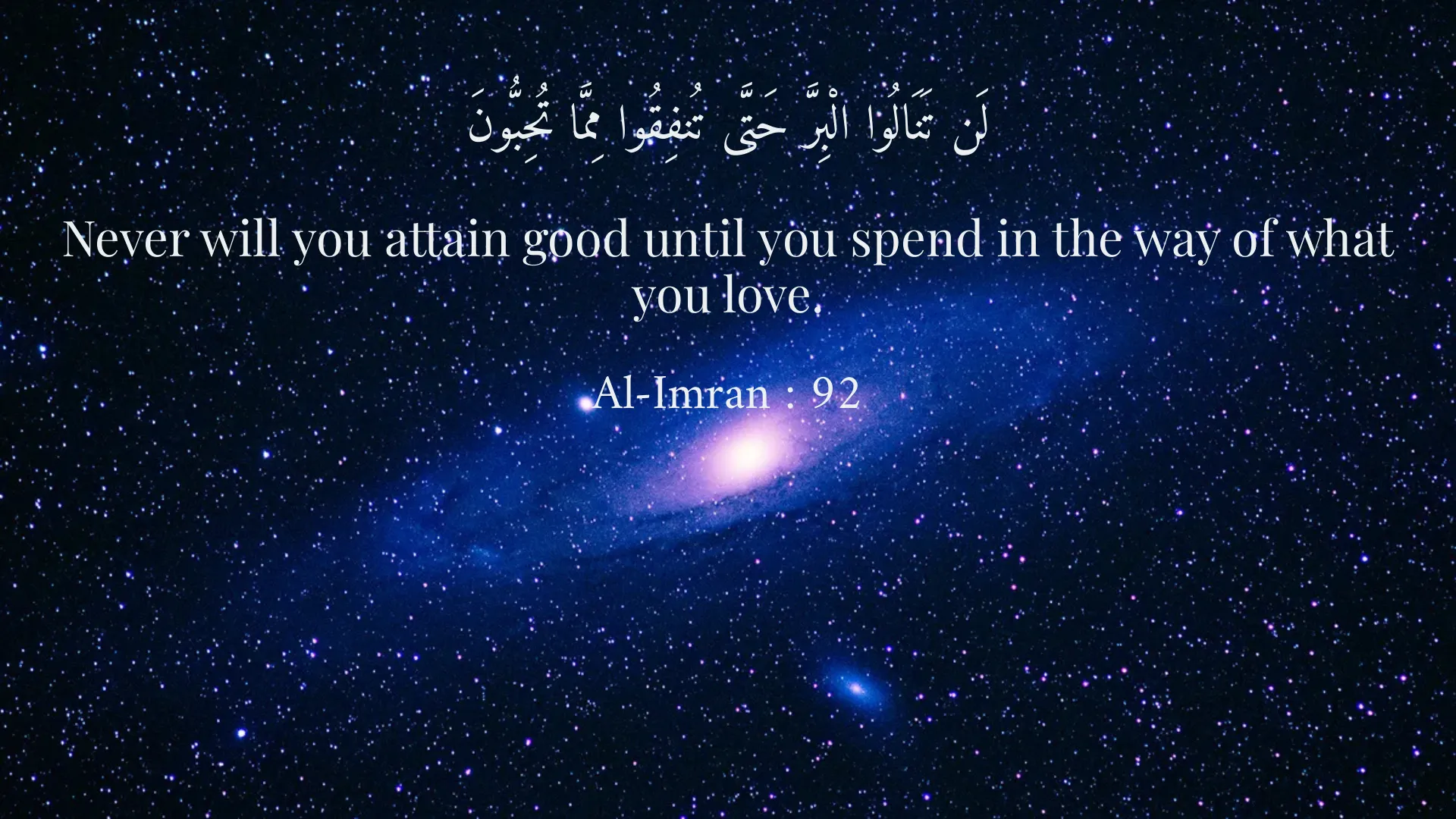
لَن تَنَالُوا الْبِرَّ حَتَّى تُنفِقُوا مِمَّا تُحِبُّونَ
Never will you attain good until you spend in the way of what you love.
Al-Imran : 92
مَثَلُ الَّذِينَ يُنفِقُونَ أَمْوَالَهُمْ فِي سَبِيلِ اللَّهِ كَمَثَلِ حَبَّةٍ أَنبَتَتْ سَبْعَ سُنبُلَاتٍ
The example of those who spend their wealth in the way of Allah is like a seed that grows into seven ears.
Al-Baqarah : 261
Short Story
One day, Adel was talking to a friend who mentioned that he always thinks about himself and struggles to part with his possessions. Adel shared a verse from the Quran, stating, 'Never will you attain good until you spend in the way of what you love.' That day, they decided to visit an orphanage and help the children together. They went with happy hearts and love for others, and they filled their lives with more blessings and light.