Quranic Answer
In the Holy Quran, the significance of patience is repeatedly highlighted, especially when facing oppression and injustice. Patience is not merely a passive act of waiting; it is an active engagement in persevering through hardship while maintaining one’s faith and resilience. The Quran speaks profoundly and descriptively about the various aspects of patience, addressing the believers and urging them to seek refuge in their faith during turbulent times. This article seeks to explore the deep connections between patience and faith as depicted in the Quran, illustrating how patience is a virtue that can empower individuals and foster a profound relationship with Allah. In Surah Al-Baqarah, verse 153, it states: "O you who have believed, seek help through patience and prayer. Indeed, Allah is with the patient." This verse serves as a reminder that during challenging times, when faced with injustice, seeking help from Allah through patience and prayer is not just advisable but essential. The verse directly connects patience with prayer, recognizing that both are necessary tools for coping with adversity. When believers actively engage in prayer while remaining patient, they cultivate an inner strength and resilience that can help them navigate the darkest of times. Moreover, the phrase "Indeed, Allah is with the patient" holds profound significance. It assures believers that they are not alone during their trials. This divine support reinforces the idea that patience is an act of reliance on Allah. When individuals patiently endure their struggles, they attract Allah's mercy and assistance. It is a profound encouragement to keep faith in the midst of chaos—an invitation to see one’s trials as a pathway to spiritual elevation. In Surah Al-Imran, verse 200, Allah commands believers saying, "O you who have believed, persevere and endure and remain stationed and fear Allah that you may be successful." This verse articulates a multi-faceted approach to dealing with adversity. The terms "persevere," "endure," and "remain stationed" advocate for a proactive attitude towards challenges and injustices. Patience is not synonymous with inaction; rather, it involves an active stance against injustices while relying on spiritual guidance. The Quran emphasizes that perseverance is a pathway to success. It is this success that is pleasing to Allah and essential for spiritual growth. The Prophet Muhammad (peace be upon him) exemplified patience through his life and teachings. His struggles against persecution, injustice, and the pressures of societal opposition highlight the vital role that patience plays in the journey of faith. Muslims are encouraged to turn to his life as a source of inspiration, especially during their own trials. The Hadith literature supports the Quranic message, reminding believers that patience is rewarded and that Allah, in His infinite wisdom, has a plan for every trial one might face. The Quran also offers a nurturing perspective on the nature of patience. It teaches that enduring hardships with a positive attitude results in spiritual and personal growth. In fact, the Quran illustrates stories of the prophets who faced tremendous trials but remained steadfast and patient. Take for instance the story of Prophet Job (Ayyub), who suffered immense physical and emotional pain yet demonstrated an unparalleled level of patience. Allah praised Ayyub for his steadfastness, and his story serves as an enduring lesson that patience can lead one to find solace and strength. Wielding patience effectively requires self-awareness and emotional intelligence. Believers must ask themselves crucial questions: Have we been able to learn lessons from the Quran in situations of oppression and injustice? Do we remember the stories of those who came before us? How can we practice patience in our daily lives, ensuring it serves as a means to attain peace and strengthen our bond with Allah? Patience is not about accepting oppression; instead, it is a form of strength that allows believers to maintain dignity and composure in adversarial situations. It reminds us that our worth is inherent, regardless of how others may regard us. Furthermore, patience can lead to self-reflection and introspection, creating opportunities for personal growth. As believers endure, they develop characteristics such as empathy, compassion, and a deep understanding of humanity’s struggles, which in turn enhances their spiritual and emotional well-being. In a world where immediate results are often demanded, the Quran’s emphasis on patience sends a powerful message. The current climate of societal unrest and injustice can cause frustration and despair; however, the Quran reminds us that patience is an essential virtue. It is imperative for individuals to embrace patience not only as a reaction to adversity but as a way of life—one that can shape their character and establish a deep spiritual connectivity with Allah. In conclusion, patience is a cardinal principle in Islam, reinforced through numerous verses in the Quran. It is a virtue that bears fruit in times of turmoil, nourishing the soul and fortifying one's relationship with Allah. Patience transforms adversities into opportunities for growth and enlightenment. As believers, it is vital to cultivate this invaluable trait in daily life, uphold it as a cornerstone of faith, and trust that Allah’s wisdom guides our journeys. When we practice patience, we assert our commitment to righteousness and retain the hope of eventual relief and success promised by Allah. Let us remember that with every trial, patience can be our champion, and in it, we find strength, resolve, and a deeper connection with our Creator.
Related Verses
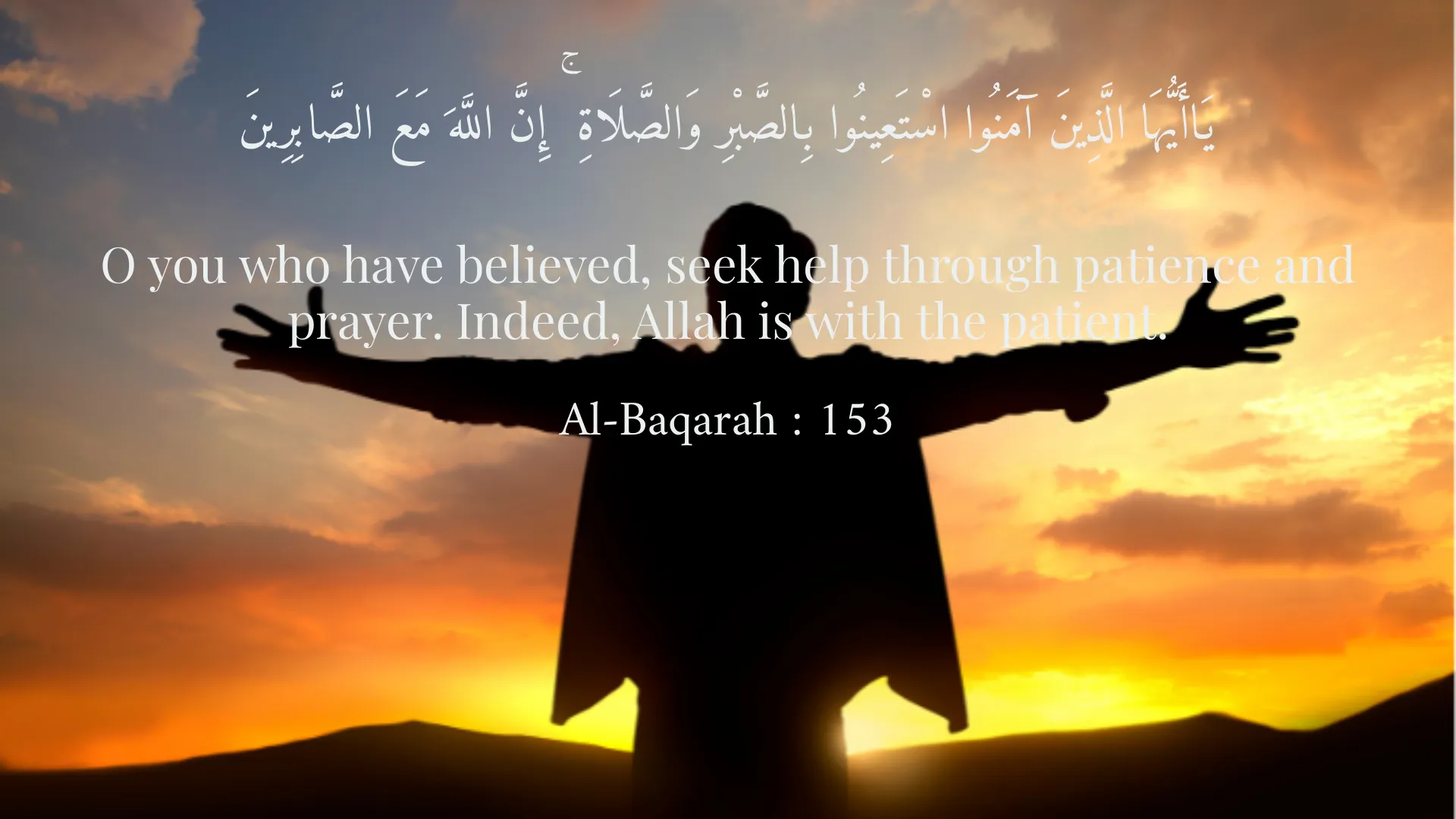
يَاأَيُّهَا الَّذِينَ آمَنُوا اسْتَعِينُوا بِالصَّبْرِ وَالصَّلَاةِ ۚ إِنَّ اللَّهَ مَعَ الصَّابِرِينَ
O you who have believed, seek help through patience and prayer. Indeed, Allah is with the patient.
Al-Baqarah : 153
يَا أَيُّهَا الَّذِينَ آمَنُوا اصْبِرُوا وَثَابِتُوا وَرَابِطُوا وَاتَّقُوا اللَّهَ لَعَلَّكُمْ تُفْلِحُونَ
O you who have believed, persevere and endure and remain stationed and fear Allah that you may be successful.
Al-Imran : 200
Short Story
Once upon a time in a small village, there was a man named Ali who always helped others. One day, he realized that one of his neighbors was oppressing him and taking his belongings. Heartbroken, Ali remembered the verses of the Quran and decided to be patient and put his trust in God. He maintained his composure through prayer and worship. After some time, his neighbor, regretting his actions due to Ali's kindness, decided to make amends. Through his patience and good character, Ali not only freed himself from oppression but also guided his neighbor onto the right path.