Quranic Answer
Lying is a pervasive issue that stands out as one of the most criticized moral vices across various cultures and religions, including Islam. In the teachings of the Holy Quran, lying is addressed with significant firmness and is condemned for its various detrimental effects on both an individual's character and society as a whole. The Quran serves as a guide for moral behavior, and within its verses, it provides insights into the nature of truth, honesty, and the consequences of deceit. A close examination of the Quran reveals profound wisdom regarding the importance of truthfulness and the inherent dangers associated with lying. In Surah Al-Baqarah, verse 42, Allah instructs believers with the admonition, "And do not exchange My verses for a small price, and fear Me." This powerful verse underscores that one should never forsake divine truths in pursuit of superficial gains, be they material wealth or social status. The phrase 'small price' can be interpreted as a warning against the allure of lies that promise immediate gratification but ultimately lead to moral decay and spiritual loss. The use of 'fear Me' in this context invites believers to remain conscious of Allah's presence and to uphold the integrity of their actions, ensuring that they stay steadfast in their faith and commitment to truth. The lack of awareness about the significance of honesty is highlighted further in Surah Al-Anfal, verse 30, where it states, "But most of them do not know." This verse speaks to a universal truth—many people remain oblivious to the value of faith and honesty, often allowing lies to infiltrate their lives without recognizing the potential harm. The Quran calls on individuals to seek knowledge and understanding, fostering an awareness of the implications of their words and actions. As individuals grow in their understanding of faith, they can begin to appreciate the vital role that honesty plays in their lives, which subsequently leads to a greater commitment to truth. To combat the vice of lying effectively, one must first cultivate a deep understanding of the truth and the moral behaviors that support it. This involves a twofold approach, requiring both self-awareness and a commitment to ethical standards that align with Islamic teachings. Strengthening one's faith is paramount, as it serves as a foundation for all virtuous behavior. In Surah Al-Ahzab, verse 70, Allah commands, "O you who have believed, fear Allah and speak words of appropriate justice." This verse directly compels believers to prioritize honesty in their speech. By encouraging us to engage in just discourse, Allah emphasizes that the words we choose to express have a direct correlation to our moral compass and spiritual wellbeing. Thus, adhering to divine guidance ensures that one remains truthful in all matters, fostering an atmosphere of trust and reliability in interactions with others. Establishing a sense of honesty within oneself is essential, but it requires deliberate effort and commitment. Engaging with sacred texts such as the Quran and the teachings of the Imams can significantly enhance one's moral framework. Consistent study of such texts fosters a deeper understanding of the essence of honesty and encourages individuals to embrace ethical behavior wholeheartedly. The Quran serves as a repository of wisdom that emphasizes the virtues of honesty, compassion, and humility, offering numerous stories and parables that depict the consequences of lying and the rewards of truthfulness. In addition to studying the Quran, strengthening one's connection with Allah through prayers and supplication is instrumental in nurturing honesty. Regular prayers serve as a reminder of Allah's omnipresence and reinforce the commitment to living a life marked by integrity. Private supplications allow individuals to seek guidance and forgiveness, aiding in the awakening of one's conscience and the rectification of wrongdoing. This spiritual practice fosters a state of continual reflection and self-improvement, ultimately leading to a decrease in the propensity to lie. Moreover, the societal implications of lying cannot be overlooked. Lies often erode trust within communities, leading to fractured relationships and a breakdown of social cohesion. In contrast, when individuals commit to honesty, they contribute to a culture of transparency and mutual respect, enabling communities to thrive. It is vital for believers to recognize that their pursuit of honesty has far-reaching implications that extend beyond their personal lives, affecting the moral fabric of society as a whole. In summary, the teachings of the Quran underscore the importance of adhering to truth and rejecting falsehood. Through constant engagement with divine guidance and self-discipline, individuals can cultivate an authentic sense of honesty that resonates with faithfulness and integrity. By nurturing this commitment to truthfulness, believers not only strengthen their relationship with Allah but also enhance the quality of their lives and the lives of those around them. Therefore, embarking on the path of honesty, grounded in Quranic principles, serves as a catalyst for personal growth and spiritual perfection, ultimately leading to a more just and harmonious society.
Related Verses
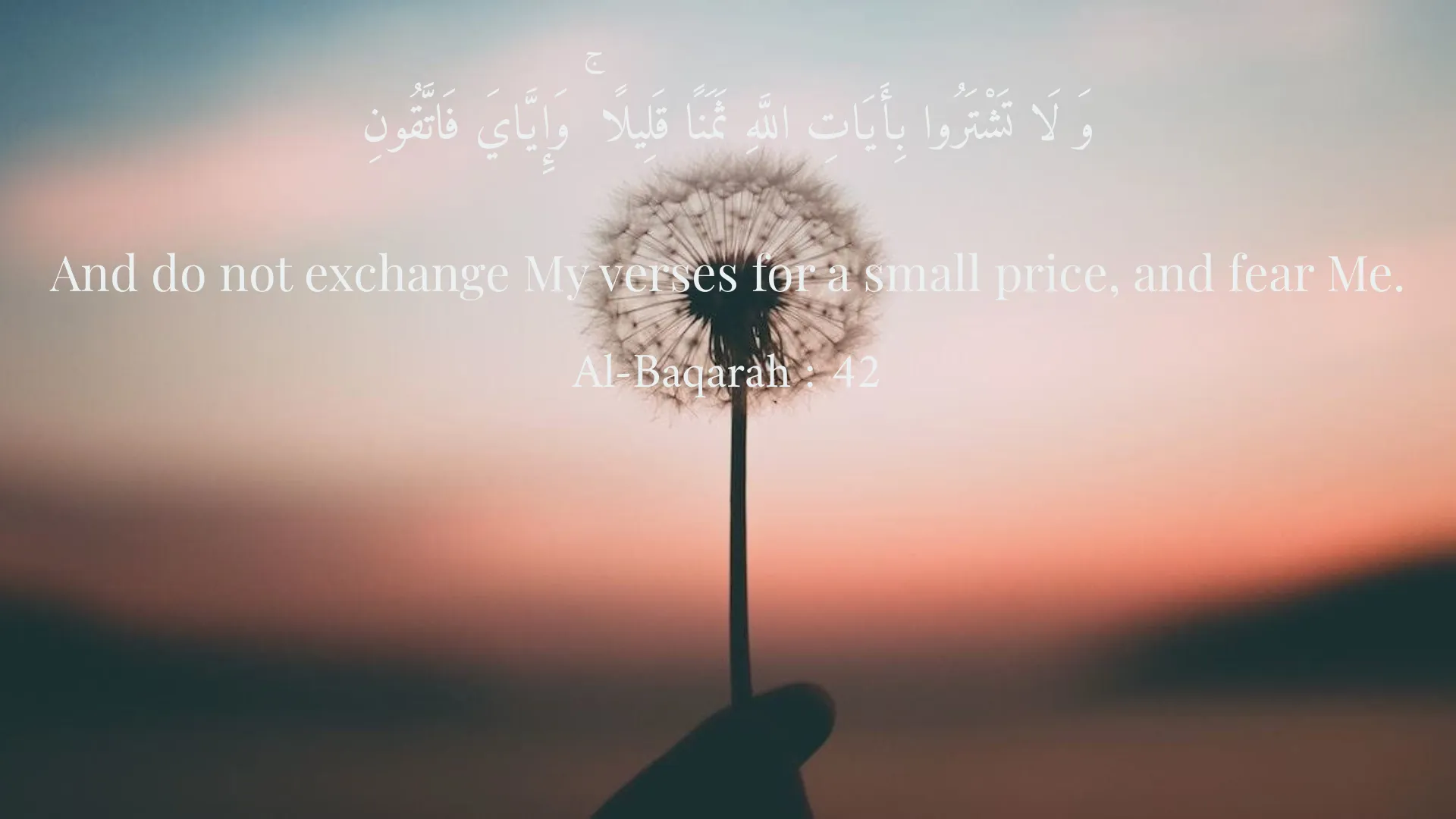
وَ لَا تَشْتَرُوا بِأَيَاتِ اللَّهِ ثَمَنًا قَلِيلًا ۚ وَإِيَّايَ فَاتَّقُونِ
And do not exchange My verses for a small price, and fear Me.
Al-Baqarah : 42
بَلْ أَكْثَرُهُمْ لَا يَعْلَمُونَ
But most of them do not know.
Al-Anfal : 30
يَا أَيُّهَا الَّذِينَ آمَنُوا اتَّقُوا اللَّهَ وَقُولُوا قَوْلًا سَدِيدًا
O you who have believed, fear Allah and speak words of appropriate justice.
Al-Ahzab : 70
Short Story
One day, a man named Hossein faced challenges due to lying in his relationships. He decided to turn to the Quran and reflect on its verses. After reading and contemplating the verses, Hossein emphasized his honesty and began to mend his relationships. Gradually, he realized that his honesty improved his relationships and built trust with others.