Quranic Answer
Forgiveness is a profound and multifaceted concept deeply embedded within the teachings of the Holy Quran. The act of forgiving not only reflects our relationship with others but also illustrates our relationship with Allah, the Supreme Being of Islam. This article explores the significance of forgiveness in Islam, its implications for personal and communal peace, and the benefits that arise from embracing this vital tenet of faith. ### Understanding Forgiveness in Islam In Islam, the concept of forgiveness is intricately tied to mercy, compassion, and love. Allah encourages individuals to forgive one another, underscoring the nature of divine mercy. As stated in Surah An-Nur, verse 22: "Let them pardon and overlook. Would you not like that Allah should forgive you? And Allah is Forgiving and Merciful." This verse not only highlights the importance of forgiving others but also presents forgiveness as a reciprocal act; just as we forgive, we too shall be forgiven by Allah. This reflects the crux of Islamic teachings: the circle of mercy in which individuals are encouraged to participate. The call to forgive is not merely a suggestion; it is accompanied by a reminder of Allah's attributes - Forgiving and Merciful. The implication here is profound: if we aspire to attain divine forgiveness, we must first practice forgiveness ourselves. This approach nurtures a culture of compassion and understanding within communities, allowing individuals to overcome grievances and move towards collective harmony. ### The Role of Forgiveness in Personal Growth Furthermore, forgiveness is pivotal to personal growth and emotional well-being. The act of forgiving can often be challenging, especially when dealing with deep-seated wounds. However, clinging to anger and resentment can lead to spiritual stagnation and emotional turmoil. In Surah Aal-E-Imran, verse 134 states: "Those who spend in the way of Allah during ease and hardship and who restrain anger and who pardon the people - and Allah loves the doers of good." This verse not only emphasizes the act of forbearance but also illustrates that those who forgive are beloved by Allah. By forgiving others, we take significant strides towards self-healing. Holding onto bitterness can weigh heavily on our hearts, causing distress and hindering our overall well-being. In contrast, when we release those grudges, we open ourselves to greater inner peace and emotional liberation. This transformation often requires a conscious effort to change our mindset, moving from feelings of resentment to one of empathy and understanding. ### Forgiving Oneself A crucial aspect of forgiveness often overlooked is the necessity of forgiving oneself. Many individuals struggle with feelings of guilt, shame, or self-blame, which can stem from past actions or decisions perceived as mistakes. To actively engage in forgiveness means not only to overlook the missteps of others but also to acknowledge one’s imperfections. Islam teaches that Allah’s mercy encompasses all, and thus individuals should extend that same grace to themselves. When one forgives oneself, it reflects a deeper understanding of the human condition – that everyone makes mistakes and that these do not define one's worth. Recognizing our fallibility allows us to embrace our humanity and learn from our experiences rather than dwell in self-condemnation. This shift in perspective can lead to healthier self-esteem and a renewed sense of purpose. ### The Benefits of Forgiveness The benefits of forgiveness extend far beyond individual well-being. Forgiveness can contribute to healthier interpersonal relationships, whether familial, social, or professional. It fosters an environment of trust and understanding, allowing for the resolution of conflicts and the strengthening of bonds. In communities where forgiveness is practiced, mutual respect and compassion thrive, leading to a more cohesive society. Moreover, the act of forgiving can serve as a form of social healing. In a world rife with divisions and animosities, embracing forgiveness can pave the way for reconciliation and cooperation among different groups. It embodies the essence of the Islamic spirit of unity and collective well-being. ### The Power of Prayer in Seeking Forgiveness In addition to these practical steps toward forgiveness, prayer plays a critical role in seeking Allah’s assistance in our journey of forgiving. Turning to Allah in supplication helps to cultivate a mindset of patience and understanding. Engaging in regular prayer encourages reflection and fosters a deeper connection with the divine, which can guide individuals on their path toward forgiveness. Praying for the strength to forgive others and ourselves can shift our perspectives and transform our hearts. Such prayers are a means of aligning our will with the divine will, seeking guidance, and inviting mercy into our lives. The spiritual grounding provided through prayer can facilitate emotional readiness for the sometimes challenging work of forgiveness. ### Conclusion In conclusion, the concept of forgiveness in Islam is one of profound importance, urging followers to mirror Allah's merciful attributes in their interactions. By practicing forgiveness, both toward others and oneself, individuals can experience numerous personal and communal benefits, fostering peace and understanding in a fractured world. Engaging in the act of forgiveness requires courage and compassion, attributes at the core of Islamic teachings. With prayer and the help of divine guidance, the journey toward forgiveness becomes not only a path of healing but also an opportunity for spiritual growth. Ultimately, embracing forgiveness is essential for achieving a harmonious life in accordance with the principles of Islam.
Related Verses
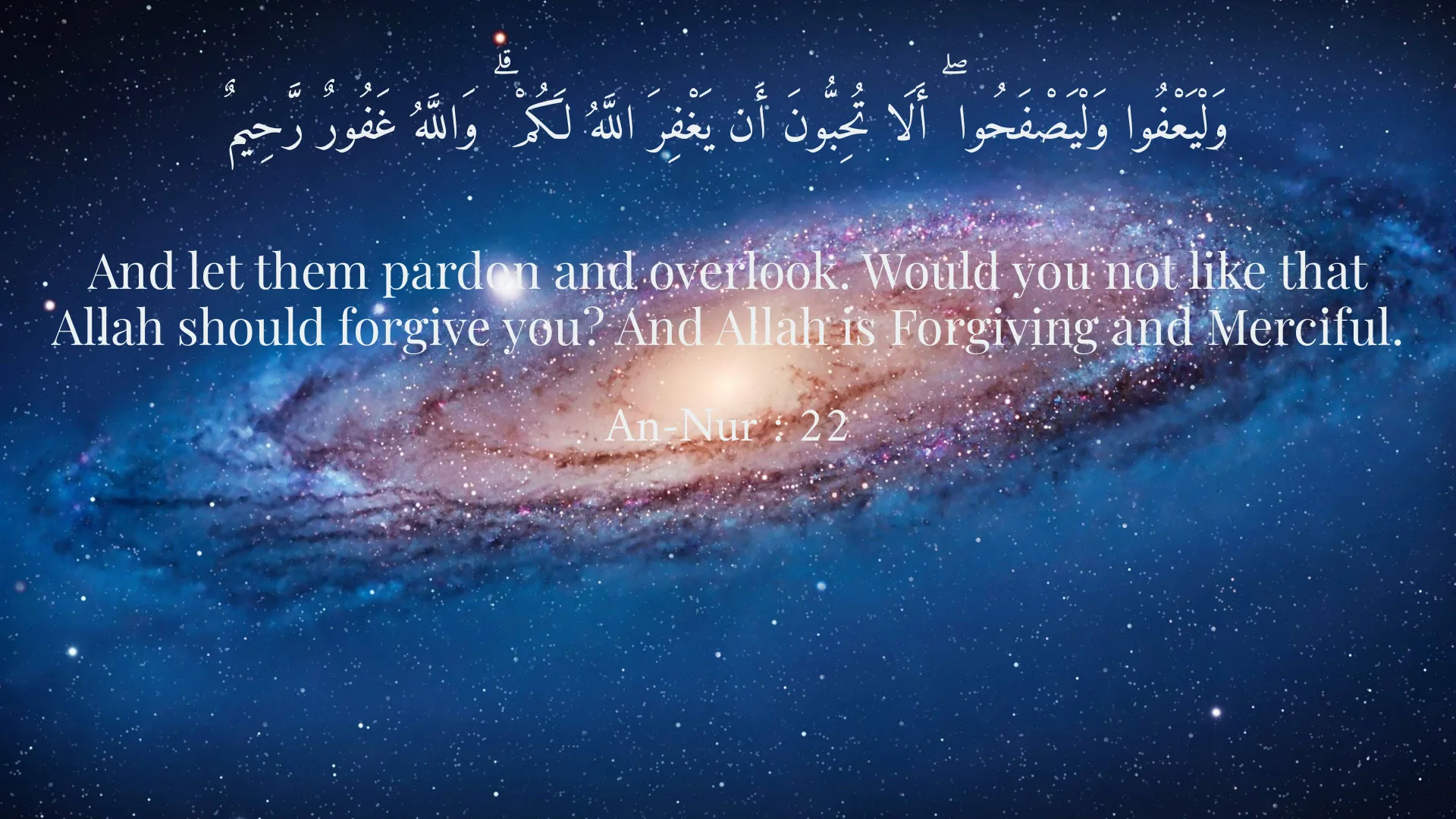
وَلْيَعْفُوا وَلْيَصْفَحُوا ۖ أَلَا تُحِبُّونَ أَن يَغْفِرَ اللَّهُ لَكُمْ ۗ وَاللَّهُ غَفُورٌ رَّحِيمٌ
And let them pardon and overlook. Would you not like that Allah should forgive you? And Allah is Forgiving and Merciful.
An-Nur : 22
الَّذِينَ يُنفِقُونَ فِي السَّرَّاءِ وَالضَّرَّاءِ وَالْكَاظِمِينَ الْغَيْظَ وَالْعَافِينَ عَنِ النَّاسِ ۗ وَاللَّهُ يُحِبُّ الْمُحْسِنِينَ
Those who spend in the cause of Allah during ease and hardship and who restrain anger and pardon the people - and Allah loves the doers of good.
Aal-E-Imran : 134
Short Story
In ancient times, a man named Hossein was deeply hurt by his friend. He decided to distance himself from their friendship due to the pain and suffering. However, one day in the mosque, the Imam said: 'If you wish for Allah's mercy, you must forgive others.' Hossein thought to himself and decided to forgive his friend and open his heart for love. After this act, a sense of joy and peace flowed within him.