Quranic Answer
Maintaining a pure heart towards others is one of the most fundamental Quranic and Islamic teachings, profoundly impacting both individual and collective well-being. The Holy Quran not only emphasizes outward acts of worship but also places immense importance on inner purity and fostering healthy relationships with fellow human beings. This concept is deeply rooted in Tazkiyah al-Nafs (self-purification), which is a primary objective of human creation and the mission of the prophets. Allah states in Surah Ash-Shams, verses 9-10: "He has succeeded who purifies it (the soul), and he has failed who corrupts it." This success undoubtedly encompasses maintaining a pure heart towards others, forming the cornerstone of a healthy society built on mutual love and respect. To keep one's heart pure, one must first abstain from the spiritual ailments that contaminate it. The Quran explicitly mentions several such afflictions and warns how these negative traits can not only destroy human relationships but also jeopardize one's spiritual health: 1. Suspicion (Zann): In Surah Al-Hujurat, verse 12, it is stated: "O you who have believed, avoid much [negative] assumption. Indeed, some assumption is sin." Negative suspicion is the root of many grievances and resentments, dirtying the heart towards others. These negative assumptions are often based on rumors, misunderstandings, or even personal fantasies, lacking any verifiable evidence. For a pure heart, one should always strive to interpret others' actions in the best possible light, unless there is clear and undeniable evidence to the contrary. This approach not only increases one's inner peace but also builds social relationships based on trust, understanding, and respect, fostering an atmosphere of friendship and cooperation. 2. Backbiting (Gheebah) and Spying (Tajassus): The same verse continues: "And do not spy or backbite each other." Backbiting means speaking ill of others behind their back in a way they would dislike, even if what is said is true. The Quran strongly condemns backbiting, likening it to eating the flesh of one's dead brother, signifying ultimate abhorrence. Spying involves invading people's privacy and searching for their hidden faults. Both actions not only damage an individual's reputation but also pollute the heart of the speaker and listener towards the absent person, planting seeds of malice and enmity. A pure heart always seeks to conceal faults and cover deficiencies, rather than exposing them, recognizing that Allah Himself is As-Sattar (The Concealer of Faults) and calls His servants to emulate this attribute. Protecting others' privacy and respecting their honor are signs of a sound heart. 3. Envy (Hasad): Although not explicitly mentioned as a heart contaminant towards others in a specific verse, envy is one of the greatest spiritual diseases that prevents one from wishing well for others. In Surah Al-Falaq, refuge is sought from the evil of the envier when he envies: "And from the evil of an envier when he envies." Envy, which is the desire for others' blessings to cease, severely harms the health of the heart and can lead to malicious actions and resentment. To keep the heart pure from envy, one must believe in divine decree and wish goodness for oneself and others, focusing on personal growth and progress instead of comparing oneself to others. When one is grateful for their blessings and understands that provision comes from Allah, there remains no room for envy. Conversely, the Quran teaches us how to purify our hearts towards others and even fill them with love and benevolence, building lasting and constructive relationships: 1. Forgiveness (Afw): In Surah Ali Imran, verse 134, Allah describes the righteous (Muttaqeen) as: "Those who spend [in the cause of Allah] during ease and hardship and who restrain anger and who pardon people - and Allah loves the doers of good." Forgiveness is the key to freeing the heart from grudges and bitterness. When we forgive someone, we lift a heavy burden from our hearts, opening the way for peace and love. This act demonstrates strength of character and nobility of spirit and carries immense reward from Allah. 2. Kindness and Ihsan (Excellence in Conduct): The Quran repeatedly commands kindness to others. "And speak to people good words..." (Al-Baqarah 2:83). "Indeed, Allah orders justice and good conduct and giving to relatives..." (An-Nahl 16:90). This kindness should manifest not only in action but also in intention and heart. Being good to others, even to those who have wronged us, purifies the heart and eradicates animosity, strengthening relationships. Ihsan is the highest level of goodness, where an action is performed in the best and most beautiful manner. 3. Brotherhood/Sisterhood (Ukhuwwah): In Surah Al-Hujurat, verse 10, it states: "The believers are nothing but brothers, so make reconciliation between your two brothers and fear Allah that you may receive mercy." This verse establishes the foundation of spiritual brotherhood/sisterhood and defines our responsibility towards one another. A pure heart desires good and welfare for its believing brothers and and sisters and avoids any form of discord or enmity. Striving for peace and resolving conflicts are among the most important manifestations of a pure heart in social interactions. 4. Remembrance of Allah (Dhikr): Inner peace and purity of heart are achieved through the remembrance of Allah. "Unquestionably, by the remembrance of Allah hearts are assured." (Ar-Ra'd 13:28). When the heart finds tranquility through the remembrance of Allah, it becomes less susceptible to temptations and negative emotions, gaining a greater capacity for forgiveness, love, and benevolence. Prayer (Salat), supplication (Du'a), reciting the Quran, and pondering over divine verses are among the best ways to connect with Allah and purify the heart. The remembrance of Allah reminds a person that everything is from Him and returns to Him, thus the heart should not be contaminated by fleeting worldly matters. 5. Acceptance of Flaws and Imperfections: Humans are prone to error. A pure heart accepts the imperfections of others and, instead of judging or blaming, prays for them and strives to focus on individuals' positive aspects rather than magnifying their faults. This perspective is rooted in divine mercy and compassion, which we are taught to emulate. Every human being has positive and negative aspects, and focusing on others' strengths, rather than their weaknesses, helps cultivate a positive outlook and maintain a pure heart. Ultimately, maintaining a pure heart is a continuous process that requires self-struggle (mujahadat al-nafs). It begins with sincere intention for the sake of Allah and continues with persistent effort to avoid moral vices and adorn oneself with virtues. The Holy Quran is a complete guide on this path, providing instructions and practical examples to help us achieve a pure heart full of love. This purity not only brings peace and blessings to our worldly lives, leading to stable and meaningful relationships, but also serves as a treasure for our afterlife, for on the Day of Judgment, only a "sound heart" (Qalb-e-Saleem) can truly benefit a person and lead to eternal salvation.
Related Verses
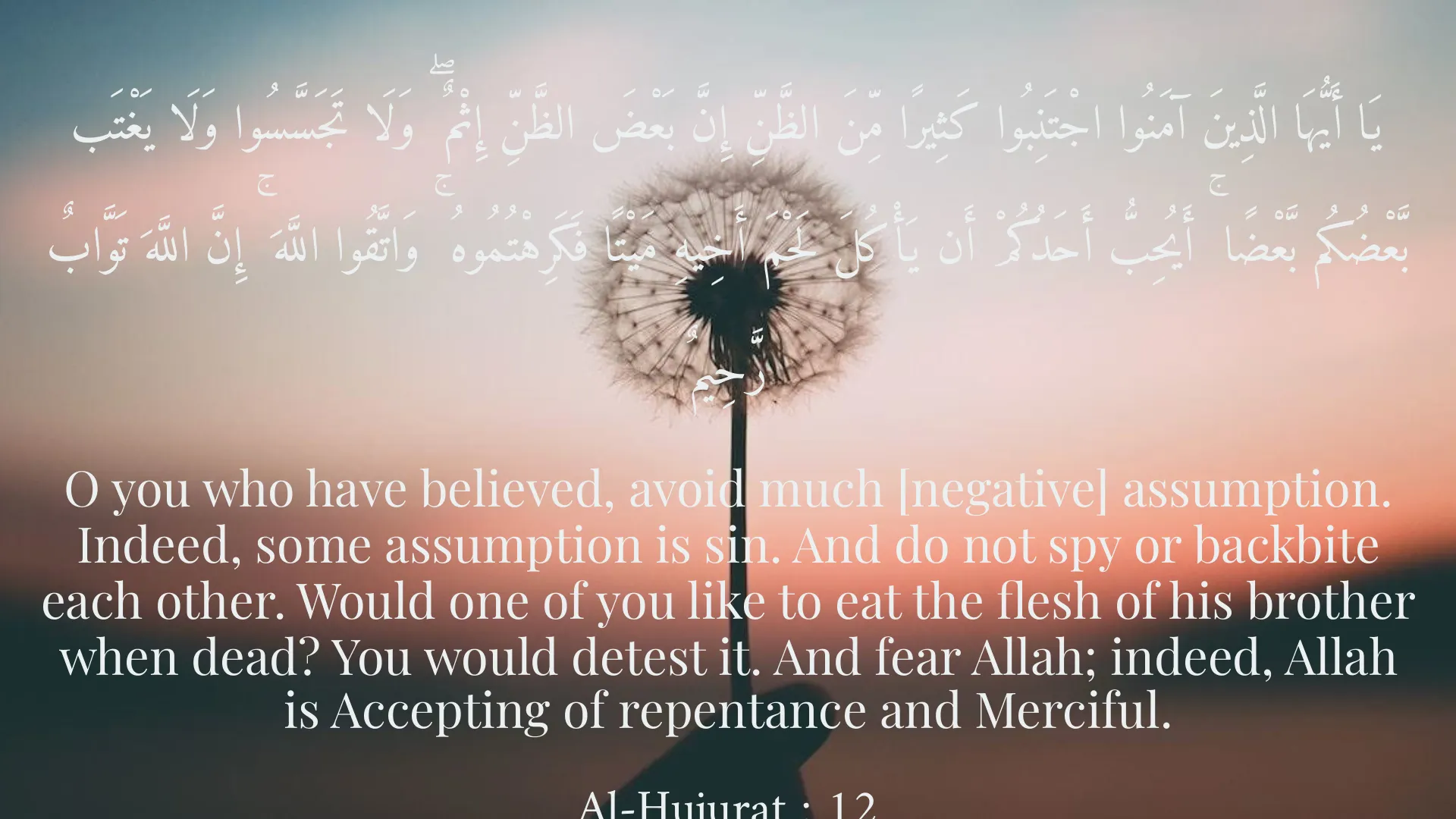
يَا أَيُّهَا الَّذِينَ آمَنُوا اجْتَنِبُوا كَثِيرًا مِّنَ الظَّنِّ إِنَّ بَعْضَ الظَّنِّ إِثْمٌ ۖ وَلَا تَجَسَّسُوا وَلَا يَغْتَب بَّعْضُكُم بَّعْضًا ۚ أَيُحِبُّ أَحَدُكُمْ أَن يَأْكُلَ لَحْمَ أَخِيهِ مَيْتًا فَكَرِهْتُمُوهُ ۚ وَاتَّقُوا اللَّهَ ۚ إِنَّ اللَّهَ تَوَّابٌ رَّحِيمٌ
O you who have believed, avoid much [negative] assumption. Indeed, some assumption is sin. And do not spy or backbite each other. Would one of you like to eat the flesh of his brother when dead? You would detest it. And fear Allah; indeed, Allah is Accepting of repentance and Merciful.
Al-Hujurat : 12
الَّذِينَ يُنفِقُونَ فِي السَّرَّاءِ وَالضَّرَّاءِ وَالْكَاظِمِينَ الْغَيْظَ وَالْعَافِينَ عَنِ النَّاسِ ۗ وَاللَّهُ يُحِبُّ الْمُحْسِنِينَ
Those who spend [in the cause of Allah] during ease and hardship and who restrain anger and who pardon people - and Allah loves the doers of good.
Ali Imran : 134
إِنَّمَا الْمُؤْمِنُونَ إِخْوَةٌ فَأَصْلِحُوا بَیْنَ أَخَوَیْکُمْ وَاتَّقُوا اللَّهَ لَعَلَّکُمْ تُرْحَمُونَ
The believers are nothing but brothers, so make reconciliation between your two brothers and fear Allah that you may receive mercy.
Al-Hujurat : 10
Short Story
It is narrated that in ancient times, there lived a pious man, a dervish, renowned for his inner purity and peaceful heart. Despite his apparent poverty, he was always smiling and joyful, harboring no malice in his heart. One day, a wealthy and troubled merchant, whose heart was clouded with envy and gossip about others, came to him and said: "O Sheikh, I lack nothing of worldly possessions, yet my heart is never free from grudges and envy. How can I be as calm and pure-hearted as you?" The dervish replied with a warm smile: "My friend, a person's heart is like a mirror. If the dust of envy, backbiting, and suspicion settles upon it, it will never truly reflect the image of truth, nor will the light of peace be reflected within it. I wash this mirror every day with the water of forgiveness and the remembrance of God, and I clear it of the pebbles of malice and ill-will. As long as your heart is preoccupied with finding fault and comparing yourself to others, it will never find peace. Overlook the wrongdoings of others, remember their good deeds, and wish well for everyone. Then you will see that the mirror of your heart has brightened, and eternal peace will manifest within it." The merchant benefited from this wise counsel and, by gradually acting upon it, tasted the sweet flavor of a pure heart and true tranquility. He realized that the greatest wealth is a heart free from deceit and impurity.