Quranic Answer
Title: Embracing a Non-Judgmental Life: Insights from the Quran Introduction In a world that often emphasizes competition and comparison, the notion of judging others becomes a pervasive habit among individuals. The Holy Quran, however, provides a different perspective for believers. Through its teachings, believers are reminded to focus on self-improvement and personal development rather than on the faults of others. This article will delve deeper into the verses that speak of judgment, self-improvement, and personal development, particularly focusing on Surah Al-Hujurat (49:12) and Surah An-Nisa (4:135). Judging Others: A Sin According to the Quran Surah Al-Hujurat, verse 12, offers profound guidance on the behavior expected from believers. Allah states, 'O you who have believed, avoid much [negative] assumption. Indeed, some assumption is sin.' This clarion call encourages believers to refrain from making baseless assumptions about others. In today's context, where rumors and misinformation can spread like wildfire through social media and communication platforms, this verse serves as a crucial reminder. When we engage in negative assumptions, we are not only failing to uplift our community but actively contributing to its decline. The Quran categorically labels certain assumptions as sinful, encouraging a culture where understanding and kindness overshadow judgment. Instead of looking outward and criticizing our peers, we are urged to redirect our thoughts toward self-reflection and personal growth. Self-Improvement: The Ultimate Goal In addition to advising against judgment of others, the Quran profoundly advocates for self-improvement. The path to building a more compassionate society starts with looking inward. How often do we engage in self-critique or self-assessment? This self-reflection is crucial because it helps us identify our strengths and weaknesses, enabling us to grow and develop as individuals. Moreover, engaging in personal development can involve various practices such as education, spiritual reflection, and creative expression. When we invest time in self-improvement, not only do we become better members of our community, but we also set an example for others. This creates a ripple effect, promoting an atmosphere where love, kindness, and understanding flourish. Empathy and Understanding: Filling the Gap Between People Moving beyond self-criticism, the Quran also emphasizes the importance of empathy and understanding. When Allah instructs believers to avoid negative assumptions, it inherently suggests that they should strive to understand their peers and their circumstances. Empathy involves putting ourselves in the shoes of others and seeing situations from their perspective. This ability to connect emotionally with others helps bridge gaps in understanding and allows us to appreciate our differences. Practicing empathy can involve active listening, engaging in meaningful conversations, and demonstrating a willingness to learn about others' experiences. By fostering empathy, we can counteract the natural inclination to judge and instead respond to others' actions with compassion and understanding. Practical Steps Toward Non-Judgmental Living To live a life free from judgment, practical methods can be employed. The teachings from Surah An-Nisa, verse 135, reinforces this by stating, 'O you who have believed, be persistently standing firm in justice.' The call for justice highlights the necessity for fairness and objectivity in our interactions with others. 1. Positive Thinking: One essential step is cultivating a mindset centered around positivity. By focusing on the strengths of others rather than their flaws, we naturally shift our behavior towards appreciation and understanding. Positivity also contributes to our mental well-being and helps foster more meaningful relationships. 2. Enhancing Empathy: Setting aside time to practice empathy can be as simple as initiating conversations with people from different backgrounds or engaging with those who approach life from a different perspective. Activities such as volunteering and community service can also provide opportunities to enrich our understanding of others' lives and challenges. 3. Effective Communication: Developing communication skills is another key factor that can reduce judgment. Engaging in open-ended discussions, asking questions, and being genuinely curious about others' thoughts can create a foundation for building connections rooted in mutual respect and understanding. 4. Respecting Differences: Rather than viewing differences as a divide, we should embrace them. Recognizing that diversity enriches our communities encourages a better understanding among various cultural, social, and personal backgrounds. Conclusion In light of the teachings provided in the Holy Quran, rejecting the habit of judgment in favor of love, kindness, and understanding becomes both a moral and spiritual responsibility for believers. As we reflect on our attitudes toward others, it is important to remind ourselves that self-improvement is an ongoing journey, not a destination. Fostering a non-judgmental society that prioritizes empathy, understanding, and positive thinking can lead to the creation of a more harmonious world in which individuals respect each other’s differences and promote justice. As individuals, we each hold the power to initiate change within ourselves and, consequently, in the wider spiritual community. Let us walk the path that the Quran has laid out for us—one of compassion, growth, and unity.
Related Verses
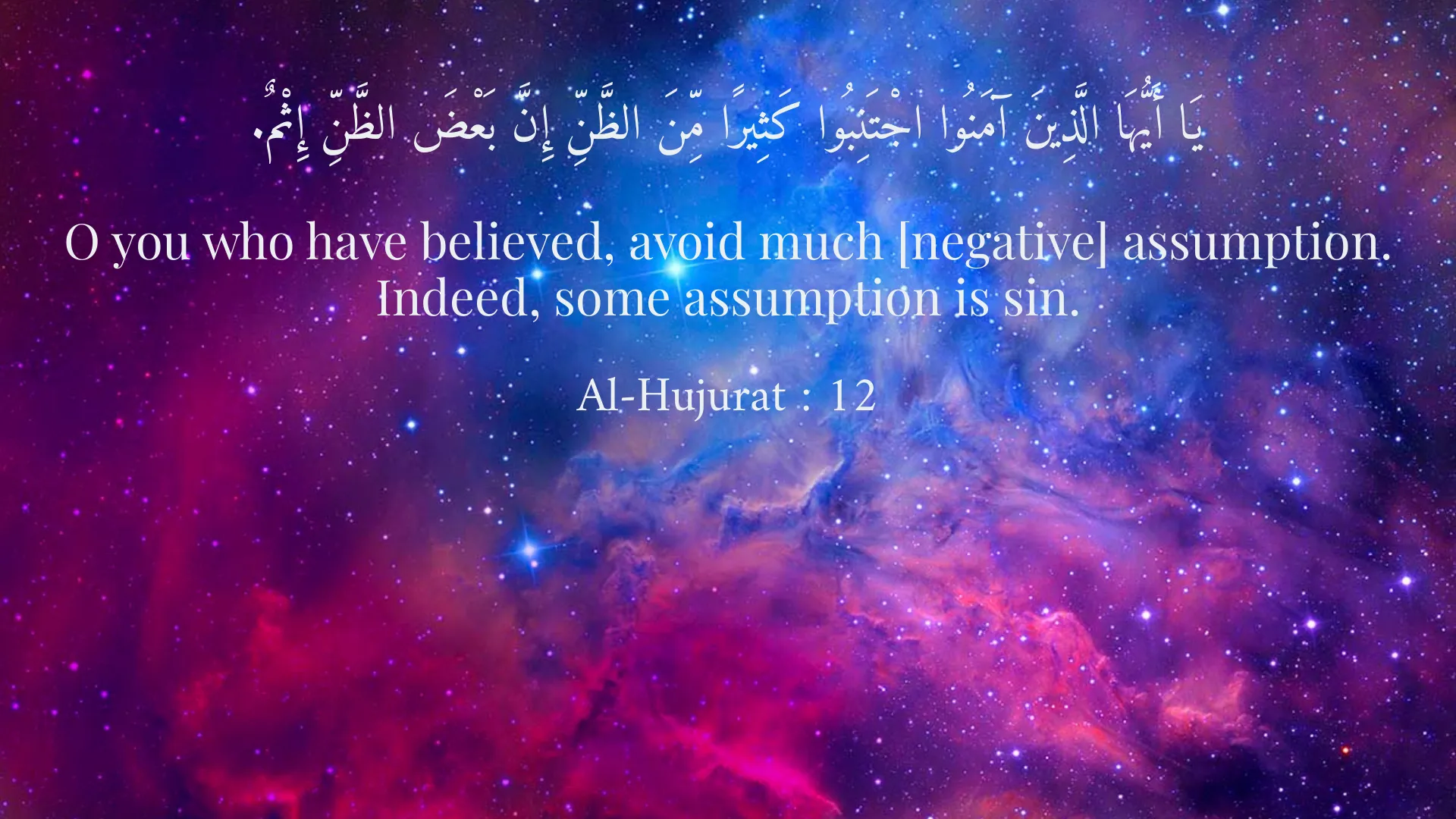
يَا أَيُّهَا الَّذِينَ آمَنُوا اجْتَنِبُوا كَثِيرًا مِّنَ الظَّنِّ إِنَّ بَعْضَ الظَّنِّ إِثْمٌ.
O you who have believed, avoid much [negative] assumption. Indeed, some assumption is sin.
Al-Hujurat : 12
يَا أَيُّهَا الَّذِينَ آمَنُوا كُونُوا قَوَّامِينَ بِالْقِسْطِ.
O you who have believed, be persistently standing firm in justice.
An-Nisa : 135
Short Story
One day, a man named Hasan decided to live without judging others. He noticed that whenever he criticized others, his heart remained uneasy. After a while, he decided to listen to the words of the Quran and strive to become a better person. He began to build closer connections with his friends and attempted to empathize with their situations rather than judge them. Soon, Hasan realized that his life had become considerably happier and more peaceful.