Quranic Answer
Honesty is the cornerstone of any lasting and meaningful relationship, and in the teachings of the Holy Quran, it holds an exceptionally high position as one of the fundamental human and spiritual virtues. The Quran emphasizes honesty not only in speech but also in all dimensions of a person's being, including intentions, actions, and commitments. Strengthening honesty in relationships is, in essence, a spiritual and ethical journey achieved through adherence to divine commands and self-discipline. This process requires awareness, willpower, and continuous practice, and its outcomes will benefit individuals both in this world and the hereafter. Human social and individual life cannot achieve its necessary correctness and stability without honesty, as trust, the primary product of honesty, is considered the foundation of any constructive interaction. One of the most pivotal Quranic verses that directly emphasizes the necessity of honesty is Surah At-Tawbah (9:119), which states: “YĀ AYTUHĀ ALLADHĪNA ĀMANŪ ITTAQŪ ALLĀHA WA KŪNŪ MAʿA AL-SĀDIQĪN” (O you who have believed, fear Allah and be with the truthful). This noble verse places honesty alongside divine consciousness (Taqwa), indicating that truthfulness is not merely an ethical trait but a prerequisite for attaining Taqwa and spiritual perfection. “Being with the truthful” also implies associating and aligning oneself with those who walk the path of honesty, and this companionship, in turn, helps reinforce honesty within the individual. To strengthen honesty in relationships, we must first internalize honesty as a fundamental principle within ourselves. This means not only refraining from lying but also adhering to the truth in all circumstances, even if it might seem disadvantageous to us. This encompasses honesty with oneself, with God, and with others. Honesty with oneself means recognizing strengths and weaknesses, accepting realities without self-deception, and avoiding self-delusion that distances a person from reality and hinders their growth. Honesty with God means sincerity in worship and intentions, and avoiding hypocrisy, because Allah is aware of hidden intentions. And honesty with others means transparency in words and deeds, and avoiding harmful and deceptive concealment that can destroy the foundation of trust. Honesty in speech and action must stem from an internal source, namely pure intention and fear of God, to be steadfast and true. Another verse that, in a way, refers to honesty in speech is Surah Al-Ahzab (33:70): “YĀ AYTUHĀ ALLADHĪNA ĀMANŪ ITTAQŪ ALLĀHA WA QŪLŪ QAWLAN SADĪDĀ” (O you who have believed, fear Allah and speak words of appropriate approval/straightforward speech). “Qawlan Sadīdā” refers to firm, clear, and unadulterated speech, free from any crookedness or deviation. This speech must be based on truth and, at the same time, be accompanied by wisdom and courtesy. In relationships, this means avoiding backbiting, slander, gossip, and any harmful or deceptive discourse. We must be careful that our words not only carry truth but are also uttered in a way that gains the trust of the other party and helps strengthen the relationship. This also includes fulfilling promises and avoiding false promises. Many relationships are weakened due to a lack of honesty in speech and the violation of covenants and agreements. The Quran strongly emphasizes fulfilling promises, as stated in Surah Al-Ma'idah (5:1): “YĀ AYTUHĀ ALLADHĪNA ĀMANŪ AWFU BI AL-ʿUQŪD” (O you who have believed, fulfill your contracts). Fulfilling promises is a symbol of practical honesty, demonstrating that an individual is not only truthful in speech but also committed to their obligations in action, and this commitment conveys a deeper understanding of honesty to the other party. Another crucial aspect of honesty is the concept of “trustworthiness” (Amanah), which is repeatedly emphasized in the Quran. Surah An-Nisa (4:58) states: “INNALLĀHA YA'MURUKUM AN TU'ADDŪ AL-AMĀNĀTI ILĀ AHLIHĀ” (Indeed, Allah commands you to render trusts to whom they are due). Trustworthiness is not merely about safeguarding people's property; it extends to keeping secrets, respecting the rights of others, and fulfilling responsibilities entrusted to us. In relationships, this means being confidential, respecting individuals' privacy, and being accountable for the roles and duties we hold within a relationship. Any betrayal of trust, whether material or spiritual, deals a fatal blow to honesty and trust in the relationship. For example, if a friend shares a secret with you, keeping that secret is a trust that strengthens your honesty in friendships and demonstrates your respect for their trust. This broad concept of trustworthiness is vital not only in personal relationships but also in social and professional interactions, forming the basis for a healthy and committed society. To practically strengthen honesty in relationships, the following points can also be considered: 1. Honesty in Intentions: Before any speech or action, examine your intentions. Are your intentions sincere and for the sake of Allah and the good of the relationship, or are they based on personal gain and concealment? Sincere intentions lead to sincere actions and have more stable positive effects. 2. Accepting Responsibility: When we make a mistake, we should honestly acknowledge it and refrain from justifying or deflecting blame. Admitting fault and striving to rectify it is a sign of honesty and personal maturity, and it increases the trust of the other party because it shows that you are reliable and responsible. 3. Reasonable Transparency: In close relationships, be as transparent as possible and avoid unnecessary concealment that could create suspicion. Of course, transparency does not mean indiscretion in expressing every truth, but rather avoiding deceit and concealing the truth in cases where its disclosure is vital for the health of the relationship. 4. Avoiding Hypocrisy and Pretence: The Quran strongly condemns hypocrisy. Honesty means that a person's inner and outer selves are aligned. Pretending to be something you are not gradually dries up the roots of trust in a relationship and causes distance between people. 5. Practicing Courage: Sometimes, telling the truth requires courage, especially when we know it might be met with a negative reaction. However, true honesty reveals itself in these difficult moments. By practicing this courage, honesty becomes more deeply rooted within us and transforms us into stronger and more trustworthy individuals. 6. Reflecting on the Consequences of Lying: Although lying might solve a problem in the short term, in the long run, it destroys the foundation of trust and inflicts irreparable damage on relationships. The Quran severely condemns lying and considers it a sign of hypocrisy and disbelief. Liars are deprived of divine guidance, and its severe consequences become apparent in individual and social life. Ultimately, strengthening honesty in relationships is a continuous process of growth and self-improvement, rooted in a deep belief in God and adherence to Quranic ethical values. Honesty not only fortifies our human relationships but also serves as a bridge towards divine pleasure and inner peace. A society built on honesty will be a healthier, more just, and more prosperous society. Therefore, every step we take on the path of honesty not only helps our personal relationships but also contributes to building a better world in accordance with Quranic teachings. This endeavor for honesty in every word and every action leads a person to attain the status of “Siddiqin” (the truthful ones), whose ranks are mentioned in the Quran after prophets and martyrs. This status is the worldly and otherworldly reward for honesty and steadfastness on the path of truth, and a sign of great divine success for those who have embraced honesty.
Related Verses
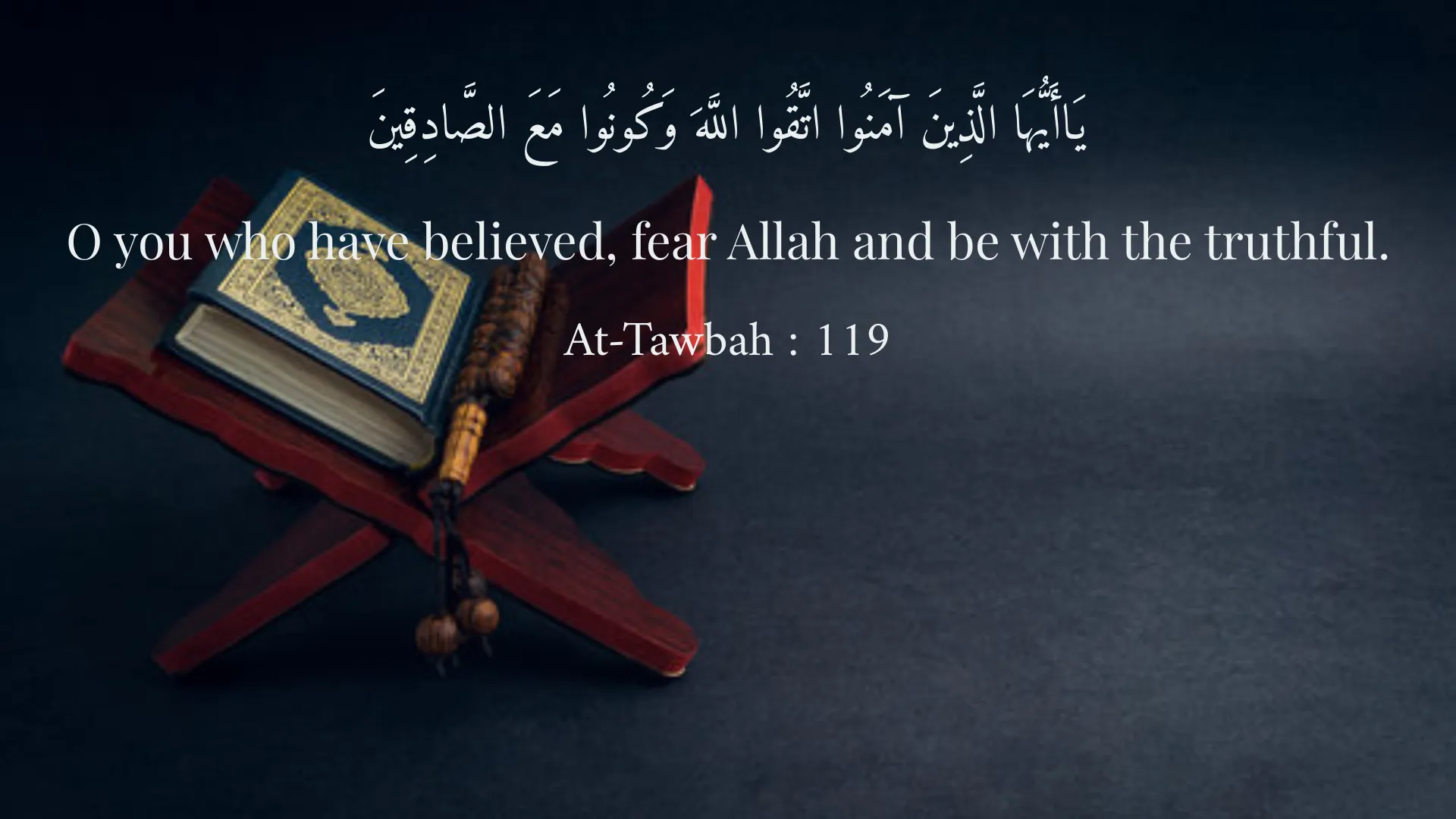
يَاأَيُّهَا الَّذِينَ آمَنُوا اتَّقُوا اللَّهَ وَكُونُوا مَعَ الصَّادِقِينَ
O you who have believed, fear Allah and be with the truthful.
At-Tawbah : 119
يَاأَيُّهَا الَّذِينَ آمَنُوا اتَّقُوا اللَّهَ وَقُولُوا قَوْلًا سَدِيدًا
O you who have believed, fear Allah and speak words of appropriate approval.
Al-Ahzab : 70
إِنَّ اللَّهَ يَأْمُرُكُمْ أَن تُؤَدُّوا الْأَمَانَاتِ إِلَىٰ أَهْلِهَا
Indeed, Allah commands you to render trusts to whom they are due.
An-Nisa : 58
Short Story
It is narrated that one day, a dignitary asked Sa'di, 'How should one learn and cherish honesty in their heart so that it remains steadfast in relationships?' Sa'di smiled and said, 'There once was a merchant in Shiraz whose reputation for honesty surpassed his wealth. He never sold defective goods and never broke a promise, even if it meant incurring a loss. One day, his ship sank at sea, and all his assets were lost. His friends advised him to slightly exaggerate prices or reduce the quality of his goods to compensate for the loss. But the merchant replied, 'My wealth is gone, but my good name and people's trust in me remain. How can I, for a few paltry dirhams, squander the capital of my life, which is honesty?' He continued his work with the same truthfulness and integrity as before. It wasn't long before people flocked from all directions to trade with him, knowing that his word was true and his deeds were just. Gradually, not only were his losses recovered, but he amassed even greater wealth than before. And thus, this merchant became an example for all that honesty is the best capital and the most enduring way to gain trust and maintain relationships. So, my friend, if you wish your relationships to be firm, cherish honesty in your heart like a precious treasure.'