Quranic Answer
True love is an expansive and profound concept that transcends mere emotion, functioning instead as a guiding principle rooted deeply in spirituality and ethics. Within the context of the Holy Quran, several verses highlight the centrality of love, particularly the love for God and His creations. Understanding these dimensions of love can illuminate the way we interact with our surroundings and how we cultivate our relationships with both the Divine and humanity. The Quran positions love as a critical foundation for both faith and practice, and this relationship is articulated explicitly in Surah Al-Imran, verse 31, where Allah states, "Say, if you truly love Allah, then follow me so that Allah will love you and forgive your sins." This verse encapsulates the idea that love for God is inseparably linked to obedience and loyalty. In essence, genuine love manifests in the willingness to follow divine guidance and teachings. It indicates that love is not merely an abstract feeling but requires action and adherence to a prescribed path of righteousness. Furthermore, the concept of love is expanded upon in Surah At-Tawbah, verse 24, in which believers are reminded of the scale of their affections: "Say, if your fathers, your sons, your brothers, your wives, your relatives, and the wealth which you have obtained are more beloved to you than Allah and His Messenger, then wait for Allah’s command." This powerful verse emphasizes that true love should prioritize God and His Messenger above all worldly attachments. It challenges believers to reflect on the priorities of their hearts and recalibrate their allegiances, suggesting that an unyielding attachment to anything other than God can impede spiritual growth. Moreover, the Quran delineates a more expansive interpretation of love, one that encompasses kindness, compassion, and altruism. In Surah Al-Baqarah, verse 177, Allah states: "Righteousness is not that you turn your faces toward the east or the west, but true righteousness is in one who believes in Allah, the Last Day, the Angels, the Book, and the Prophets, and gives his wealth, in spite of love for it, to relatives, orphans, the needy, the traveler, those who ask [for help]." This verse signifies that true love is not only expressed in spiritual devotion but also in the tangible acts of kindness we extend to others. Here, love transitions from the realm of sentiment into the practical domain of actions that uplift and support fellow beings. In this context, true love is depicted as an intrinsic part of righteousness. It urges believers to take their love beyond familial ties and personal interests, directing it instead toward social responsibility and community welfare. Thus, love becomes not only about what we feel but, more importantly, about what we do. When we reflect on this principle, we realize that the practice of love is foundational to building a just and harmonious society. This dimension of true love urges us to take action, to contribute to the wellbeing of others, which in turn allows us to reciprocate the love we receive from our Creator. The notion of true love, as presented in the Quran, ultimately promotes a cyclical relationship where loving God leads to loving creation, and in expressing love for creation, one experiences divine love more profoundly. This reciprocal relationship enriches the human experience, fostering a spirit of connection that transcends individualism and isolation. The Quran teaches that accepting the Creator leads naturally to an appreciation of His creations, illustrating a holistic understanding of love that incorporates both the divine and human elements. Furthermore, embarking on a journey of understanding true love encourages self-reflection. It beckons us to assess the level of sincerity in our actions and relationships. If one claims to love Allah, the manifestation of that love should reflect in our treatment of others, showcasing kindness, humility, and empathy. True love serves as a vehicle through which we can understand and cultivate virtues such as patience, forgiveness, and generosity. Additionally, the significance of love in various human relationships cannot be overlooked. Love fosters bonds that enhance cooperation, understanding, and peace among individuals and communities. It acts as a catalyst for change, inspiring individuals to rise above animosities and prejudices, thereby creating a sense of unity and common purpose. Engaging with the teachings of the Quran regarding love nurtures emotional intelligence, allowing us to navigate our feelings and relationships with compassion and wisdom. In a world often fraught with chaos and discord, integrating the teachings of true love from the Quran could pave the way for a more peaceful existence. It calls for introspection and a conscious effort to embody the principles of love in our everyday lives. When we prioritize love—both for God and for His creations—we not only enrich ourselves but also contribute positively to the world around us. Ultimately, true love is multifaceted. It requires us to reflect, act, and continually strive for a relationship with our Creator and our fellow human beings. The Quran offers guidance on how to cultivate this love, urging believers to engage in acts of charity, kindness, and compassion. Each act of love, whether it’s helping a neighbor or following the teachings of the Prophet, brings us closer to understanding the true essence of love. In conclusion, love, as depicted in the Holy Quran, is not just a feeling; it is a comprehensive framework for living a righteous and fulfilling life. It challenges us to redefine our priorities and to extend our compassion beyond ourselves, shaping a more equitable world. This divine love, reflecting through our actions, facilitates a deeper understanding of life, as it encourages us to nurture relationships that uphold justice, mercy, and understanding. Through accepting God's love and embracing the love for His creations, we come to understand not just the concept of love, but its profound implications on our existence and purpose within this universe.
Related Verses
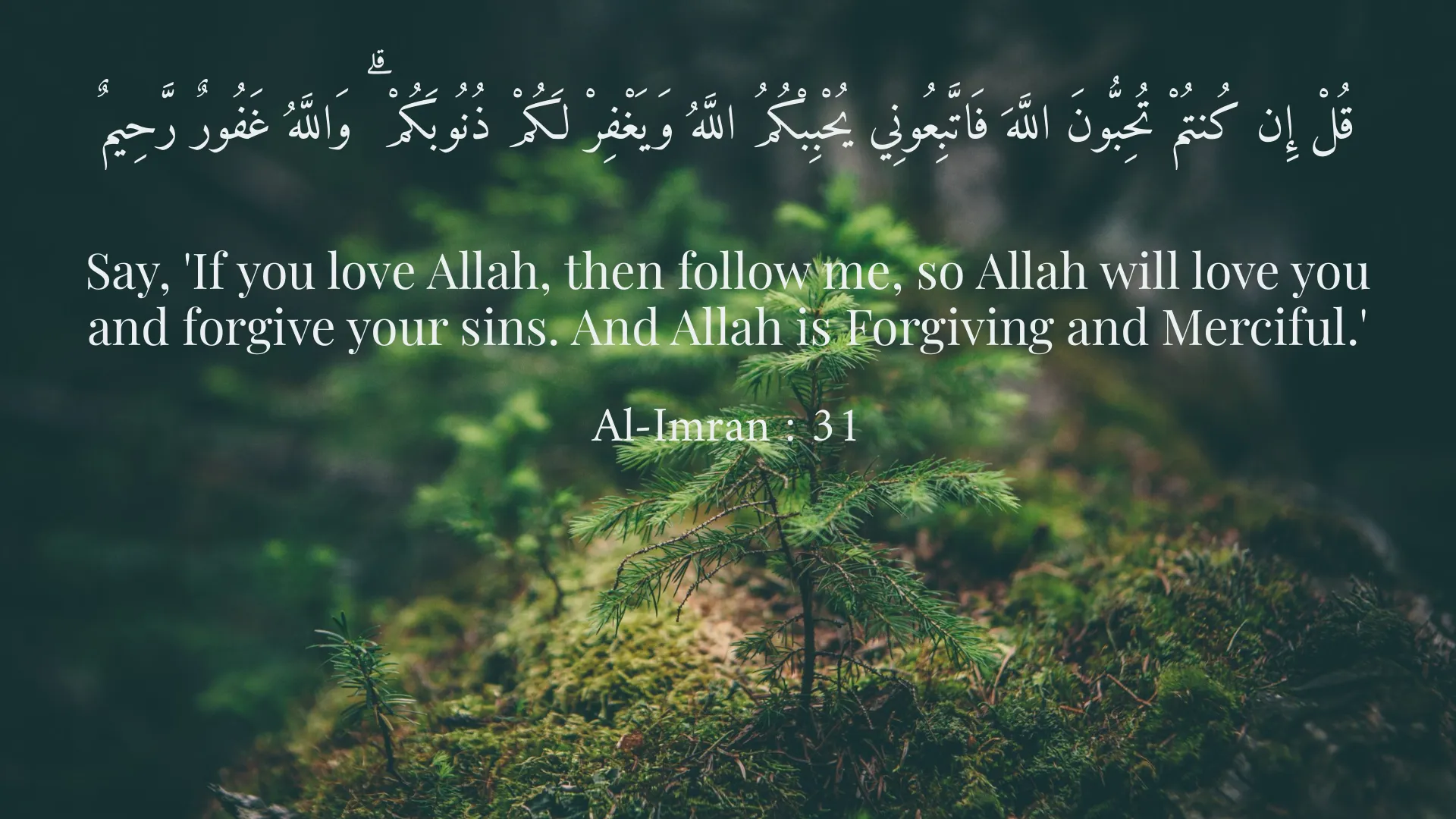
قُلْ إِن كُنتُمْ تُحِبُّونَ اللَّهَ فَاتَّبِعُونِي يُحْبِبْكُمُ اللَّهُ وَيَغْفِرْ لَكُمْ ذُنُوبَكُمْ ۗ وَاللَّهُ غَفُورٌ رَّحِيمٌ
Say, 'If you love Allah, then follow me, so Allah will love you and forgive your sins. And Allah is Forgiving and Merciful.'
Al-Imran : 31
قُلْ إِن كَانَ آبَاؤُكُمْ وَأَبْنَاؤُكُمْ وَإِخْوَانُكُمْ وَأَزْوَاجُكُمْ وَعَشِيرَتُكُمْ وَأَمْوَالٌ اقْتَرَفْتُمُوهَا أَحَبَّ إِلَيْكُمْ مِّنَ اللَّهِ وَرَسُولِهِ وَجِهَادٍ فِي سَبِيلِهِ فَتَرَبَّصُوا حَتَّى يَأْتِيَ اللَّهُ بِأَمْرِهِ ۚ وَاللَّهُ لَا يَهْدِي الْقَوْمَ الْفَاسِقِينَ
Say, 'If your fathers, your sons, your brothers, your wives, your relatives, and the wealth which you have obtained are more beloved to you than Allah and His Messenger and jihad in His cause, then wait until Allah executes His command.'
At-Tawbah : 24
لَيْسَ الْبِرَّ أَن تُوَلُّوا وُجُوهَكُمْ قِبَلَ الْمَشْرِقِ وَالْمَغْرِبِ وَلَكِنَّ الْبِرَّ مَن آمَنَ بِاللَّهِ وَالْيَوْمِ الْآخِرِ وَالْمَلَائِكَةِ وَالْكِتَابِ وَالْمُرْسَلِينَ وَأَعْطَى الْمَالَ عَلَى حُبِّهِ ذَوِي الْقُرْبَى وَالْيَتَامَى وَالْمَسَاكِينَ وَابْنَ السَّبِيلِ وَالسَّائِلِينَ
Righteousness is not that you turn your faces toward the east or the west, but true righteousness is in one who believes in Allah, the Last Day, the Angels, the Book, and the Prophets, and gives his wealth, in spite of love for it, to relatives, orphans, the needy, the traveler, those who ask [for help].
Al-Baqarah : 177
Short Story
One day, Adel was contemplating true love and affection. He recalled the verses of the Quran and realized that true love for God and His creation reflected deep affection. Therefore, he decided to dedicate more of his time to serving others and behaving with kindness and respect. After a while, not only did he feel happier, but he also noticed that others were loving him in return.