Quranic Answer
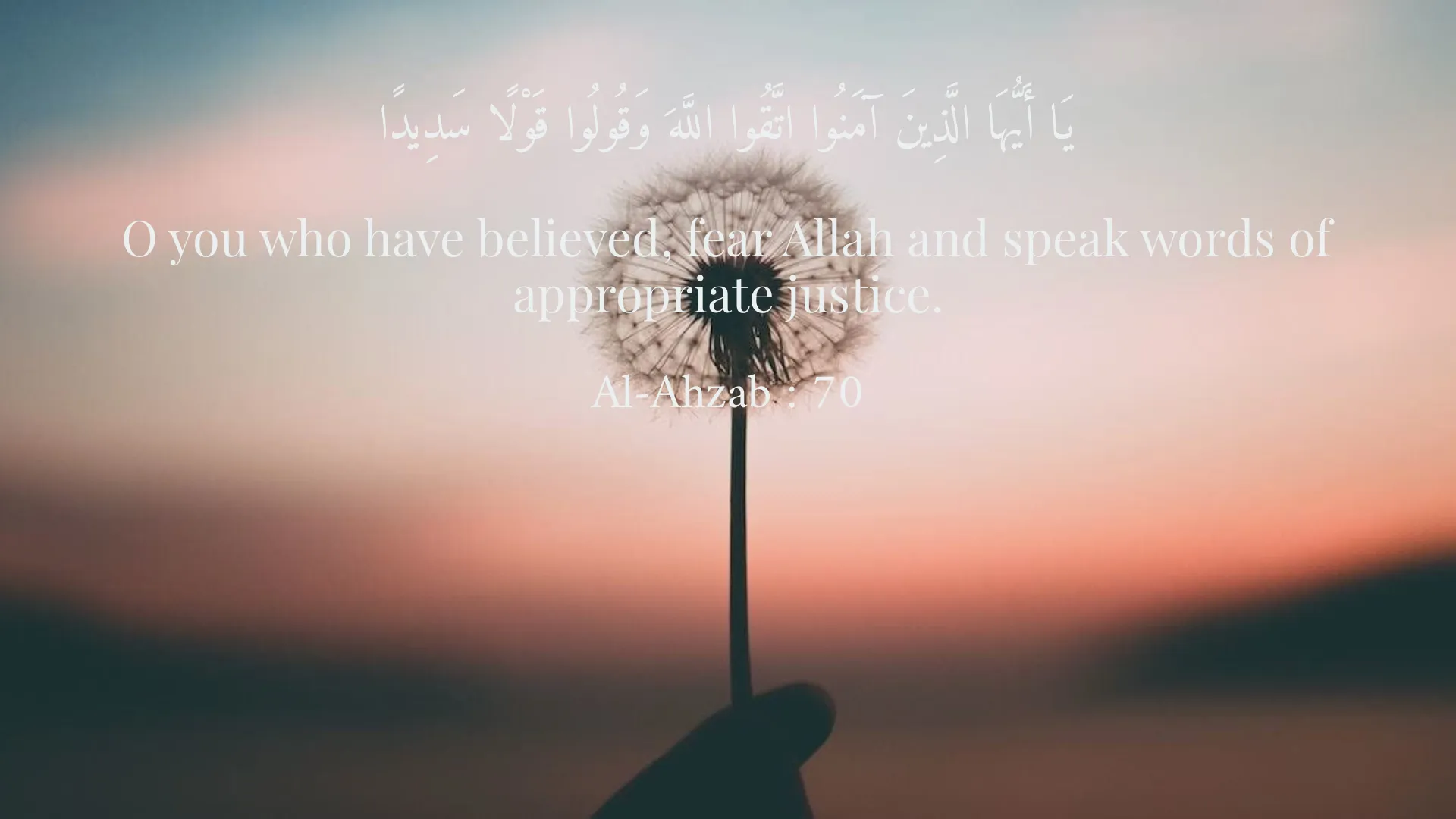
In the Holy Quran, there are numerous signs and indicators that serve as guideposts for identifying wrong behaviors. These divine instructions offer not only spiritual enlightenment but also practical advice on leading a righteous life. Grasping the essence of these teachings is an essential part of the transformative journey for every believer. One of the most paramount methods for recognizing wrong behaviors, as emphasized in the Quran, is through the contemplation of our inner thoughts and sentiments. This delicate balance of self-awareness and spiritual mindfulness is vital for anyone wishing to cultivate a lifestyle that is in accordance with divine mandates. In Surah Al-Ahzab (33:70), Allah states: 'O you who have believed, fear Allah and speak words of appropriate justice.' This profound verse serves multiple purposes: it provides a direct command to the believers, emphasizes the importance of justice, and underscores the imperative of mindfulness in speech. By invoking the concept of 'fear of Allah,' the verse encourages believers to be conscious of their actions and words, which play a significant role in defining one's morality. The connection between faith and behavior is made explicit; the more we anchor our lives in fear of Allah, the more likely we are to align our actions with the ethical guidelines prescribed in the Quran. In a practical sense, this means that if you ever feel that you are uttering words or engaging in actions that conflict with the principles outlined by Allah, it is a clear and immediate sign that a rethink is necessary. The internal discomfort that arises when one acts against their faith serves as a crucial indicator. It compels us to reevaluate our behaviors and adjust accordingly. This spiritual check-in is a valuable tool for personal growth and realignment with faith-based conduct. Furthermore, Surah Al-Baqarah (2:2) reiterates the importance of faith in divine guidance. The verse mentions that the believers have faith in the divine verses and act upon them in their daily lives. This principle is not only about core beliefs but also about translating those beliefs into actionable steps. Therefore, if you find yourself participating in behaviors that directly contradict the teachings of Islam, it can be seen as a glaring indicator of wrongdoing. This should prompt reflection and possibly corrective action. One way to engage in this self-reflective practice is to maintain a daily log of thoughts, feelings, and actions. Over time, this practice can shed light on patterns that reveal inconsistencies between one's beliefs and behaviors. Awareness of one’s thoughts is crucial, as it forms the basis for our actions. The Quran emphasizes the significance of discipline in thought life as a precursor to action. Thus, self-monitoring becomes a pathway to not only identifying wrong behaviors but also rectifying them through informed decisions and spiritual strengthening. In addition to self-reflection, the act of prayer plays a pivotal role in spiritual nurturing. The Quran instructs believers to seek forgiveness and engage with Allah in heartfelt supplication. This act of devotion opens channels for guidance, allowing one to acquire wisdom and insight necessary for discerning between right and wrong. Engaging earnestly in prayer can reinforce one’s commitment to ethical living and motivate a believer to live in harmony with divine instruction. Seeking forgiveness also fosters humility, allowing an individual to recognize their flaws and imperfections. It cultivates a sense of accountability in the acknowledgment that one is not infallible and must strive continuously to improve. This process of self-betterment is a preventative measure against straying into wrongful conduct and a means to strengthen one's faith. Moreover, it is invaluable to consult with seasoned individuals who exhibit higher moral and spiritual character. Their experiences can provide guidance in identifying wrong behaviors that may be less apparent to the untrained eye. Scholars, spiritual leaders, and those who embody strong ethical standards can serve as a barometer for discerning right from wrong. Their insights and wisdom can guide one on a path that aligns with the teachings of the Quran. Engaging in discussions with such individuals can bring clarity and offer new perspectives, which are instrumental in correcting and refining one’s behavior. In conclusion, the Holy Quran provides a wealth of knowledge aimed at helping believers recognize and rectify wrong behaviors. Through self-awareness, reflection, prayer, forgiveness, and consulting with spiritually mature individuals, one can successfully align their actions with the principles set forth in divine scripture. Recognizing the signs of wrongdoing is not merely an act of self-critique, but a conscientious journey towards spiritual growth and fulfillment. Leaders in morality and spirituality remind us that the ultimate goal of this exploration is to develop a more profound relationship with Allah, enhance our moral compass, and lead lives that resonate with justice, compassion, and righteousness. In the end, this understanding and practice enable us not only to become better individuals but also to contribute positively to our communities and society at large.
Related Verses
يَا أَيُّهَا الَّذِينَ آمَنُوا اتَّقُوا اللَّهَ وَقُولُوا قَوْلًا سَدِيدًا
O you who have believed, fear Allah and speak words of appropriate justice.
Al-Ahzab : 70
ذَلِكَ الْكِتَابُ لَا رَيْبَ ۛ فِيهِ ۛ هُدًى لِّلْمُتَّقِينَ
This is the Book about which there is no doubt, a guidance for those conscious of Allah.
Al-Baqarah : 2
Short Story
One day, a young man named Ali was looking for a way to identify his wrong behaviors. He decided to reflect on his actions and connect with the Quran. In this journey, he spoke with healthy and experienced friends. Over time, he was able to better understand his behaviors and, paying attention to the verses of the Quran, he worked on correcting his wrong actions. He realized that by seeking forgiveness and maintaining a close relationship with God, he could improve himself.