Quranic Answer
Speaking the truth at all times is one of the most fundamental and sublime moral virtues, profoundly emphasized in the teachings of the Holy Quran and the tradition of Prophet Muhammad (PBUH). The Quran considers "Sidq" (truthfulness) not only essential in speech but also in intention, action, and commitment, deeming it a prerequisite for an a pious and divine life. This virtue serves as the backbone of a healthy society and relationships built on trust and justice. Indeed, the path to salvation and divine pleasure passes through the gate of truthfulness. To always be able to speak the truth, the Quran provides practical and profound guidance. The first and most crucial step is to possess "Taqwa" (God-consciousness). Allah states in Surah Al-Ahzab, verse 70: “O you who have believed, fear Allah and speak words of truth/sound speech.” This verse indicates that Taqwa, which is piety and awe of God, is the necessary foundation for truthful speech. When a person fears God and remembers the accountability of the Day of Judgment, they develop a strong motivation to avoid lies, backbiting, slander, and any false discourse. Taqwa grants individuals insight and courage to speak the truth, even if doing so might be against their own interests or those of their loved ones. The second strategy is to be aware of "Haqq" (truth) and "Batil" (falsehood). The Quran constantly distinguishes between truth and falsehood and calls upon believers to always side with the truth. Haqq is the reality revealed by God, and Batil is anything contrary to it. Understanding this distinction helps individuals discern truth from lies when confronted with various information, rumors, and statements. Without this understanding, even with the intention to be truthful, one might inadvertently utter falsehoods. Seeking sound knowledge and contemplating divine verses assists us in this regard. The third aspect is "courage and decisiveness in expressing the truth." Speaking the truth is not always easy, especially when it conflicts with personal interests, social relations, or even personal safety. In Surah An-Nisa, verse 135, the Quran commands believers: “O you who have believed, be persistently [upholders of] justice, witnesses for Allah, even if it be against yourselves or parents and relatives.” This verse highlights the extreme difficulty and importance of truthfulness and justice. A true believer must be courageous enough to speak the truth without fear or hesitation, even if that truth is detrimental to themselves, their family, or their friends. This courage stems from reliance on Allah and certainty in His support. The fourth point is "truthfulness in intention and action." Truthfulness is not confined merely to speech. A person must be sincere in their intentions, meaning what they utter verbally should align with what is in their heart, and in action, they must fulfill what they say. The Quran criticizes those who speak but do not act accordingly (Surah As-Saff, verses 2-3). This congruence between speech, intention, and action grants a person character and credibility, making their words more impactful. Someone who is not truthful in their actions will not be trusted, even if they speak the truth. The fifth aspect is the "quality of expressing truth." Speaking the truth should not be accompanied by harshness, violence, or humiliation. The Quran emphasizes "Qawlan Layyinan" (gentle speech) and "Qawlan Ma'rufan" (kind and goodly speech), even when addressing opponents. The purpose of speaking the truth is guidance and enlightenment, not offense or discouragement. Prophets of Allah also spoke to people with gentleness and wisdom (for instance, the story of Moses and Aaron with Pharaoh in Surah Taha, verse 44: “And speak to him with gentle speech that perhaps he may be reminded or fear [Allah].”). Therefore, always speaking the truth does not mean uttering whatever seems right without observing etiquette and wisdom; rather, it means expressing the truth in the best manner, considering the circumstances and the audience. The sixth strategy is "supplication and seeking Allah's help." Humans are weak beings and need divine assistance to preserve faith and remain steadfast on the path of truth. Supplicating for steadfastness, insight in recognizing truth, and courage in expressing it are among the acts that help a believer on this path. Seeking guidance from Allah so that our tongues utter nothing but truth and our hearts accept nothing but truth is extremely important. Finally, "learning from the fate of past nations" who were destroyed due to lying and concealing the truth can also help us on this path. The Quran recounts many stories of nations who called prophets liars and subsequently suffered punishment. These stories serve as warnings for anyone who turns away from speaking or hearing the truth. In summary, always speaking the truth requires a combination of deep faith, God-consciousness, awareness and insight, moral courage, sincerity in intention and action, and wisdom in expression. These are attained only through reliance on God and continuous practice. They not only transform individual lives but also contribute to building a just and truthful society. This is a lifelong journey where every step taken on the path of truthfulness brings one closer to divine proximity. This virtue is a sign of the perfection of one's faith and piety, and Allah loves the truthful and has prepared an immense reward for them. Although this path may entail difficulties, its outcome is divine pleasure and unparalleled inner peace.
Related Verses
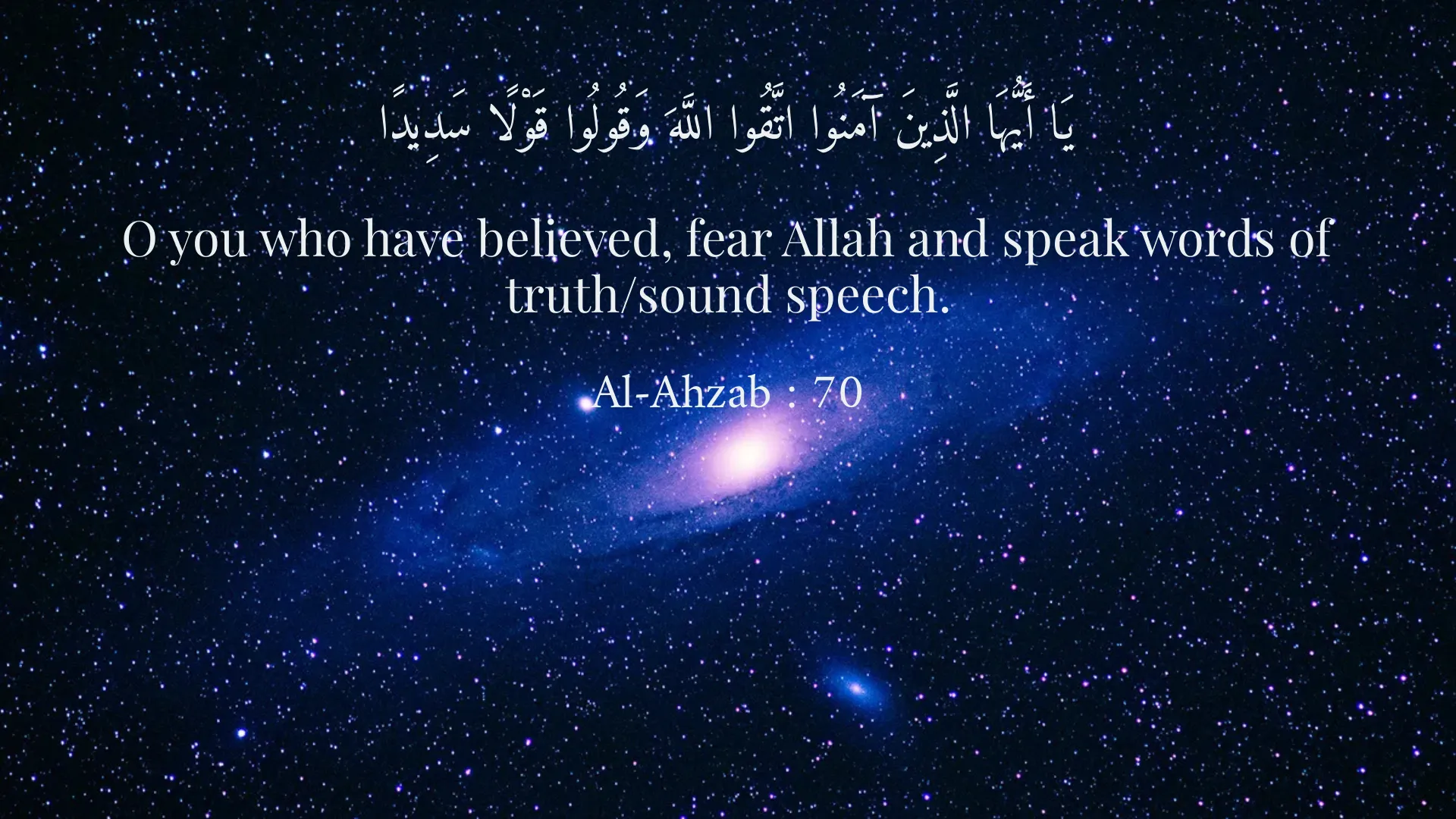
يَا أَيُّهَا الَّذِينَ آمَنُوا اتَّقُوا اللَّهَ وَقُولُوا قَوْلًا سَدِيدًا
O you who have believed, fear Allah and speak words of truth/sound speech.
Al-Ahzab : 70
يَا أَيُّهَا الَّذِينَ آمَنُوا كُونُوا قَوَّامِينَ بِالْقِسْطِ شُهَدَاءَ لِلَّهِ وَلَوْ عَلَىٰ أَنفُسِكُمْ أَوِ الْوَالِدَيْنِ وَالْأَقْرَبِينَ ۚ إِن يَكُنْ غَنِيًّا أَوْ فَقِيرًا فَاللَّهُ أَوْلَىٰ بِهِمَا ۖ فَلَا تَتَّبِعُوا الْهَوَىٰ أَن تَعْدِلُوا ۚ وَإِن تَلْوُوا أَوْ تُعْرِضُوا فَإِنَّ اللَّهَ كَانَ بِمَا تَعْمَلُونَ خَبِيرًا
O you who have believed, be persistently [upholders of] justice, witnesses for Allah, even if it be against yourselves or parents and relatives. Whether one is rich or poor, Allah is more worthy of both. So follow not [personal] inclination, lest you deviate. And if you distort [your testimony] or turn away, then indeed Allah is ever, with what you do, Acquainted.
An-Nisa : 135
فَقُولَا لَهُ قَوْلًا لَّيِّنًا لَّعَلَّهُ يَتَذَكَّرُ أَوْ يَخْشَىٰ
And speak to him with gentle speech that perhaps he may be reminded or fear [Allah].
Taha : 44
Short Story
Once upon a time, there was a wise and virtuous king who constantly sought perfection. One day, he asked his minister, 'How can one remain truthful and trustworthy among people, especially when speaking the truth can sometimes be difficult and perilous?' The minister, with a kind smile, replied, 'O King, recall the saying of Saadi of Shiraz: "A truth-telling lie is better than a mischievous truth." However, this saying must be understood in its proper context. Saadi also says elsewhere: "To speak the truth to a king, though it be bitter, is better than to deceive him with a sweet lie." For truthfulness is like a bitter medicine that uproots illness, while a lie is like a sweet syrup that conceals pain and worsens the ailment. To always speak the truth, you must free your heart from fear and know that what comes from truth is enduring and will ultimately prevail. This belief will grant you a courage that no lie can diminish. So, accustom your tongue to truth, even if it is bitter, for eternal sweetness lies within it.' The king took heed of this advice and always strove to ensure his tongue uttered nothing but the truth.