Quranic Answer
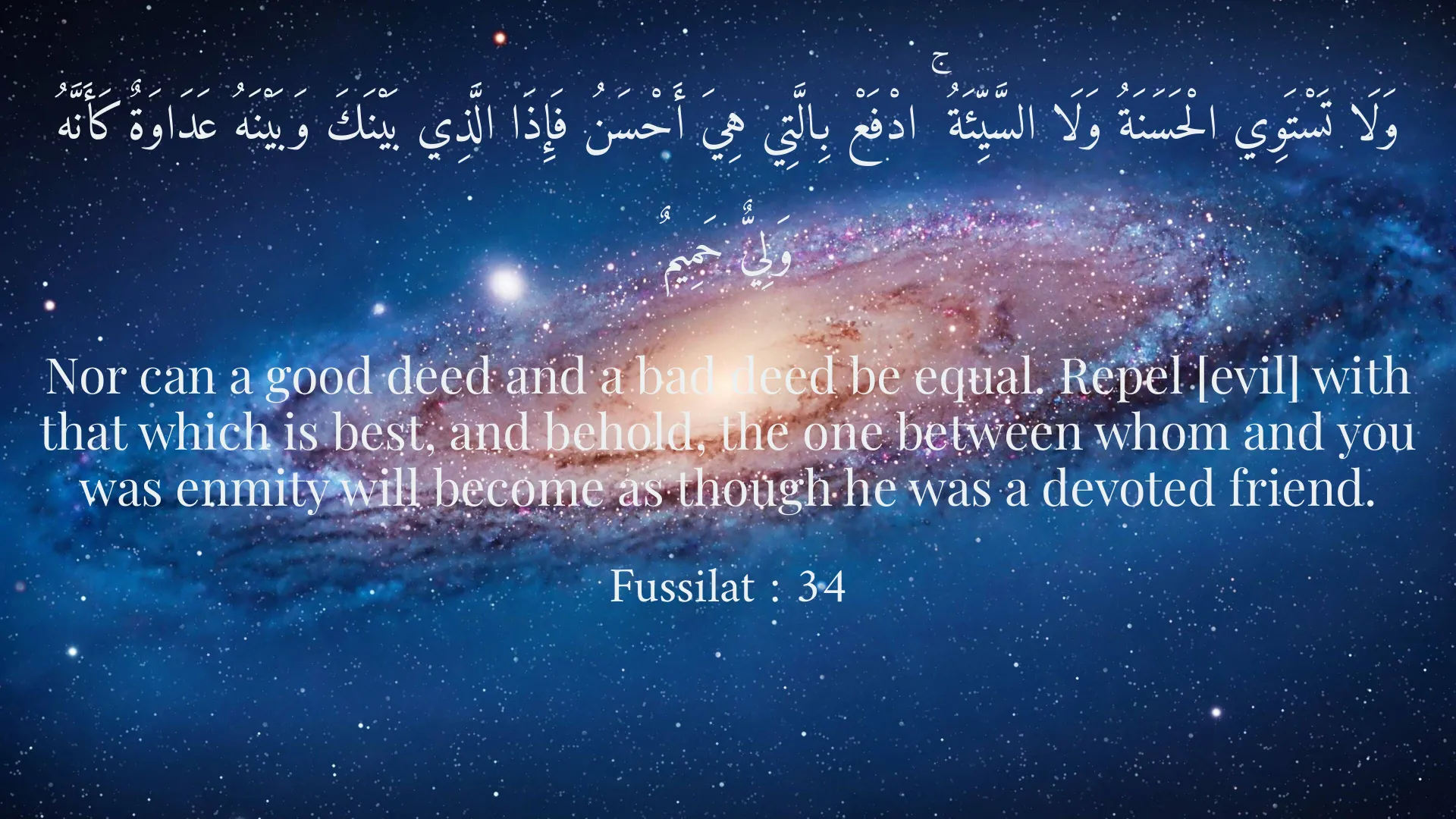
Hatred is a destructive and poisonous phenomenon that not only afflicts an individual's soul and psyche but can also weaken the foundations of families, societies, and even international relations. In the rich and comprehensive teachings of the Holy Quran, profound and effective strategies are provided to combat this devastating emotion. The Quran does not teach us to respond to hatred with hatred, but rather sets forth a path of wisdom, patience, forgiveness, and benevolence to not only confront hatred but even transform it into love and friendship. This Quranic approach aims for an internal and external transformation rooted in a deep understanding of the self and an awareness of humanity's place in existence. The first and perhaps most crucial step in combating hatred is self-control and overcoming inner anger. The Holy Quran, in numerous verses, emphasizes the importance of controlling emotions and refraining from hasty reactions. In Surah Al-Imran, verse 134, Allah praises those who "restrain anger and pardon the people" (wal-kazimeena al-ghaiza wal-ʿafeena ʿan al-nas). This verse indicates that swallowing one's anger is not a weakness but a sign of spiritual strength and piety. When anger is controlled, it prevents it from escalating into persistent hatred and malice. This self-restraint allows an individual to act with wisdom and insight instead of emotional reaction, paving the way for a more constructive approach. Indeed, much hatred stems from suppressed anger or inappropriate responses to others' anger. Practicing this virtue means achieving inner peace and not allowing negative emotions to control our lives. Another fundamental strategy mentioned in the Quran is responding to evil with good. This principle is articulated in a very explicit and impactful manner in Surah Fussilat, verse 34: "Nor can a good deed and a bad deed be equal. Repel [evil] with that which is best, and behold, the one between whom and you was enmity will become as though he was a devoted friend." (Wa la tastawi al-hasanatu wa la al-sayyi'atu idfa' bil-lati hiya ahsan fa-idha alladhi baynaka wa baynahu 'adawatun ka-annahu waliyyun hameem). This verse offers a revolutionary strategy for resolving conflicts and eradicating hatred. By responding to malice with kindness, to enmity with forgiveness, and to injustice with benevolence, we not only extinguish the fire of hatred but also create the potential to transform an enemy into a friend. This act requires courage, magnanimity, and strong faith, as it goes against natural human inclinations that call for retaliation. However, its results are beyond imagination, as it softens hearts and opens new avenues for relationships. This principle applies not only to individual relationships but also to social and even international interactions, demonstrating that peace and reconciliation are achieved through positive and benevolent actions. Forgiveness and pardon are other crucial pillars in combating hatred. The Quran repeatedly advises Muslims to be forgiving and overlook the faults of others. In Surah An-Nur, verse 22, Allah says: "And let them pardon and overlook. Would you not like that Allah should forgive you?" (Wal-ya'fu wal-yasfahu ala tuhibbuna an yaghfira Allahu lakum). This verse sets forth a golden rule: just as we are in need of Allah's forgiveness, we must ourselves be forgiving. Forgiveness not only brings peace to the one who is forgiven but, first and foremost, liberates the forgiver from the heavy burden of resentment and hatred. Holding onto grudges and hatred is like carrying a heavy load that exhausts the soul and prevents the experience of peace and joy. Forgiveness does not mean forgetting the wrongdoing, but rather releasing oneself from the chains of hatred and opening a path to inner peace. This step, especially in family and social relationships, can bridge divides and strengthen bonds. Justice and avoiding oppression, even towards enemies, are fundamental Quranic principles that are vital in eliminating hatred. In Surah Al-Ma'idah, verse 8, Allah states: "O you who have believed, be persistently [upholders of] justice, witnesses for Allah, even if it be against yourselves or parents and relatives. And let not the hatred of a people prevent you from being just. Be just; that is nearer to righteousness." (Ya ayyuha alladhina amanu kunu qawwamina lillahi shuhada'a bil-qisti wa la yajrimannakum shana'anu qawmin 'ala alla ta'dilu i'dilu huwa aqrabu lil-taqwa). This verse clearly states that hatred should not deviate us from the path of justice. When people feel that they are treated fairly, even if there is animosity, the ground for reducing hatred is prepared. Oppression and injustice are among the primary roots of hatred and malice. Therefore, insisting on justice, even in hostile situations, is not only a moral and religious duty but also a practical strategy to prevent the spread of hatred and create a basis for reconciliation and peaceful coexistence. This is especially important when dealing with opponents and those with differing views. Furthermore, the Quran emphasizes the importance of patience and forbearance. In the face of hateful acts or words, patience allows us to make decisions without haste and with wisdom. Patience increases the capacity to endure hardships and annoyances and prevents hasty reactions that might deepen hatred. Alongside patience, supplication and prayer to Allah, as a powerful spiritual tool, can transform hearts and eliminate hatred. Asking for guidance for oneself and even for those who harbor hatred can open unexpected paths to peace and reconciliation. Ultimately, combating hatred from a Quranic perspective is a comprehensive process that includes self-control, responding to evil with good, forgiveness, insistence on justice, and patience and prayer. These teachings offer invaluable keys not only for the individual but also for creating a society based on mercy and peace. They teach us how we can free ourselves from the clutches of hatred and step towards a world full of love and friendship. This battle is an internal one that begins in the heart and mind, then extends to our actions and behaviors, and through them, gradually influences and transforms our surroundings. By following these principles, we can play an effective role in reducing hatred in the world as conscious and responsible individuals, and through love and kindness, move closer to our true place in creation, bringing peace and tranquility into our lives and the lives of others.
Related Verses
وَلَا تَسْتَوِي الْحَسَنَةُ وَلَا السَّيِّئَةُ ۚ ادْفَعْ بِالَّتِي هِيَ أَحْسَنُ فَإِذَا الَّذِي بَيْنَكَ وَبَيْنَهُ عَدَاوَةٌ كَأَنَّهُ وَلِيٌّ حَمِيمٌ
Nor can a good deed and a bad deed be equal. Repel [evil] with that which is best, and behold, the one between whom and you was enmity will become as though he was a devoted friend.
Fussilat : 34
الَّذِينَ يُنفِقُونَ فِي السَّرَّاءِ وَالضَّرَّاءِ وَالْكَاظِمِينَ الْغَيْظَ وَالْعَافِينَ عَنِ النَّاسِ ۗ وَاللَّهُ يُحِبُّ الْمُحْسِنِينَ
Those who spend [in the way of Allah] in ease and hardship and who restrain anger and who pardon the people - and Allah loves the doers of good.
Al-Imran : 134
يَا أَيُّهَا الَّذِينَ آمَنُوا كُونُوا قَوَّامِينَ لِلَّهِ شُهَدَاءَ بِالْقِسْطِ ۖ وَلَا يَجْرِمَنَّكُمْ شَنَآنُ قَوْمٍ عَلَىٰ أَلَّا تَعْدِلُوا ۚ اعْدِلُوا هُوَ أَقْرَبُ لِلتَّقْوَىٰ ۖ وَاتَّقُوا اللَّهَ ۚ إِنَّ اللَّهَ خَبِيرٌ بِمَا تَعْمَلُونَ
O you who have believed, be persistently [upholders of] justice, witnesses for Allah, even if it be against yourselves or parents and relatives. And let not the hatred of a people prevent you from being just. Be just; that is nearer to righteousness. And fear Allah; indeed, Allah is Acquainted with what you do.
Al-Ma'idah : 8
Short Story
It is related in Saadi's Gulistan that a man cursed a virtuous nobleman and uttered vile words. The nobleman, being a wise and dignified man, instead of becoming angry or retaliating, responded with a cheerful face and gentle words. People were astonished by the nobleman's conduct and asked him, "How is it that despite all this abusive language, you respond with such kindness?" The nobleman smiled and said, "When I saw this man in the well of ignorance, I wished to pull him out with my good character, not to fall into the trap of his anger and hatred myself." The cursing man was shamed by this magnanimity, and his enmity turned into love and respect. Thus, as the Holy Quran states, responding to evil with good can transform enmity into friendship and remove grudges from hearts.