Quranic Answer
The Holy Quran addresses the issue of purity and its role against corruption and social challenges comprehensively. In a world that often seems engulfed in moral decay and social ills, the Quran serves as a guiding light, indicating the importance of maintaining purity in both thought and action. By examining specific verses, we can understand how spiritual purity fosters resilience against corruption and moral degradation, ultimately leading to successful living in challenging social conditions. In Surah Al-Imran, verse 200, Allah instructs the believers: 'O you who have believed, persevere and endure and remain stationed and fear Allah that you may be successful.' This verse is profound in its message; it communicates the necessity of patience and perseverance in the face of adversity. It implicitly acknowledges that challenges are a part of life – particularly in societies plagued by corruption. Here, Allah exhorts us not just to endure, but to be proactive in our perseverance and steadfastness. The act of remaining stationed represents a firm grounding in one's faith, implying that as believers, we must anchor ourselves in our principles and values, especially when we are surrounded by the temptations of the worldly life. Patience in this context can be perceived as an active force against the tide of corruption and immorality. When faced with societal challenges, a believer is reminded to hold onto their integrity, to fear Allah, and to focus on the divine guidance, which ultimately leads to success in both this world and the hereafter. It is through this divine support and personal adherence to purity that we find the strength to resist the allure of corruption and temptation, becoming agents of change in a flawed world. Furthermore, in Surah Al-Baqarah, verse 165, it states: 'And of the people are some who take other than Allah as equals [to Him]. They love them as they should love Allah. But those who believe are stronger in love for Allah.' This verse addresses the central theme of love, directing us towards a hierarchy of love and devotion. The verse emphasizes that our affection and loyalty should primarily belong to Allah alone. The quotation brings into focus a common contemporary issue – the tendency of some people to equate their love for worldly things and entities with their love for Allah. Such divisions in love can lead to corruption of the heart, clouding one's judgment and diluting the essence of purity. Therefore, aligning our hearts and minds towards Allah establishes a foundation of clarity and honesty. When our love for God is profound and paramount, it cultivates an inner strength that helps believers to resist the distractions of the material world, empowering them to uphold their beliefs and technical integrity. This link between divine love and the purity of character is critical in navigating moral complexities and social interactions, reinforcing the necessity of prioritizing spiritual over worldly attachments. Lastly, in Surah Al-Ma’idah, verse 105, it states: 'O you who have believed, protect yourselves and your families from a Fire whose fuel is people and stones.' This verse signifies personal responsibility in maintaining one's faith and purity. It stands as a reminder that the task of safeguarding one's soul, as well as that of our families, requires effort and intentionality. The imagery of a raging fire instills a sense of urgency about the consequences of failing to live a life steeped in piety and virtue. Indeed, this verse emphasizes that living with awareness and commitment to divine ordinances provides a shield against the flames of corruption and social malaise prevalent in society. It encapsulates the message that one of the keys to remaining on the path of purity is to actively engage in protecting oneself and others. Spiritual cleanliness not only influences our individual standing before Allah, but it also extends to our families, communities, and society at large. If believers embody faith and piety, they can significantly influence their surroundings with good character and moral integrity, collectively tackling environmental challenges while maintaining their purity. Here, we see a clear interconnection between individual accountability and social welfare; an individual's moral behavior can essentially act as a catalyst for broader societal change. A community filled with believers who practice patience, prioritize their love for Allah, and take personal responsibility for their conduct is more likely to thrive in an environment characterized by challenges and temptations. In essence, the Holy Quran profoundly addresses the concept of purity in the midst of corruption and social challenges. Through the verses in Surah Al-Imran, Al-Baqarah, and Al-Ma’idah, we are reminded to cultivate patience, prioritize our love for Allah above all else, and engage in the active stewardship of our own souls and those of our families. It is this adherence to spiritual principles that enables believers to navigate life's tribulations with grace and virtue, ultimately instilling hope in the possibility of a more righteous, pure society. By embodying these principles, each of us can contribute to the purification of not only ourselves but also the world we inhabit.
Related Verses
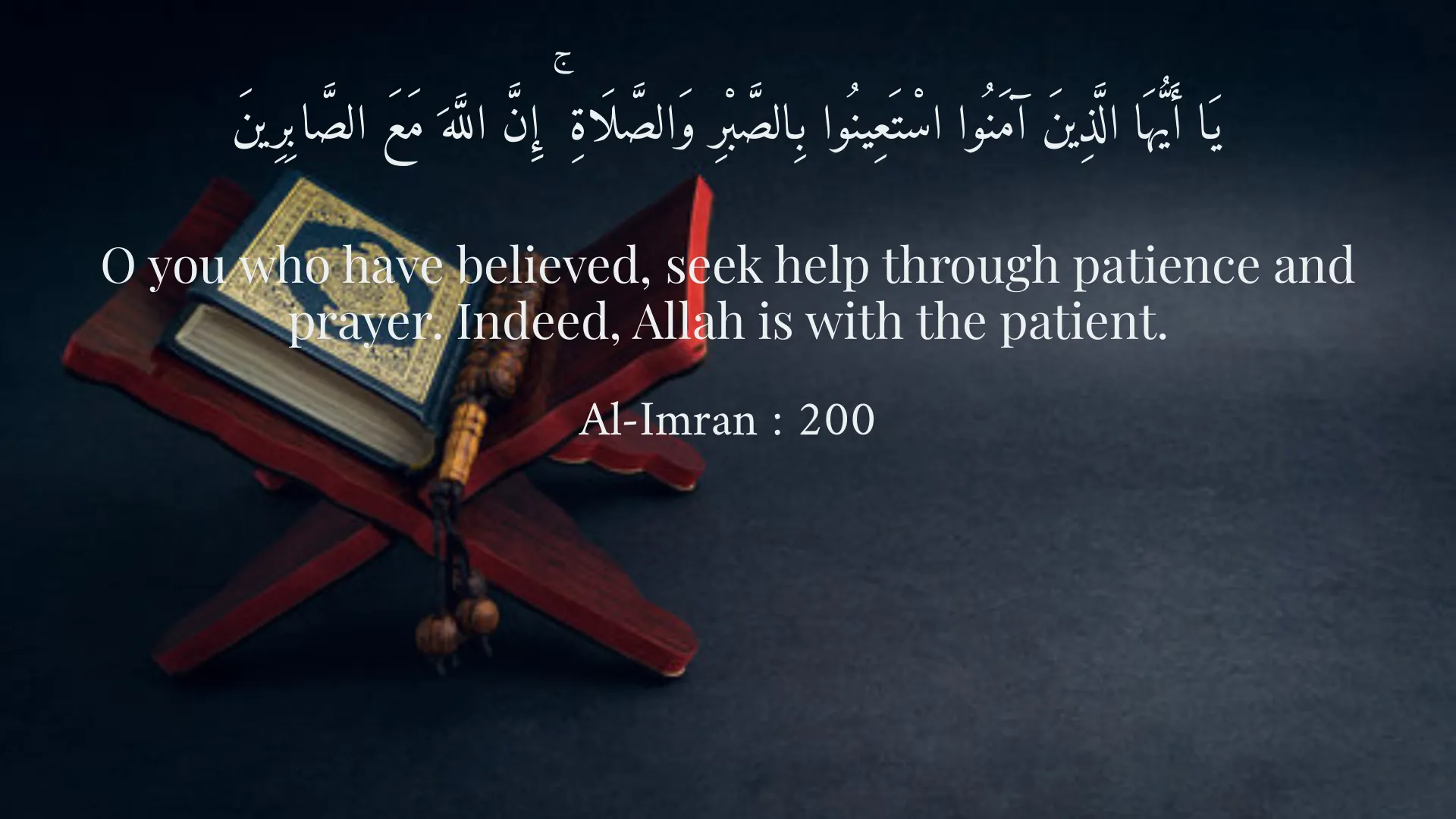
يَا أَيُّهَا الَّذِينَ آمَنُوا اسْتَعِينُوا بِالصَّبْرِ وَالصَّلَاةِ ۚ إِنَّ اللَّهَ مَعَ الصَّابِرِينَ
O you who have believed, seek help through patience and prayer. Indeed, Allah is with the patient.
Al-Imran : 200
وَمِنَ النَّاسِ مَن يَتَّخِذُ مِن دُونِ اللَّهِ أَندَادًا يُحِبُّونَهُمْ كَحُبِّ اللَّهِ ۚ وَالَّذِينَ آمَنُوا أَشَدُّ حُبًّۭا لِّلهِ ۚ وَلَوْ يَرَى الَّذِينَ ظَلَمُوا إِذْ يَرَوْنَ الْعَذَابَ أَنَّ الْقُوَّةَ لِلَّهِ جَمِيعًۭا وَأَنَّ اللَّهَ شَدِيدُ الْعَذَابِ
And of the people are some who take other than Allah as equals [to Him]. They love them as they should love Allah. But those who believe are stronger in love for Allah.
Al-Baqarah : 165
يَا أَيُّهَا الَّذِينَ آمَنُوا قُوا أَنفُسَكُمْ وَأَهْلِيكُمْ نَارًا قُودُهَا النَّاسُ وَالْحِجَارَةُ ۚ عَلَيْهَا مَلَائِكَةٌ غِلَاظٌ شِدَادٌ لَّا يَعْصُونَ اللَّهَ مَا أَمَرَهُمْ وَيَفْعَلُونَ مَا يُؤْمَرُونَ
O you who have believed, protect yourselves and your families from a Fire whose fuel is people and stones. Over it are [appointed] angels, harsh and severe; they do not disobey Allah in what He commands them but do what they are commanded.
Al-Ma’idah : 105
Short Story
A story from Saadi's Bustan reveals a man living in a society full of corruption and impurity. Despite numerous challenges, he always tried to maintain simplicity and purity in his life. One day, the man asked a friend, 'How can one remain pure in this world of corruption?' His friend replied, 'By remembering God and fulfilling religious duties.' From that day, the man filled his days with the remembrance of God and love for others, ultimately overcoming his problems and achieving a peaceful and joyful life.