Quranic Answer
How can one strengthen honesty within themselves? This is a profound and fundamental question, the answer to which is deeply rooted in the invaluable teachings of the Holy Quran. Honesty, or “Sidq” in Arabic, is not merely a moral trait; it is a foundational pillar upon which a person's faith and character are built. In the Quranic worldview, honesty is not limited to truthfulness in speech but encompasses broader dimensions such as sincerity in action, purity of intention, fulfilling promises, trustworthiness (Amanah), and the alignment of one's inner and outer self. Strengthening honesty within ourselves is a journey of growth and perfection that requires continuous attention and conscious effort. This virtue plays a pivotal role in a person's relationship with their Creator and in their interactions with fellow human beings, serving as the bedrock for any healthy and stable relationship, both individual and societal. The Holy Quran, in numerous verses, calls upon believers to embody honesty and to associate with those who are truthful. One of the most eloquent of these verses is Surah At-Tawbah, verse 119, which states: “Yā ayyuhā al-ladhīna āmanū ittaqū Allāha wa kūnū ma‘a al-ṣādiqīn” (O you who have believed, fear Allah and be with the truthful). This verse clearly indicates that divine consciousness (Taqwa) – which means guarding oneself against sins and being aware of Allah's presence – is a prerequisite for achieving honesty. Taqwa implies an inner sense of divine presence and observation, which helps individuals to refrain from lies and betrayal, both in private and public. Furthermore, this verse emphasizes that associating with honest individuals and emulating them is a crucial factor in strengthening this virtue. When a person surrounds themselves with those known for their honesty, they instinctively align their behavior and speech with those standards and are protected from the negative influences of environments where honesty is lacking. To cultivate honesty within ourselves, we must begin from within: from pure and sincere intentions in every action we undertake. Allah is aware of intentions, and true honesty emanates from the depths of a person's being, manifesting in all aspects of their life. This sincerity of intention is the key to the acceptance of deeds and the attainment of divine pleasure. Another vital dimension of honesty is truthfulness in speech. Every word we utter must be a reflection of the truth. Lying is the basis of all deviation and corruption, and the Quran strongly prohibits it. “Fa naj‘al la‘nata Allāhi ‘alā al-kādhibīn” (Then we will invoke the curse of Allah upon the liars) (Surah Al-Imran, 61). This Quranic warning underscores the paramount importance of truthfulness and indicates that lying is not merely a personal sin but an act that incurs divine wrath and curse. To practice truthfulness, one must refrain from telling even small, seemingly insignificant lies, as minor falsehoods pave the way for greater and more complex ones, gradually leading a person towards hypocrisy and insincerity. The habit of truthfulness, even in difficult circumstances, requires courage and reliance on Allah. It may be that in some situations, speaking the truth might seem to harm one's apparent interests or lead to challenges, but the honest person knows that a good outcome and divine pleasure await them, and lying will never be a true solution. This courage in truthfulness stems from a deep faith in Allah's promises. Trustworthiness (Amanah) and fulfilling promises (Wafa bi al-Ahad) are also prominent manifestations of honesty. Allah states in Surah An-Nisa, verse 58: “Innā Allāha ya’murukum an tu’addū al-amānāti ilā ahlilā” (Indeed, Allah commands you to render trusts to whom they are due). These trusts can include material wealth and possessions, the secrets and confidences of others, professional positions and social responsibilities, and even one's own body parts and lifespan, all of which are considered divine trusts. We must honestly guard these trusts and return them properly to their rightful owners or use them in the correct way. Similarly, fulfilling promises and covenants made with others is a sign of honesty and self-respect. Surah Al-Mu'minun, verse 8, explicitly states: “Wa al-ladhīna hum li-amānātihim wa ‘ahdihim rā‘ūn” (And those who are to their trusts and their promises attentive). This verse describes true believers as those who observe their trusts and covenants, all of which are aspects of honesty in action and conduct. To strengthen this aspect of honesty, we must be extremely cautious in every promise and pledge we make, ensuring that we are capable of fulfilling it, and then adhering to it with all our might and complete sincerity. Fulfilling promises is the backbone of social relations, and its absence leads to mistrust and the breakdown of society's moral fabric. To practically strengthen honesty in daily life, several specific steps can be taken: Firstly, Divine consciousness (Taqwa) and continuous self-monitoring: As Surah At-Tawbah, verse 119, indicates, the root of honesty lies in fearing Allah. This fear fosters a sense of self-awareness and inner responsibility that reminds a person that every word and action is recorded in the presence of Allah. This vigilance must be maintained not only in social interactions but also in solitude, for true honesty emanates from within. Secondly, Self-reflection and combating the commanding self (Nafs al-Ammarah): Many lies and inconsistencies arise from weakness of the self, fear of others' judgment, or attempts to conceal flaws or gain illicit benefits. Recognizing one's weaknesses and striving to overcome the carnal desires that draw a person towards falsehood and hypocrisy is a crucial step toward honesty. Thirdly, Associating with the truthful and emulating them: Our environment and the people we interact with have a profound impact on our behavior. Associating with those known for their honesty can serve as a strong role model and motivator for us and help us on the right path. Finding friends and companions who are embodiments of honesty helps one remain steadfast in this path. Fourthly, Conscious practice and consistency: Honesty is a skill that is strengthened through practice. Every day, in various situations, we should consciously decide to speak truthfully and act honestly, even if it seems difficult at first. This practice can begin with the most minor daily matters; for example, refraining from making small excuses or admitting mistakes. Fifthly, Reflecting on the consequences of lying and the fruits of honesty: The Quran clearly addresses the negative consequences of falsehood and the immense rewards of honesty. Surah Al-Ma'idah, verse 119, states: “Qāla Allāhu hādhā yawmu yanfa‘u al-ṣādiqīna ṣidquhum” (Allah will say, 'This is the Day when the truthful will benefit from their truthfulness'). This verse promises a tremendous reward for honesty on the Day of Judgment, which in itself is a strong incentive to adhere to it. Lying, even in this world, leads to disgrace, loss of trust, unstable relationships, and feelings of guilt and inner anxiety, whereas honesty brings inner peace, trust from others, and, above all, divine pleasure and contentment. This peace and contentment transcend any material gain. Strengthening honesty is a continuous process and a spiritual journey, whose new dimensions unfold at every stage of life. By adhering to Quranic principles, reflecting on our actions and words, choosing good companions, and remembering the divine rewards for the truthful, we can embed this great virtue within ourselves and become examples of the “Sadiqin” (the truthful ones) mentioned in the Quran. This path is not only beneficial for our worldly life and the hereafter but also significantly contributes to building a healthier society, based on mutual trust, transparency, and justice. Honesty is the key to individual and societal well-being, and the Holy Quran has clearly shown us this path. By embarking on this journey, doors of light and blessings will open up in our lives, and our lives will be accompanied by greater peace and assurance.
Related Verses
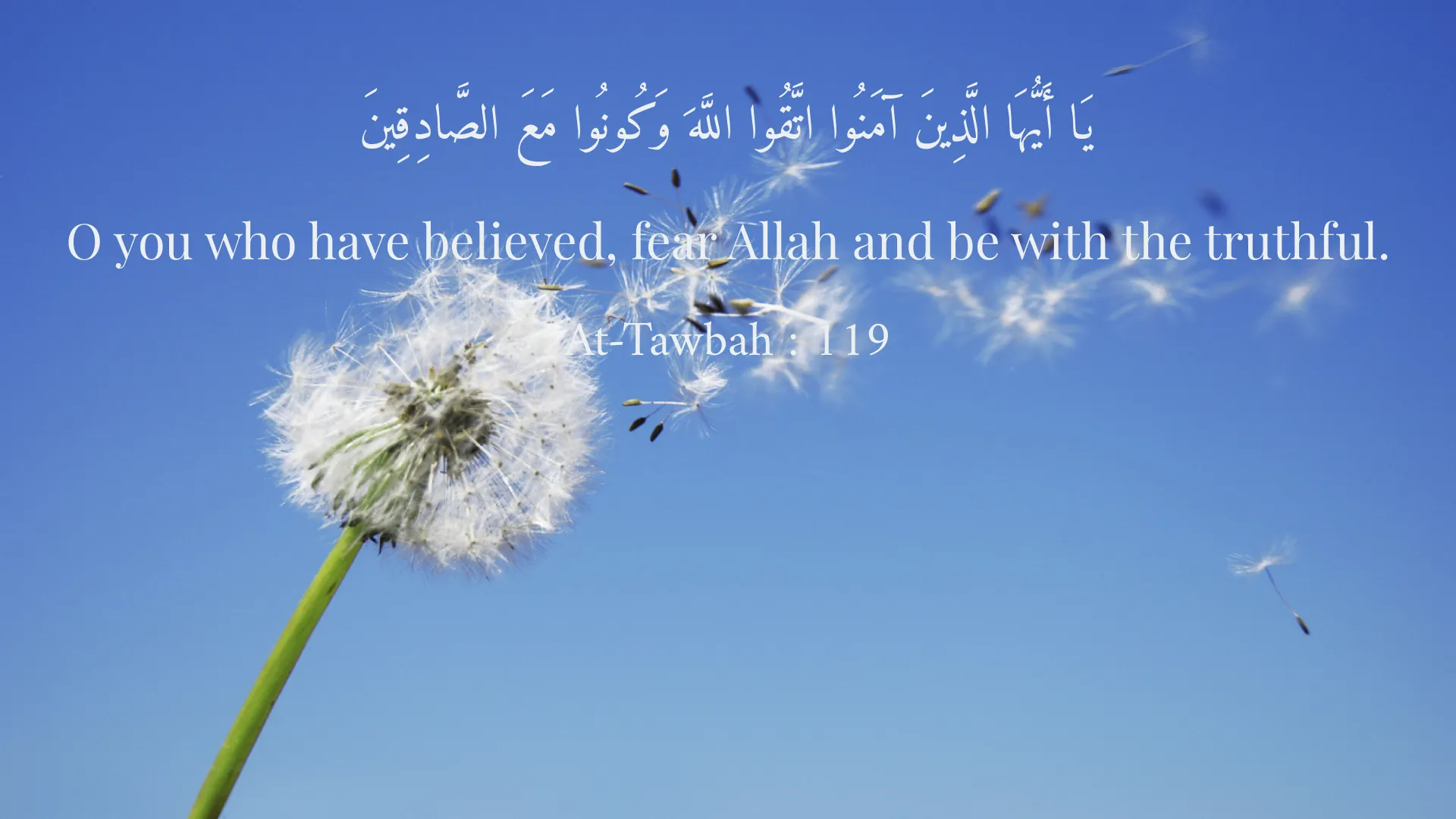
يَا أَيُّهَا الَّذِينَ آمَنُوا اتَّقُوا اللَّهَ وَكُونُوا مَعَ الصَّادِقِينَ
O you who have believed, fear Allah and be with the truthful.
At-Tawbah : 119
قَالَ اللَّهُ هَٰذَا يَوْمُ يَنفَعُ الصَّادِقِينَ صِدْقُهُمْ ۚ لَهُمْ جَنَّاتٌ تَجْرِي مِن تَحْتِهَا الْأَنْهَارُ خَالِدِينَ فِيهَا أَبَدًا ۚ رَّضِيَ اللَّهُ عَنْهُمْ وَرَضُوا عَنْهُ ۚ ذَٰلِكَ الْفَوْزُ الْعَظِيمُ
Allah will say, 'This is the Day when the truthful will benefit from their truthfulness.' For them are gardens beneath which rivers flow, wherein they will abide forever; Allah being pleased with them and they with Him. That is the great attainment.
Al-Ma'idah : 119
وَالَّذِينَ هُمْ لِأَمَانَاتِهِمْ وَعَهْدِهِمْ رَاعُونَ
And those who are to their trusts and their promises attentive
Al-Mu'minun : 8
Short Story
It is recounted that one day a king asked a dervish: "Which form of worship is best?" The dervish replied without hesitation: "It is truthfulness, even if it leads to harm." The king was astonished by the dervish's words and understood that truthfulness in speech, even at the cost of losing something, holds a higher value. This story reminds us that honesty, regardless of any apparent outcome it might have, is itself the greatest virtue and worship, and the only true path to peace and contentment.