Quranic Answer
The Holy Quran, revered as the ultimate source of guidance for Muslims, transcends mere religious scripture; it serves as a meticulous framework for social behavior and moral conduct. Its verses encapsulate timeless principles that have the potential to shape interpersonal dynamics, community interactions, and the ethical landscape of society as a whole. As we delve deeper into the Quranic teachings, it becomes evident that understanding its ethical principles and the mutual rights of individuals is the foundational step toward applying the Quran to everyday life. ### The Guiding Light of the Quran At the core of the Quran lies the emphasis on ethical virtues that guide human conduct. Believers are not only encouraged to adhere to these values but also to embody them in their social interactions. For instance, in Surah Al-Imran, verse 104, Allah instructs, "And let there be [arising] from you a nation inviting to goodness, enjoining what is right and forbidding what is wrong." This verse encapsulates a profound ethical directive: the necessity to promote goodness while discouraging immoral behavior. The Quran highlights the importance of community engagement; individuals are tasked with fostering an environment where mutual support prevails. This collaborative spirit becomes particularly vital when addressing the complex social issues that challenge modern societies. ### Promoting Teamwork and Cooperation The call to form a nation that advocates for goodness inherently promotes the principles of teamwork and cooperation. In an increasingly polarized world, the values found in the Quran can serve as a basis for rebuilding connections among diverse groups. By extending a hand of kindness and supporting one another toward righteous actions, communities can enhance their collective well-being. This proactive approach not only cultivates strong bonds between individuals but also nurtures a sense of belonging and acceptance, which are essential components of a healthy society. ### Justice as a Cornerstone of Society Justice stands as a central theme within the Quran, emphasized repeatedly across its verses. In Surah An-Nisa, verse 135, believers are commanded to "be persistently standing firm in justice, witnesses in justice." This profound directive calls upon individuals to uphold truth and fairness in all circumstances, reinforcing that justice should prevail irrespective of personal bias or potential repercussions. Embracing justice in social interactions encourages accountability and transparency, fostering trust within communities. Moreover, this principle of justice transcends personal benefit; it demands that believers place a higher value on the collective good of society. When individuals prioritize justice, they contribute to creating an environment where every person feels valued and respected. As social relationships are grounded in fairness, the foundations of the community become more robust, allowing it to thrive despite challenges. ### The Call for Peace and Reconciliation In times of discord and conflict, the Quran's teachings serve as a reminder of the importance of peace and reconciliation. Surah Al-Hujurat, verse 10 states, "Indeed, the believers are brothers, so make settlement between your brothers." This assertion reflects the Muslim ethos of unity and kinship, emphasizing that believers should actively work toward resolving conflicts and fostering harmonious relationships. The Quran encourages mediation and dialogue, suggesting that when misunderstandings arise, they should be addressed respectfully and constructively. Conflict is a natural part of human interaction; however, the way individuals handle disagreements can define the character of a community. Encouraging dialogue and seeking common ground can lead to resolutions that respect differing perspectives while promoting peace. These tenets of reconciliation not only contribute to personal relationships but also enhance the overall societal fabric, reducing the potential for divisions and hostility. ### Implementing Quranic Teachings in Daily Life Translating these Quranic teachings into everyday practice requires commitment and mindfulness. Believers can incorporate these ethical principles into their interactions through various means: by engaging in community service, promoting social justice, attending conflict resolution workshops, and nurturing healthy relationships through open communication. Furthermore, educational institutions and community organizations can play a significant role in instilling the values found in the Quran within younger generations. By incorporating lessons about justice, the importance of cooperation, and conflict resolution into curriculums and training programs, future leaders will be better equipped to foster a compassionate and equitable society. ### Building Healthy Communities The Quran’s emphasis on mutual rights, justice, and reconciliation underscores the potential to create strong, healthy communities. By applying these teachings in social contexts, individuals can significantly enhance the quality of relationships around them. As people align their actions with the principles outlined in the Quran, they contribute to the emergence of a society built on respect, empathy, and understanding. Ultimately, as believers strive to apply the ethical standards of the Quran in their social interactions, they contribute to a broader social framework that promotes peace and cooperation. By recognizing and acting upon the mutual rights of individuals, standing firmly for justice, and actively seeking reconciliation, communities can move toward a more harmonious future. ### Conclusion The Holy Quran, through its rich tapestry of teachings, acts as a guiding light that illuminates the pathways of ethical conduct and social responsibility. As individuals embrace its principles and work towards embodying them in their daily lives, they become catalysts for positive change within their communities. By promoting goodness, maintaining justice, and seeking peace, believers not only fulfill their spiritual obligations but also contribute meaningfully to the greater good of society. In doing so, they honor the spirit of the Quran while laying the groundwork for a brighter, more inclusive future.
Related Verses
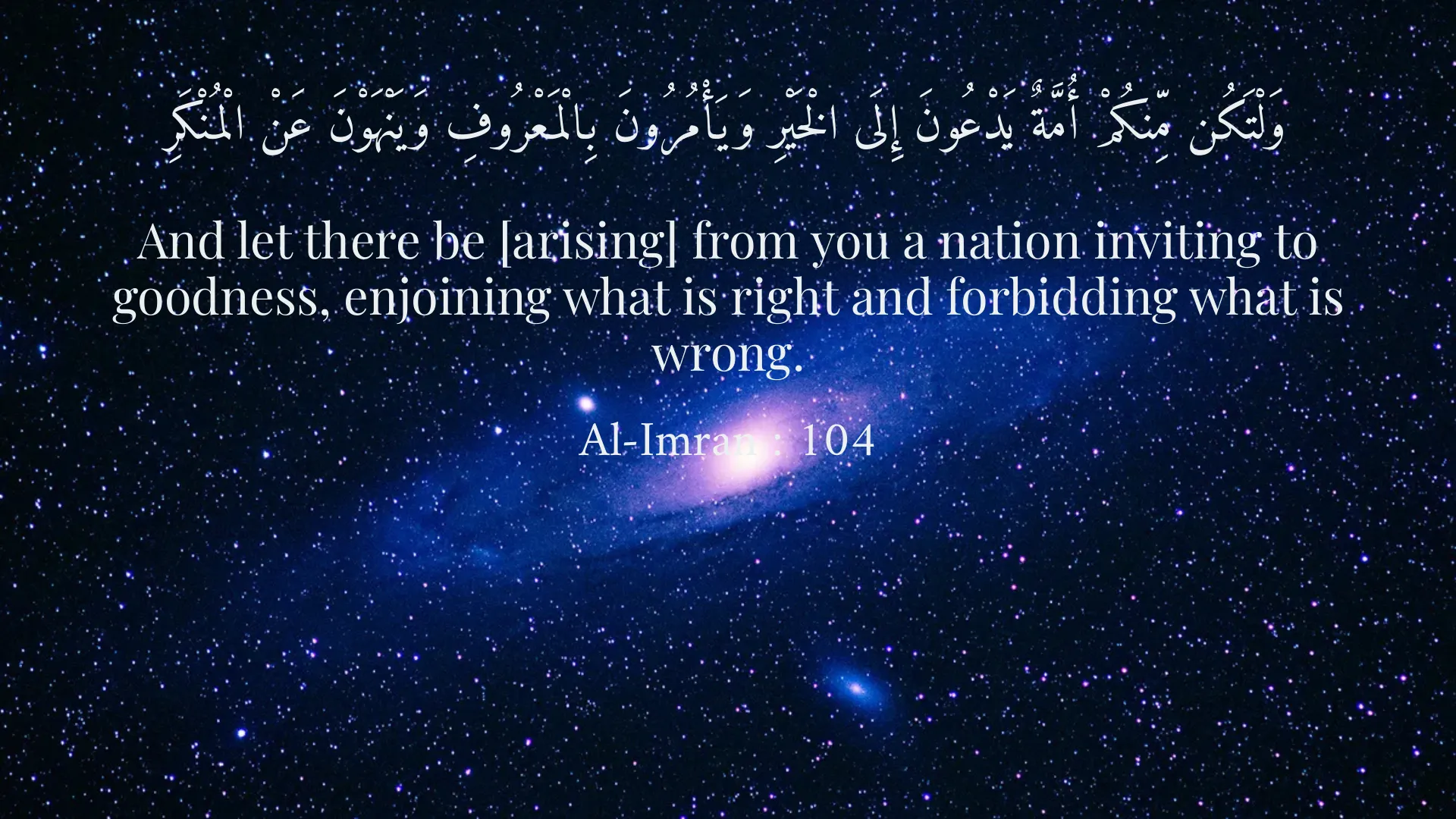
وَلْتَكُن مِّنكُمْ أُمَّةٌ يَدْعُونَ إِلَى الْخَيْرِ وَيَأْمُرُونَ بِالْمَعْرُوفِ وَيَنْهَوْنَ عَنْ الْمُنْكَرِ
And let there be [arising] from you a nation inviting to goodness, enjoining what is right and forbidding what is wrong.
Al-Imran : 104
يَا أَيُّهَا الَّذِينَ آمَنُوا كُونُوا قَوَّامِينَ بِالْقِسْطِ شُهَدَاءَ لِلَّهِ
O you who have believed, be persistently standing firm in justice, witnesses in justice.
An-Nisa : 135
إِنَّمَا الْمُؤْمِنُونَ إِخْوَةٌ فَأَصْلِحُوا بَيْنَ أَخَوَيْكُمْ
Indeed, the believers are brothers, so make settlement between your brothers.
Al-Hujurat : 10
Short Story
One day, Ali went to the mosque and discussed charitable giving and good behaviors with his friends. He remembered the verses of the Quran, especially verse 104 of Surah Al-Imran, which states: "And let there be [arising] from you a nation inviting to goodness." This inspired Ali to start planning a charity drive for the needy. His friends eagerly joined him, and this initiative brought their community closer, fostering more kindness and empathy among them.