Quranic Answer
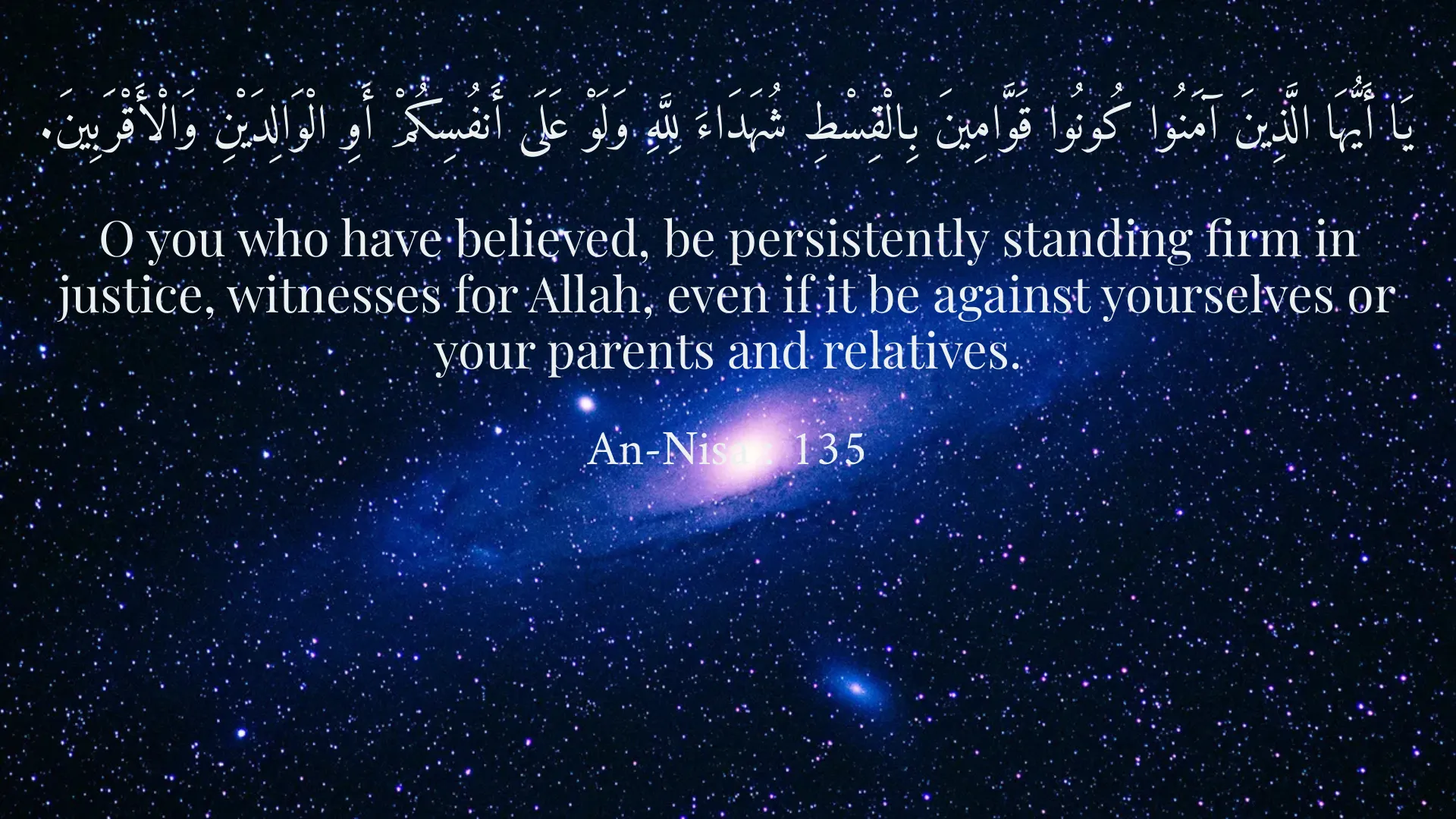
Justice is a cornerstone of ethical conduct and societal harmony, an integral value that transcends cultures and ages. In the Islamic tradition, justice is not merely a social obligation but a divine mandate that resonates throughout the pages of the Holy Quran. As believers seek to navigate the complexities of life, the Quran offers a roadmap, emphasizing the necessity of justice as one of the fundamental principles of Allah. This article aims to explore the profound significance of justice in the Quran, addressing its ethical implications, social responsibilities, and the divine expectations it entitles individuals to embrace. In the Quran, the concept of justice is exalted with unwavering clarity and conviction. The significance of justice is highlighted repeatedly; Allah commands His believers to act justly, ensuring that it remains untainted by personal interests or emotional ties. For instance, in Surah An-Nisa, verse 135, Allah commands, 'O you who have believed, be persistently standing firm in justice, witnesses for Allah, even if it be against yourselves or your parents and relatives.' Here, it becomes evident that justice transcends mere legality; it embodies a higher ethical standard that demands integrity, even at the cost of personal sacrifice or familial relationships. This directive bears a profound meaning that extends beyond its literal interpretation. When individuals are called to uphold justice even against their interests or that of their loved ones, it signifies an unwavering commitment to fairness and truth. The Quran positions justice not merely as an abstract ideal but as a profound obligation that can shape the moral landscape of a community. It illustrates the fundamental idea that familial bonds and friendships do not absolve one from the responsibility of accountability; on the contrary, they may serve to enhance one’s commitment to equity and fairness. Justice, as presented in the Quran, is also interconnected with the values of compassion, mercy, and empathy. It acknowledges the plight of the marginalized and oppressed, urging the believers to recognize their rights and dignity. In Surah Al-Ma'idah, verse 8 articulates, 'And let not the hatred of a people prevent you from being just. Be just; that is nearer to righteousness.' The universality of justice is emphasized in these teachings; irrespective of the circumstances or the individuals involved, righteousness remains anchored in fairness. In a society governed by the principles of justice, the needs of the marginalized individuals are not just acknowledged; they are actively met. The Quran underscores the notion that true justice requires an understanding of the social fabric and the complexities of human relationships. It implores Muslims to engage with their environment actively, ensuring that the scales of justice are balanced. When believers internalize these teachings, their social interactions, economic dealings, and personal ethics become reflections of the divine mandate for justice. Moreover, justice in the Quran does not merely end with individual actions but extends into the realm of social and institutional integrity. The Quranic vision of justice encompasses broader societal frameworks, calling upon leaders, influencers, and policymakers to build systems that facilitate fairness and equity. This comprehensive approach ensures that justice is woven into the very fabric of society, creating a harmonious coexistence that respects the rights and dignities of all individuals, especially the vulnerable. The Quran also highlights the significance of accountability and transparency within a system of justice. Justice can only be truly realized when there is openness and honesty in interactions. In Surah Al-Baqarah, verse 283, Allah reminds us, 'And do not conceal testimony, for whoever conceals it—his heart is indeed sinful.' This admonition against concealing truth emphasizes the need for integrity and authenticity in all endeavors, thereby reinforcing the connection between justice and moral rectitude. For Muslims, upholding justice is not a passive endeavor but rather an active and continuous pursuit. As individuals navigate their social and economic activities, they are called upon to implement the tenets of justice intricately woven into the Quran. Every action—whether it relates to trade, community engagement, or interpersonal relationships—must be grounded in justice to honor the divine expectations placed upon them. This reflects not only a personal commitment to ethical values but also a collective responsibility towards creating a just society. Furthermore, the act of praying for Allah’s assistance is emphasized in the journey towards justice. Believers are encouraged to seek divine guidance through supplications, prayers, and the recitation of the Quran. Such practices cultivate a spiritual consciousness that aligns individual intentions with righteous paths, thereby drawing closer to justice in their actions and decisions. Additionally, the Quran serves as a profound source of knowledge, offering insights and teachings that can guide believers toward achieving justice in all facets of life. It offers a wealth of narratives, historical contexts, and moral lessons that shape an understanding of justice’s multifaceted nature. By consistently engaging with the teachings of the Quran, Muslims can continuously align their lives with the principles of justice, steadfastly working towards its realization in personal and communal spheres. Nevertheless, achieving justice is not devoid of challenges. Societies often grapple with systemic injustices, social inequities, and entrenched disparities. Thus, it becomes imperative for believers to actively participate in efforts that dismantle oppressive structures, advocating reforms that honor the rights of all individuals while fostering a culture of empathy and understanding. It requires a collective awakening, where believers recognize their role in promoting equity and compassion in myriad ways, from community service to raising awareness about injustices. In conclusion, justice is not merely a principle but the very foundation upon which ethical existence is built, as illuminated by the Quran. It calls upon believers to prioritize fairness, integrity, and accountability, urging them to transcend personal interests for the greater good. By internalizing and enacting these teachings, Muslims can contribute to the establishment of a just society where the rights and dignity of all individuals are respected and upheld. It is through a sincere and steadfast commitment to justice that believers can embody the divine attributes reflected in the teachings of the Quran, creating a harmonious world that honors the sacred call of justice from Allah.
Related Verses
يَا أَيُّهَا الَّذِينَ آمَنُوا كُونُوا قَوَّامِينَ بِالْقِسْطِ شُهَدَاءَ لِلَّهِ وَلَوْ عَلَى أَنفُسِكُمْ أَوِ الْوَالِدَيْنِ وَالْأَقْرَبِينَ.
O you who have believed, be persistently standing firm in justice, witnesses for Allah, even if it be against yourselves or your parents and relatives.
An-Nisa : 135
يَا أَيُّهَا الَّذِينَ آمَنُوا كُونُوا قَوَّامِينَ بِالْقِسْطِ شُهَدَاءَ لِلَّهِ وَلَوْ عَلَى أَنفُسِكُمْ أَوِ الْوَالِدَيْنِ وَالْأَقْرَبِينَ.
O you who have believed, be persistently standing firm in justice, witnesses for Allah, even if it be against yourselves or your parents and relatives.
Al-Ma'idah : 8
Short Story
One day, a group of young people gathered in the mosque to discuss justice. One of them recalled the verses of the Quran and said, 'We must ask Allah to help us implement justice in our lives and never forget to act according to the teachings of the Quran.' The other youths agreed with him and decided to meet once a week to talk about justice and how to implement it in the community.