Quranic Answer
The Holy Quran provides timeless wisdom on many aspects of human behavior, particularly in the context of emotions such as anger and the urge for revenge. Anger is a natural human emotion, but unchecked anger can lead to destructive consequences—both for the individual experiencing it and for those around them. The Quran recognizes this struggle and offers guidance to help believers navigate these challenging emotions in a manner that promotes peace, harmony, and compassion. This article delves into how the Quran directs us to manage our anger and avoid the detrimental cycle of revenge, supported by relevant verses from the Holy Text. One of the cornerstone verses addressing this subject is found in Surah Al-Imran, verse 134. This verse articulates the characteristics of true believers, stating, "And those who, when they are wronged, they take revenge, yet they forgive the transgressors." The essence of this verse lies in its portrayal of those who respond to aggression with steadiness and restraint. When provoked, many people experience a natural urge to retaliate or seek revenge. Yet, the Quran teaches that true strength is displayed not in anger, but in the ability to forgive and remain steadfast. The spiritual teachings imbued in this verse invite the believers to reflect on their actions and urge them to transcend their anger into a state of patience and understanding. Such an attitude not only promotes personal peace but also cultivates an environment of mutual respect and calm within communities. The moral imperative presented here emphasizes that responses to conflict should be grounded in wisdom and self-control. Moreover, Surah Fussilat, verse 34 introduces a powerful principle about responding to wrongdoings: "And not equal are the good deed and the bad deed. Repel [evil] by that which is better; then, indeed, the one who between you and him is enmity will become as though he was a devoted friend." This verse serves as a profound reminder that responding to negativity with kindness can not only mitigate conflict but transform enmity into friendship. In practical terms, this means we should actively choose to react with compassion when others commit wrongs against us. The Quran encourages believers to prioritize goodwill and positive gestures, replacing retaliatory thoughts with acts of kindness. This shift in perspective fosters a culture of love and understanding rather than one filled with resentment and hostility—thereby distancing oneself from anger and the temptation of vengeance. Furthermore, the Quran reiterates the importance of forgiveness in Surah Ash-Shura, verse 40: "And the retribution of an evil act is an evil one like it; but whoever pardons and makes reconciliation, his reward is due from Allah. Indeed, He does not like the wrongdoers." Here, the Quran explicitly addresses the cycle of retaliation, suggesting that one wrongdoing should not justify another. Instead, believers are encouraged to adopt forgiveness as a means of healing—not only for the person forgiven but for their own spiritual well-being. Forgiveness, as highlighted in this verse, allows individuals to rise above petty grievances and conflicts and fosters an inner peace that cannot be easily shaken. The phrase ‘makes reconciliation’ emphasizes the proactive approach one can take in healing relationships. By cultivating an attitude of forgiveness, individuals contribute to a balanced and harmonious society, as they break the cycle of anger and vengeance. Moreover, the Quranic teachings urge those in positions of authority to act justly and compassionately. Surah An-Nisa, verse 135, states: "O you who have believed, be persistently standing firm in justice, witnesses in justice, even if it be against yourselves or parents and relatives. Whether one is rich or poor, Allah is more worthy of both. So follow not [personal] inclination, lest you not be just. And if you distort [your testimony] or refuse [to give it], then indeed Allah is Acquainted with what you do." This verse encompasses the need for honesty and fairness, even in emotionally charged situations—advocating for justice not just in external actions but also in the internal motivation behind those actions. On a broader societal level, the principle of forgiveness and the management of anger create a ripple effect that promotes psychological well-being and social cohesion. When individuals within a community practice forgiveness and strive to replace anger with love, harmony prevails. It can lead to stronger relationships, healthier dialogues about conflict, and a reduction in interpersonal violence. In summary, the Holy Quran serves as a profound guide for controlling anger and eschewing revenge by emphasizing patience, kindness, forgiveness, and justice. The lessons from verses such as those from Surah Al-Imran, Surah Fussilat, and Surah Ash-Shura underscore the importance of responding to conflicts with love rather than hostility. By embodying these principles, believers can cultivate inner peace and foster a society rooted in compassion and understanding. By integrating these teachings into our daily lives, we can move beyond personal grievances towards a more harmonious existence, ultimately reflecting the high moral and ethical standards promoted by the Quran. As we navigate the often turbulent waters of human emotions, the guidance of the Quran remains a steady anchor, helping us choose the path of love and forgiveness over anger and retaliation.
Related Verses
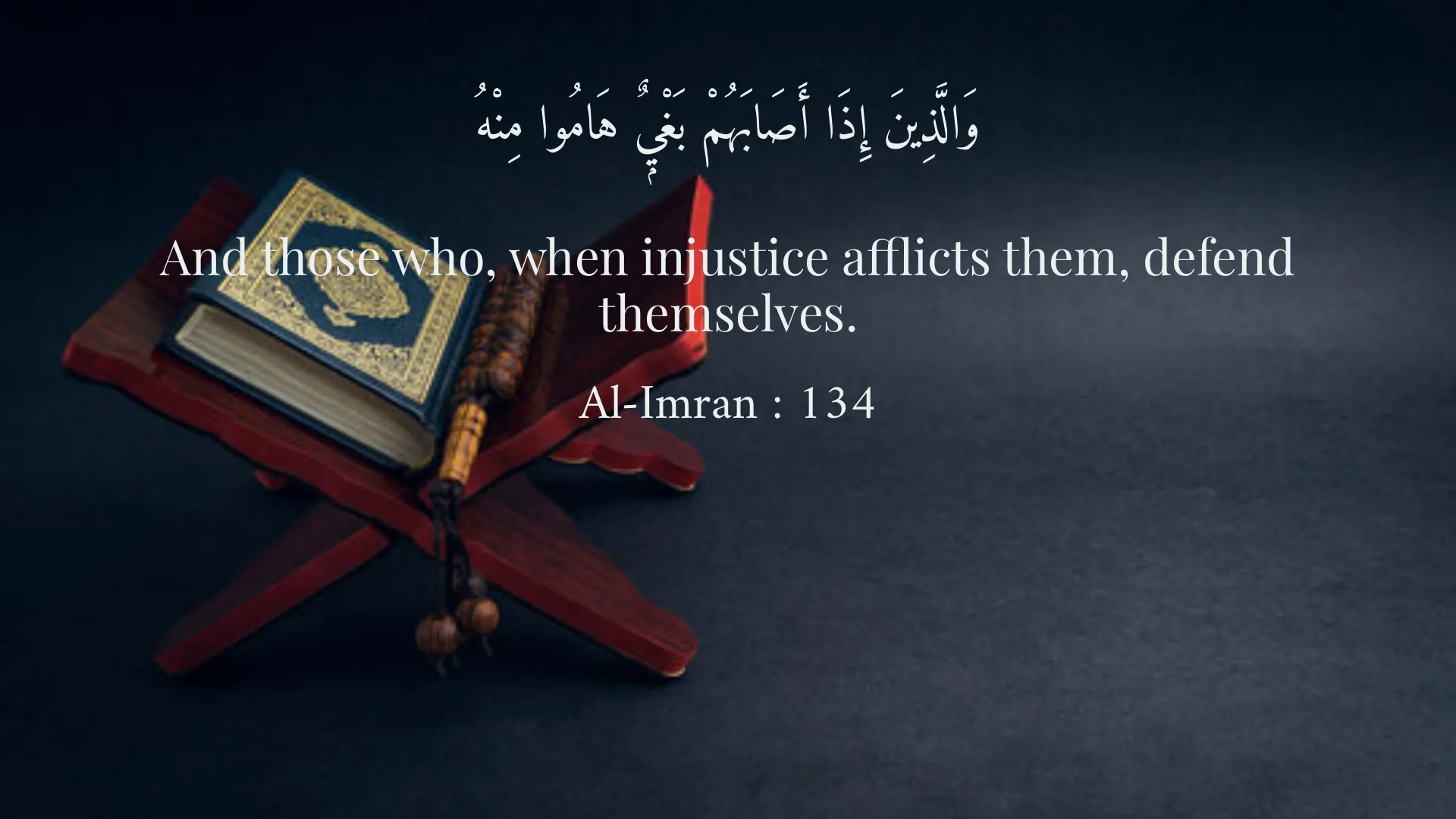
وَالَّذِينَ إِذَا أَصَابَهُمْ بَغْيٌۭ هَامُوا مِنْهُ
And those who, when injustice afflicts them, defend themselves.
Al-Imran : 134
وَلَا تَسْتَوِي الْحَسَنَةُ وَالسَّيِّئَةُ ۖ ادْفَعْ بِالَّتِي هِيَ أَحْسَنُ
And never are the good deed and the bad deed alike. Repel [evil] by that which is better.
Fussilat : 34
وَجَزَاءُ سَيِّئَةٍ سَيِّئَةٌ مِّثْلُهَا
And the retribution of an evil act is an evil one like it.
Ash-Shura : 40
Short Story
One day, Adel woke up and realized that one of his friends had disrespected him. For a while, he contemplated revenge, but then he remembered the verses of the Quran that call for patience and forgiveness. He decided instead to respond with empathy and kindness. This act not only improved his relationship with his friend but also brought Adel a greater sense of peace.