Quranic Answer
The Holy Quran, as the central religious text of Islam, serves not only as a guide for spiritual practices but also as a comprehensive manual for ethical living. Among the various topics it addresses, the question of wealth—particularly unlawful or unjust wealth—receives significant attention. The Quran provides clear instructions on how believers should approach wealth in their lives, urging them to maintain integrity, honesty, and justice in their financial dealings. This article will delve into the Quranic passages that address unlawful wealth, explore the temptations that accompany it, and suggest practical steps to safeguard one's financial integrity. At the heart of the discourse on unlawful wealth is Surah Al-Baqarah (Chapter 2, Verse 188), where Allah directly forbids believers from consuming one another’s wealth unjustly: 'And do not consume one another's wealth unjustly.' This instruction establishes a fundamental principle for all interactions involving property and assets. The warning against unjust consumption of wealth is not merely about avoiding theft or fraud; it encompasses a broader understanding of honesty in transactions, fair trading practices, and the avoidance of exploitation. The emphasis on legitimate wealth is critical for several reasons. First, the Quran positions honesty as a virtue that not only preserves social harmony but also lays the foundation for a prosperous society. Wealth accumulated through legitimate means fosters trust, encourages trade, and contributes to the overall well-being of the community. Conversely, wealth gained through deceit or coercion can create rifts among individuals and lead to a cycle of injustice that can plague entire societies. Moreover, greed is another aspect addressed by the Quran, as articulated in Surah Al-Imran (Chapter 3, Verse 130): 'O you who have believed, do not consume usury, doubled and multiplied, but fear Allah that you may be successful.' Here, Allah counsels against the perilous cravings that come with unlawful wealth. Greed can warp one’s judgment, turning individuals into mere instruments of their material desires at the expense of their spiritual responsibilities. The pursuit of illicit wealth not only jeopardizes an individual's standing before Allah but can also lead to severe repercussions in the hereafter. Such divine warnings serve as a reminder to believers of the importance of moderation and the idea that sincere faith must align with ethical financial conduct. Justice is another recurring theme within the Quran’s guidance on wealth. In Surah An-Nahl (Chapter 16, Verse 90), Allah commands: 'Indeed, Allah commands you to render trusts to whom they are due and when you judge between people to judge with justice.' This verse not only reinforces the principle of honesty but also emphasizes the necessity of integrity when dealing with others’ possessions. It highlights the importance of trustworthiness and fairness in financial dealings, advocating for practices that are transparent and equitable. To navigate the complexities of wealth and avoid the pitfalls of temptation, the first step is to gain a thorough understanding of what constitutes lawful and unlawful wealth. Engaging in the study of the Quran and Hadith is crucial. By learning these sacred texts, individuals can develop a genuine comprehension of the differentiating features of lawful wealth. This foundational knowledge should be integrated into one’s principles and daily practices. The Quran serves not only as a religious guide but also as an ethical framework for financial dealings, embedding an awareness of the spiritual consequences of one’s economic choices. Moreover, the social circles one chooses to be a part of play a significant role in influencing one’s financial ethics. Establishing connections with those who uphold high moral standards and engage in lawful wealth generation is essential in mitigating the temptations of unjust wealth. Surrounding oneself with individuals who prioritize ethical conduct will help reinforce one’s own commitment to financial integrity, making it easier to resist the allure of unlawful gains. Repentance is another vital element of safeguarding oneself from the temptations of unlawful wealth. The concept of seeking forgiveness — both from Allah and from those whom we may have wronged — should be a constant practice among believers. True repentance requires individuals to acknowledge their failings, reflect on their attitudes towards wealth, and be determined to rectify their behavior. This ongoing process of reflection and repentance draws individuals closer to Allah's mercy and further fortifies their resolve against the allure of unlawful wealth. In conclusion, the discourse on unlawful wealth within the Quran serves as an essential guide for believers navigating the complexities of financial life. The clear prohibitions against injustice in wealth, the warnings against greed, and the admonitions to judge fairly and justly create a framework for ethical financial behavior. Understanding what constitutes lawful wealth, fostering positive social connections, and maintaining a constant practice of repentance are practical steps believers can take to safeguard their financial integrity. By adhering to these principles, individuals can cultivate a life of righteousness that not only enhances their own spiritual standing but also contributes positively to their communities. The pursuit of lawful wealth, guided by the teachings of the Quran, ultimately leads to a sense of fulfillment and peace that transcends mere material accumulation.
Related Verses
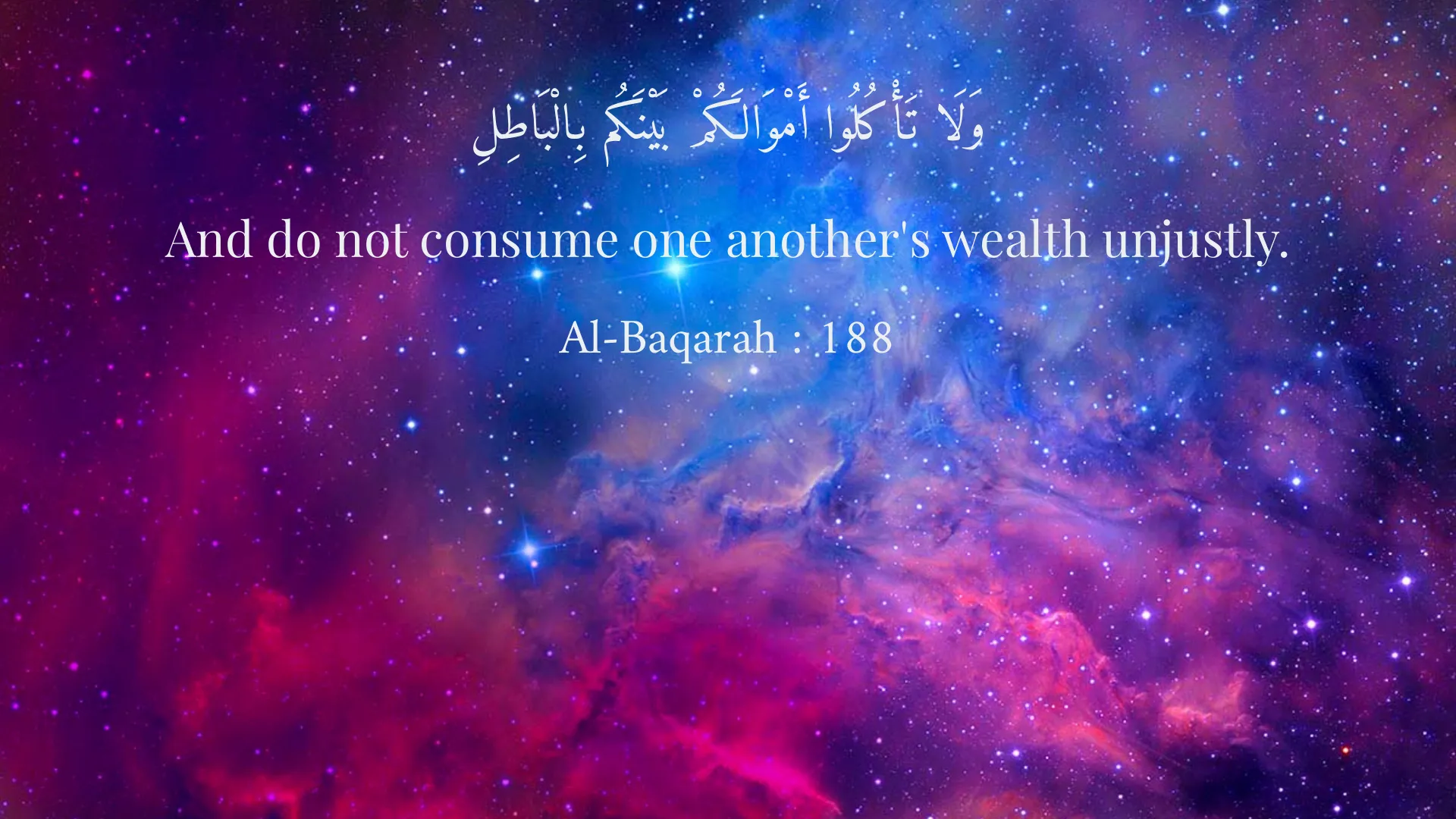
وَلَا تَأْكُلُوا أَمْوَالَكُمْ بَيْنَكُم بِالْبَاطِلِ
And do not consume one another's wealth unjustly.
Al-Baqarah : 188
يَا أَيُّهَا الَّذِينَ آمَنُوا لَا تَأْكُلُوا أَمْوَالَكُمْ بَيْنَكُمْ بِالْبَاطِلِ وَتُدْخِلُوا فِي أَرْحَامِكُمْ
O you who have believed, do not consume one another's wealth unjustly.
Al-Imran : 130
إِنَّ اللَّـهَ يَأْمُرُ بِالْعَدْلِ وَالإِحْسَانِ
Indeed, Allah commands you to render trusts to whom they are due and when you judge between people to judge with justice.
An-Nahl : 90
Short Story
Once upon a time, there was a man named Hassan who was always trying to acquire wealth. Yet, he never wanted to take advantage of any wrong ways. One night, Hassan heard a verse from the Quran in his sleep, which said: 'And do not consume one another's wealth unjustly.' After waking up, Hassan decided not to give up on his endeavors for earning lawful wealth and sought to understand the true blessings. He realized he would be happier through honesty and hard work.