Quranic Answer
Resentment is a negative and destructive emotion that can significantly affect an individual's life. It acts as a toxic undercurrent in relationships, poisoning interactions and creating barriers not only with those who may have wronged us but also with ourselves. Individuals often harbor resentment for a variety of reasons—feeling misunderstood, rejected, or disrespected. Left unchecked, these feelings can fester and develop into bitterness, leading to a plethora of psychological and emotional issues, such as anxiety, depression, and an inability to form healthy relationships. In this light, it becomes vital to consider ways to navigate through and ultimately overcome resentment. From the Quranic perspective, overcoming this issue is possible through strengthening faith, gaining a deeper understanding of life, and accepting others. The Quran serves as a guide, offering practical advice on how to tackle such negative sentiments effectively. Surah Al-Imran, verse 134 reminds us, 'Show kindness and compassion to one another, and cleanse your hearts from resentment.' This verse resonates deeply, emphasizing that being compassionate is integral not only to our spiritual well-being but also to our emotional health. Kindness can act as a balm, soothing wounds created by past grievances and helping us cultivate an environment where love and mutual respect flourish. Such kindness does not merely require grand gestures; rather, it is composed of everyday actions and interactions. Small acts of kindness and understanding can gradually dissolve the weight of resentment. By regularly practicing compassion, we can start to transform our relationships with others and ourselves. When we approach others with an open heart, we create spaces for dialogue and healing—transforming toxic interactions into opportunities for connection. In addition to kindness, acceptance plays a crucial role in the process of healing. When we face the reality that everyone is inherently flawed and that no one is immune to making mistakes, we start to develop compassion for their shortcomings and our own. Surah Ash-Shura, verse 37, states, 'And those who pardon and overlook, Allah will forgive them.' This reinforces the importance of practicing forgiveness as a powerful tool against resentment. Pardon involves releasing the burdens of anger and disappointment, not solely for the benefit of those who have wronged us but also to liberate our hearts and minds. Forgiveness is not a passive act; rather, it requires intentional effort. By acknowledging our feelings of resentment, we can begin to address the underlying issues that give rise to those emotions. It helps to articulate our feelings—writing in a journal, discussing them with a trusted friend, or seeking guidance from a spiritual advisor can provide clarity. Once our feelings are articulated, we can move toward resolution. Simply letting go of resentment without understanding its root can be superficial, often resulting in us carrying that unaddressed burden indefinitely. One of the key methods for overcoming resentment is learning patience and tolerance for the pain and mistakes of others. This can be particularly challenging as it often requires us to confront our discomfort while remaining empathetic to others' struggles. For example, when someone behaves insensitively, we can choose to respond by recognizing their humanity rather than holding on to anger at their actions. Understanding that each individual is navigating their own challenges can be liberating; it helps dilute the weight of our grievances as we remember that we are all similar in our imperfections. Moreover, embracing an attitude of patience allows us to recognize that everyone is on their journey of growth, facing their own battles and grappling with their own flaws. This broader perspective fosters a sense of unity; instead of feeling isolated in our pain, we start to connect with others through shared experiences of suffering, error, and growth. This connection serves to heal wounds and diminish grudges, making it easier to forgive and move forward. As we actively engage in forgiveness, we may begin to feel lighter. This emotional release brings about a palpable shift in our mental and spiritual state. Holding on to resentment can be likened to carrying a heavy backpack filled with stones—each resentment is another stone weighing us down. The moment we learn to forgive, we start to unload those stones, one by one, until all that remains is a sense of peace and potential. This journey from resentment to forgiveness is not instantaneous; it is a continuous process that requires daily commitment and reflection. Eventually, forgiveness evolves into an integral aspect of our character. The act is a chosen response, one that becomes easier with practice and dedication. Moreover, it can have a ripple effect; when we forgive and let go of our resentments, we exhibit a profound example for others to follow. Our actions can inspire a broader culture of understanding and compassion, transforming social dynamics to support emotional health and spiritual growth in communities. In conclusion, the journey toward overcoming resentment is multifaceted and requires conscious effort. The teachings of the Quran provide a profound framework for navigating this emotional landscape, urging us to cultivate kindness and develop patience. By practicing forgiveness, we not only liberate ourselves from the heavy burden of resentment, but we also create spaces where healing and transformation can thrive, fostering healthier relationships and promoting a culture of compassion. Ultimately, learning to forgive and show kindness towards ourselves and others opens the doors to personal peace and spiritual fulfillment, guiding us toward a more meaningful existence.
Related Verses
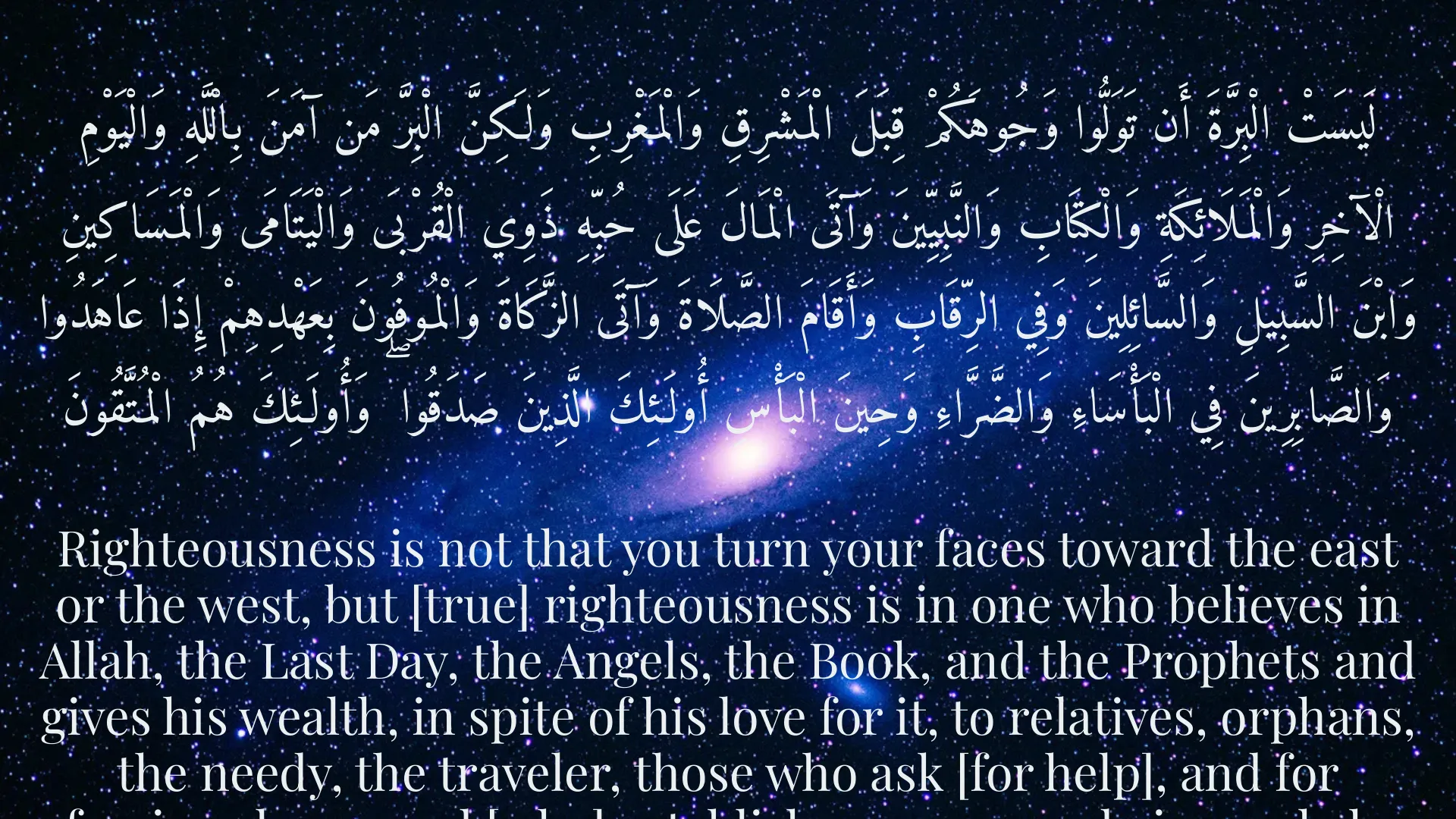
لَيسَتْ الْبِرَّةَ أَن تَوَلُّوا وَجُوهَكُمْ قِبَلَ الْمَشْرِقِ وَالْمَغْرِبِ وَلَكِنَّ الْبِرَّ مَن آمَنَ بِالْلَّهِ وَالْيَوْمِ الْآخِرِ وَالْمَلَائِكَةِ وَالْكِتَابِ وَالنَّبِيِّينَ وَآتَى الْمَالَ عَلَى حُبِّهِ ذَوِي الْقُرْبَى وَالْيَتَامَى وَالْمَسَاكِينِ وَابْنَ السَّبِيلِ وَالسَّائِلِينَ وَفِي الرِّقَابِ وَأَقَامَ الصَّلَاةَ وَآتَى الزَّكَاةَ وَالْمُوفُونَ بِعَهْدِهِمْ إِذَا عَاهَدُوا وَالصَّابِرِينَ فِي الْبَأْسَاءِ وَالضَّرَّاءِ وَحِينَ الْبَأْسِ أُولَـئِكَ الَّذِينَ صَدَقُوا ۖ وَأُولَـئِكَ هُمُ الْمُتَّقُونَ
Righteousness is not that you turn your faces toward the east or the west, but [true] righteousness is in one who believes in Allah, the Last Day, the Angels, the Book, and the Prophets and gives his wealth, in spite of his love for it, to relatives, orphans, the needy, the traveler, those who ask [for help], and for freeing slaves; and [who] establishes prayer and gives zakah; [those who fulfill their promise when they promise] and [those who are patient in poverty and hardship and during battle]. Those are the ones who have been true, and it is those who are the righteous.
Al-Imran : 134
وَالَّذِينَ يَجْتَنِبُونَ كَبَائِرَ الإِثْمِ وَالْفَوَاحِشَ وَإِذَا مَا غَضِبُوا هُمْ يَغْفِرُونَ
And those who avoid major sins and immoralities, and when they are angry, they forgive.
Ash-Shura : 37
Short Story
One day, a man named Hassan returned home with a heavy heart full of resentment. He remembered the Quranic verses urging forgiveness and kindness. He decided to let go of his resentment and speak to the person he was upset with. Once he opened his heart to reconciliation, he felt a sense of relief and peace. This experience taught him that holding onto resentment only burdens oneself, while forgiveness leads to greater tranquility.