Quranic Answer
### Self-Esteem and Humility: A Harmonious Balance for Personal and Social Growth In today's fast-paced, often chaotic world, the foundational characteristics of self-esteem and humility can significantly impact individual behaviors and societal interactions. These two traits, when harmoniously integrated, create a powerful synergy that fosters personal development and enhances social cohesion. Understanding the virtues of self-esteem and humility not only enriches our personal lives but also plays a crucial role in the spiritual aspect of human existence, especially in the context of Islamic teachings. #### The Essence of Self-Esteem Self-esteem fundamentally refers to how individuals perceive their worth and value. It encompasses self-respect, confidence, and a sense of belonging, shaping how we approach life and establish relationships. High self-esteem enables individuals to accept their strengths and weaknesses, empowering them to pursue goals while remaining resilient in the face of challenges. On the contrary, low self-esteem may result in self-doubt, fear of failure, and aversion to social interactions. Islam acknowledges the vital role of self-esteem in an individual's spiritual and social development. In Surah Al-Imran, verse 139, Allah states, "And do not weaken and do not grieve, and you will be superior if you are [true] believers." This powerful message embodies the essence of self-esteem among believers, urging them to rise above adversity and embrace their worth. The verse signifies that possessing self-worth is not an act of arrogance; instead, it is essential for affirming one’s identity as a believer and striving for personal excellence. #### Understanding Humility Conversely, humility is often misunderstood; it can be perceived as a weakness or a lack of self-worth. However, humility is far from self-deprecation. It represents a profound respect for others, an acknowledgment of human imperfection, and a commitment to serving beyond oneself. The Quran reinforces the importance of humility, especially in interpersonal interactions. In Surah Al-Furqan, verse 63, Allah describes the attributes of the faithful, stating, "And the servants of the Most Merciful are those who walk upon the earth easily, and when the ignorant address them [harshly], they say [words of] peace." This verse epitomizes the grace and composure that signify a humble believer. It illustrates that humility involves responding to adversity with dignity and kindness rather than aggression or hostility. A humble person recognizes their flaws and limitations while maintaining a compassionate attitude towards others, enhancing social interactions and fostering a peaceful environment. #### The Interplay Between Self-Esteem and Humility Both self-esteem and humility are vital components of a balanced character. On the surface, they might seem diametrically opposed; however, they complement each other in profound ways. High self-esteem provides the fortitude needed to accept one’s imperfections and the determination to grow while humility instills a sense of awareness regarding others’ feelings and perspectives. When someone possesses high self-esteem, they are more likely to engage in humble behavior, as they do not feel threatened by others' strengths or successes. They can celebrate other people's achievements while recognizing their own worth. This creates a positive cycle where self-esteem encourages humility, leading to more robust and empathetic relationships. #### Cultivating Self-Esteem through Humility While many seek to build self-esteem through achievements and recognition, the Islamic approach emphasizes humility as a pathway to genuine self-worth. By practicing humility, one develops a deeper sense of self, rooted in acknowledgment of God's mercy and the realization that we are part of a larger community. This can lead to increased self-esteem as individuals learn to appreciate their intrinsic value, independent of societal metrics. Moreover, humility fosters resilience. When faced with failures or setbacks, humble individuals can navigate these challenges with grace, understanding that their self-worth is not solely based on successes. They recognize that life encompasses both highs and lows, and through this acceptance, they can maintain a sense of respect for themselves and forothers. #### Building a Better World through Integration The integration of self-esteem and humility leads to a more compassionate society. Individuals who embody both traits contribute positively to their communities, promoting respect, understanding, and cooperation. Such individuals are equipped to address conflicts with empathy, building bridges rather than creating division. In educational and professional settings, fostering an environment that values both self-esteem and humility can lead to improved teamwork and collaboration. When individuals feel valued and respected, they are more likely to contribute their best efforts, leading to enhanced productivity and morale. This, in turn, creates a cycle of positive reinforcement, where humble recognition of others' efforts leads to an atmosphere of trust and collaboration. #### Conclusion In conclusion, self-esteem and humility are not only crucial attributes for personal development but also for creating a harmonious society. They provide a framework within which individuals learn to value themselves and others, fostering respect and compassion in interactions. The teachings of the Quran provide profound insights into the significance of these traits, reminding believers of their importance. By nurturing both self-esteem and humility, we can aspire to become individuals who reflect dignity in our self-regard while promoting kindness and respect in our interactions with others. It is through this balance that we can collectively aspire to create a better, more understanding world, grounded in love and mutual respect. As we embrace both these virtues, we can contribute to a society that thrives on growth, cooperation, and compassion.
Related Verses
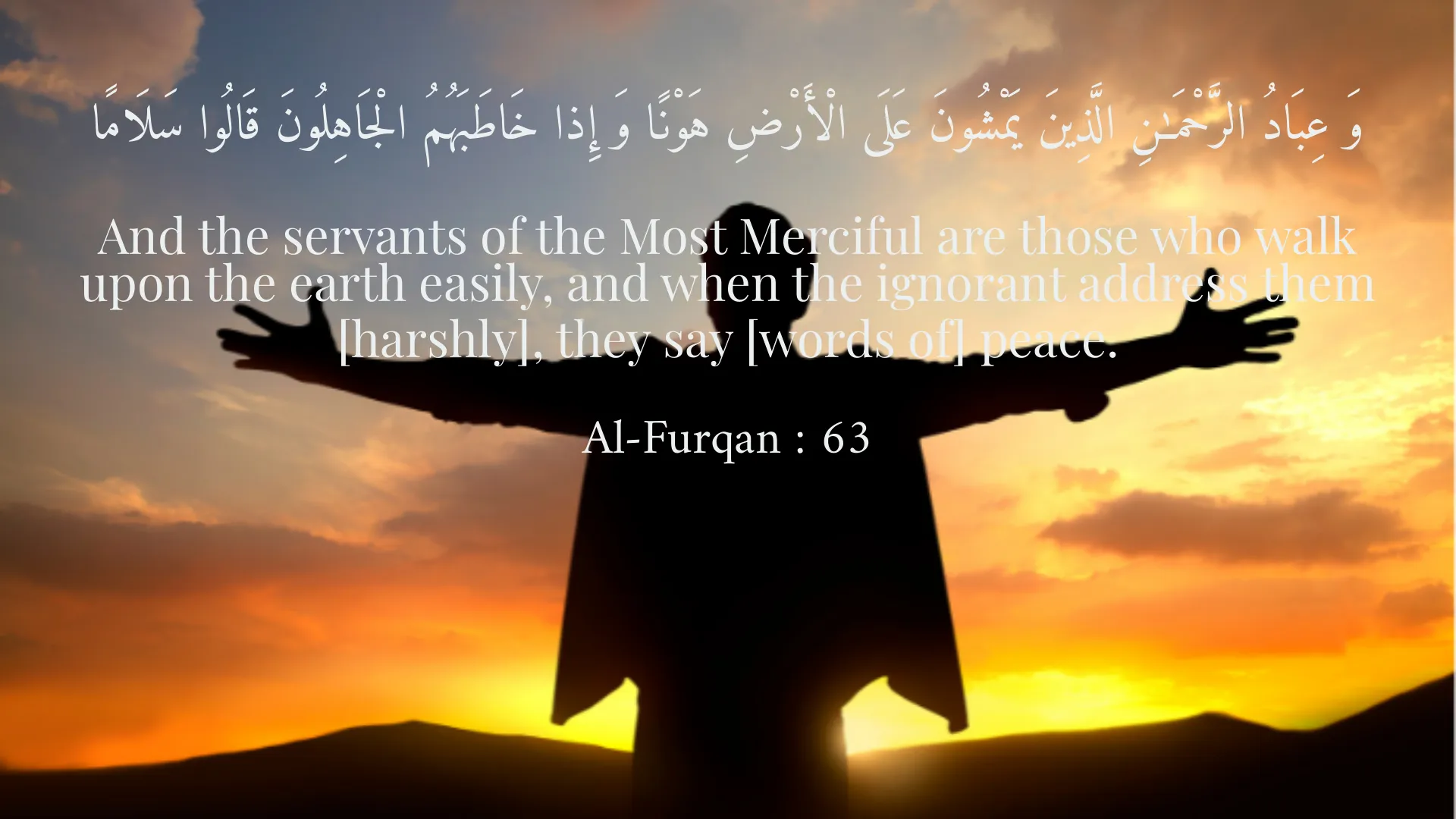
وَ عِبَادُ الرَّحْمَـٰنِ الَّذِينَ يَمْشُونَ عَلَى الْأَرْضِ هَوْنًا وَ إِذا خَاطَبَهُمُ الْجَاهِلُونَ قَالُوا سَلَامًا
And the servants of the Most Merciful are those who walk upon the earth easily, and when the ignorant address them [harshly], they say [words of] peace.
Al-Furqan : 63
وَ لَا تَهِنُوا وَ لَا تَحْزَنُوا وَ أَنتُمُ الْأَعْلَوْنَ إِن كُنتُم مُّؤْمِنِينَ
And do not weaken and do not grieve, and you will be superior if you are [true] believers.
Al-Imran : 139
Short Story
Once upon a time in a village, there lived a man named Hassan who was known for his knowledge and humility. He always spoke to people with a smile and helped others. One day, a young man asked him, 'Why are you always so polite?' Hassan replied with a smile, 'Because I believe every human being is valuable, and humility helps me to understand others better!' Hassan always respected others and listened to their opinions. Thus, he taught others the true meaning of self-esteem and humility.