Quranic Answer
Title: The Role of Trust and Honesty in Islamic Teachings Introduction Trust and honesty serve as foundational elements in human relationships and societal structures. Within the context of Islamic teachings, the Holy Quran profoundly accentuates the significance of these virtues. The Quran not only underscores the importance of trust and honesty through various verses but also delineates the pathways to cultivate trust in interpersonal relations. The following discussion delves into Quranic verses that explore themes of honesty, good conduct, respect for others’ rights, and reliance on Allah, all of which contribute to establishing a trustworthy character. The Imperative of Honesty In the realm of ethics and morality, honesty stands out as a non-negotiable principle. The Quran clearly articulates this in Surah Al-Baqarah, verse 42, where Allah commands the believers not to mix truth with falsehood. This succinct yet powerful injunction serves as a poignant reminder that the first step toward winning the trust of others lies deeply rooted in honesty. As social beings, individuals often find themselves relying on the words and actions of others. Hence, a consistent adherence to truth empowers one to develop a reputation of integrity. A person recognized as honest automatically attracts trust from peers and even strangers. Moreover, honesty transcends mere verbal commitments; it extends to actions and behaviors as well. When individuals embody transparency in their dealings, they pave the way for stronger foundations of trust. Consequently, an honest person does not simply speak the truth but lives in accordance with that truth, demonstrating honesty in all aspects of life. Encouraging Good Speech and Righteous Conduct Continuing the exploration of trust, one comes across additional guidance in Surah Al-Ahzab, verse 70, where believers are instructed to engage in good speech and righteous conduct. The Quran recognizes that words possess the power to influence and move hearts. Thus, cultivating a habit of speaking kindly and respectfully fosters goodwill and mutual respect among individuals. Positive communication is essential for building relationships based on trust and understanding. Moreover, alongside good speech, the emphasis on righteous conduct draws attention to the harmony between one’s words and deeds. Engaging in virtuous behavior not only reflects one’s values but also acts as a magnet that attracts others. When good deeds are prevalent in a community, trust flourishes, creating an environment characterized by mutual cooperation and harmony. Thus, the integration of both good speech and action forms a comprehensive strategy to nurture the trustworthiness of an individual. Respecting Rights and Kindness To further illustrate the foundations of trust, we can turn to Surah An-Nisa, verse 36. This verse profoundly underlines the importance of being good to parents, relatives, orphans, and the needy. The explicit call for kindness and respect sets a clear expectation for how individuals ought to treat one another. A society that values respect for rights amplifies a sense of trust and loyalty among its members. When people feel safe and respected within their communities, the bonds of trust are naturally strengthened. Moreover, kindness, especially towards those who may be marginalized or vulnerable, embodies the essence of social responsibility. When individuals take the initiative to care for the rights of others, they facilitate an atmosphere replete with compassion and understanding. Such virtues lay the groundwork for collective trust and solidarity. The Quran teaches that when people act with kindness and consideration, they not only support the underprivileged but also contribute to building a robust and united society. Integrity and Fairness in Dealings Additionally, the significance of integrity and fairness in one’s transactions is emphasized in Surah Al-Ma'idah, verse 8. The Quran emphasizes that fairness is crucial in every aspect of life. When a person engages in honest dealings and stays true to their promises, they uphold their integrity while garnering the trust of others. Trust cannot prosper in environments characterized by deceit and dishonesty. Fairness in interactions creates an atmosphere of predictability and security; people are more likely to engage in dealings when they believe they are being treated equitably. A consistent display of fairness amidst transactions reinforces public confidence and inspires trust. The practice of being just not only builds individual character but also nurtures environments where collective trust can thrive. The Role of Prayer and Reliance on Allah Lastly, but by no means least, the necessity of spiritual dependence on Allah cannot be overlooked. Relying on Allah in all affairs encourages personal humility and fosters a strong connection with the Creator. This reliance is crucial in nurturing trust, as it invites individuals to seek guidance and strength from Allah when navigating interpersonal relationships. In moments of hardship or moral dilemmas, turning to prayer serves as a reminder that ultimate trust lies in Allah alone. Moreover, through prayer and worship, believers cultivate attributes such as patience, gratitude, and resilience, which are essential in establishing and maintaining trust with others. By nurturing their spiritual connection with Allah, individuals can align their actions with divine attributes, thus becoming more trustworthy and honest in their daily lives. The act of prayer not only reaffirms their reliance on Allah but also propels them toward building trust in all their endeavors. Conclusion In conclusion, the Holy Quran articulates multifaceted dimensions of trust and honesty, providing a comprehensive roadmap for cultivating these virtues within society. Through principles such as honesty in speech and action, engagement in good conduct, respect for the rights of others, fairness in dealings, and reliance on Allah, individuals can successfully build a reputation of trustworthiness. As these virtues become enshrined in the fabric of daily life, they contribute to fostering stronger relationships and more harmonious communities. By adhering to these timeless principles, we can navigate our interactions with integrity and compassion, ultimately earning the trust and respect of those around us.
Related Verses
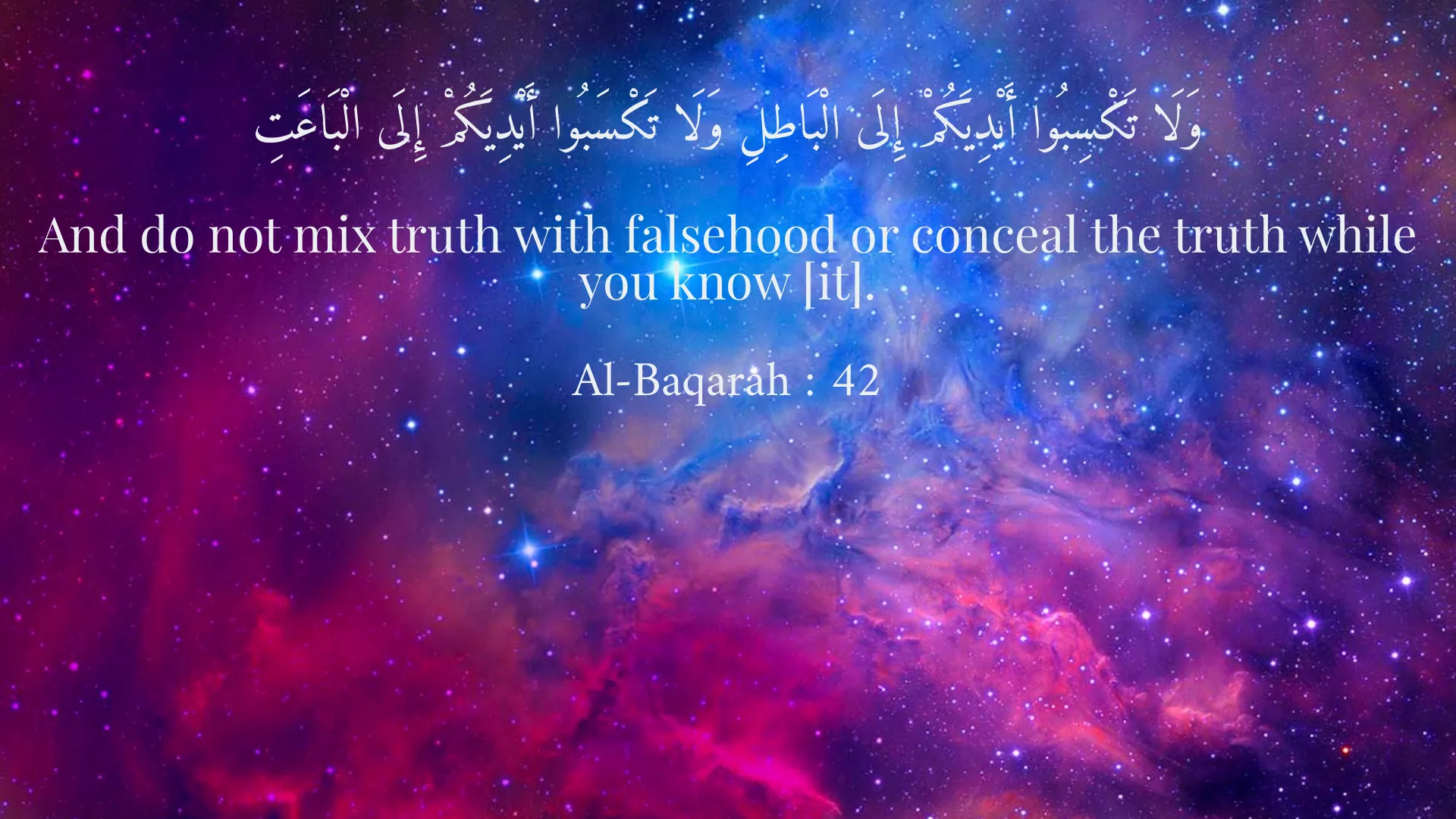
وَلَا تَكْسِبُوا أَيْدِيَكُمْ إِلَى الْبَاطِلِ وَلَا تَكْسَبُوا أَيْدِيَكُمْ إِلَى الْبَاعَتِ
And do not mix truth with falsehood or conceal the truth while you know [it].
Al-Baqarah : 42
يَا أَيُّهَا الَّذِينَ آمَنُوا اتَّقُوا اللَّهَ وَقُولُوا قَوْلًا سَدِيدًا
O you who have believed, fear Allah and speak words of appropriate justice.
Al-Ahzab : 70
اُعْبُدُوا اللَّهَ وَلَا تُشْرِكُوا بِهِ شَيْئًا وَبِالْوَالِدَيْنِ إِحْسَانًا...
Worship Allah and associate nothing with Him, and to parents, do good...
An-Nisa : 36
Short Story
Once upon a time, a man named Hasan was trying to gain the trust of his neighbors. He was always honest in his actions and truthful in his words. One day, he noticed that his neighbor needed help. He rushed to assist his neighbor and, alongside his efforts for honesty, showcased his good intentions. Gradually, his neighbors began to trust him, and his kind behavior strengthened their relationships.