Quranic Answer
The Messenger of Allah (PBUH) stands as a pillar of exemplary conduct within the Islamic tradition, embodying the pinnacle of both Islamic and human morals. His life serves as a model for countless believers around the world, and his attributes are clearly and vividly detailed within the pages of the Holy Quran. Among the myriad moral characteristics attributed to the Prophet, perhaps none is more striking than his innate kindness and compassion towards all of creation. In Surah Al-Imran, verse 159, Allah conveys a profound message regarding the nature of the Prophet's interactions with those around him. "So by mercy from Allah, [O Muhammad], you were lenient with them. And if you had been rude in speech and harsh in heart, they would have disbanded from about you." This verse encapsulates a vital aspect of human interaction: that gentleness and kindness are foundational to building strong and meaningful relationships. It reflects a universal truth that transcends cultural and religious boundaries — the importance of empathy and understanding in our behavior towards others. As we delve deeper into the character of the Prophet Muhammad (PBUH), we uncover a treasure trove of virtues that can and should guide our daily interactions. His kindness is frequently exemplified through anecdotes from his life; stories of how he treated the vulnerable, respected the poor, and engaged with even his adversaries with dignity and compassion resonate deeply within the hearts of believers. Such narratives encourage us to reflect on our behavior in our communities and social fabric. The Quran also emphasizes the importance of honesty and integrity, which were hallmark qualities of the Prophet’s character. In Surah At-Tawbah, verse 119, Allah commands the Prophet to act with truthfulness and trustworthiness, stating: "O you who have believed, fear Allah and be with those who are true." This emphasis on truthfulness serves as a powerful reminder that honesty is not merely an individual virtue but a communal commitment that strengthens the very fabric of society. The Prophet (PBUH) exemplified this in his dealings with others, ensuring that he was known as Al-Amin, the trustworthy one, long before his prophethood. To bring ourselves closer to the morals embodied by the Prophet, we must strive to reflect these attributes within our daily lives. For instance, honesty should permeate our speech and actions. This means not only avoiding deceit but actively cultivating transparency in our relationships. It requires us to hold ourselves accountable for our words and to ensure that our commitments are honored. Moreover, in our families and communities, we should foster a culture of kindness and forgiveness. Whether it is through small acts of generosity or through larger gestures of support during difficult times, our aim should be to lift others up rather than bringing them down. Additionally, we must recognize that applying these moral guidelines is an ongoing process. It is easy to become caught up in the challenges of daily life where impatience, frustration, and anger can cloud our judgment. During these moments, reflecting on the life of the Prophet can provide necessary guidance. His ability to remain calm in the face of adversity and respond with grace showcases the strength of character that is attainable through conscious effort and reliance on divine guidance. Prayer serves as a powerful mode of connection, reinforcing our faith and moral integrity. Making sincere supplications for the enhancement of good morals not only brings us closer to Allah but also strengthens our commitment to embodying the traits of the Prophet. When we pray for kindness, for forgiveness, and for strength in honesty, we internally motivate ourselves to act in accordance with these attributes. Daily prayers and reflection can significantly assist in re-centering our mental and spiritual state. Moreover, engaging with the teachings and life stories of the Prophet Muhammad (PBUH) can provide us with the inspiration necessary to transform our lives. Through studying Hadith literature, learning about significant events in the Prophet’s life, and discussing these principles in community settings, we can foster an environment where the morals of the Prophet are alive and thriving. Storytelling, in particular, can be an impactful method to pass on these values to younger generations — narratives of the Prophet’s compassion, honesty, and sense of justice can shape the hearts and minds of those who seek to emulate his example. In a world that is often characterized by divisiveness and hostility, the morals exemplified by the Prophet Muhammad (PBUH) shine as a beacon of hope. His legacy encourages individuals of all backgrounds and beliefs to strive for a life filled with compassion, integrity, and mutual respect. It reminds us that, irrespective of our differences, we are united in our capacity for kindness and that each one of us has the potential to make a positive difference in the lives of others. In conclusion, by observing the way of life of the Prophet Muhammad (PBUH), we can draw immense inspiration to incorporate his kindness and honesty into every aspect of our lives. The teachings found in the Quran and the example set by the Prophet can guide us toward building stronger relationships, fostering a sense of community, and ultimately becoming better individuals. As we seek to bring these qualities into our lives, let us not forget the importance of ongoing reflection, sincere prayer, and a commitment to personal growth. Together, by upholding the morals taught by the Prophet, we can create a ripple effect of positivity that extends far beyond ourselves.
Related Verses
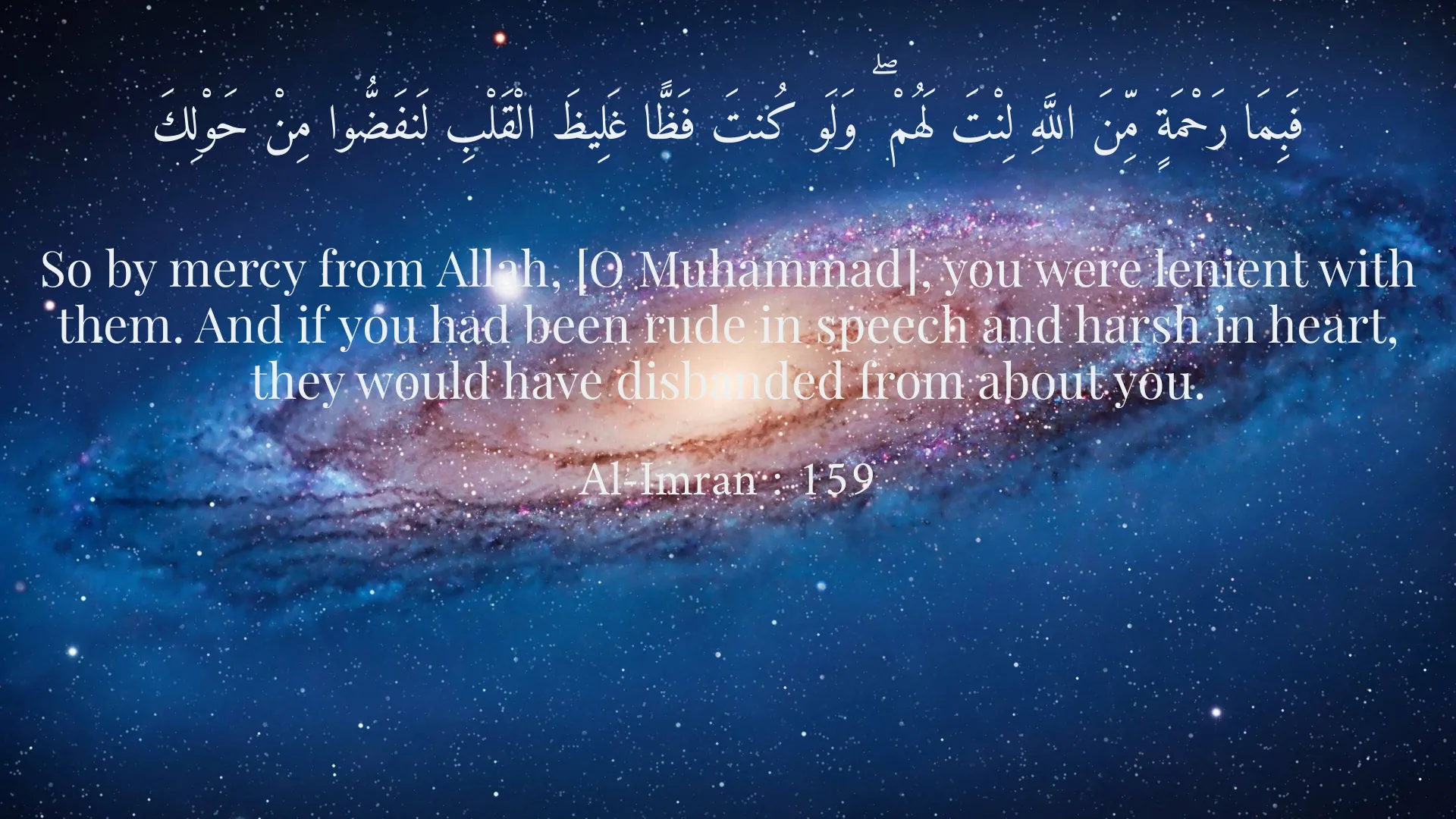
فَبِمَا رَحْمَةٍ مِّنَ اللَّهِ لِنْتَ لَهُمْ ۖ وَلَو كُنتَ فَظًّا غَلِيظَ الْقَلْبِ لَنفَضُّوا مِنْ حَوْلِكَ
So by mercy from Allah, [O Muhammad], you were lenient with them. And if you had been rude in speech and harsh in heart, they would have disbanded from about you.
Al-Imran : 159
يَا أَيُّهَا الَّذِينَ آمَنُوا اتَّقُوا اللَّهَ وَقُولُوا قَوْلًا سَدِيدًا
O you who have believed, fear Allah and speak words of appropriate justice.
At-Tawbah : 119
Short Story
One day, a man sought to get closer to the morals of the Prophet (PBUH). He decided to adopt one of the admirable traits of the Prophet every day into his life. On the first day, he chose generosity and resolved to assist anyone in need. As days passed, he noticed how others respected him, and he felt a greater sense of happiness. He continued this path and found greater peace and satisfaction every time he implemented another moral quality of the Prophet (PBUH) into his life.