Quranic Answer
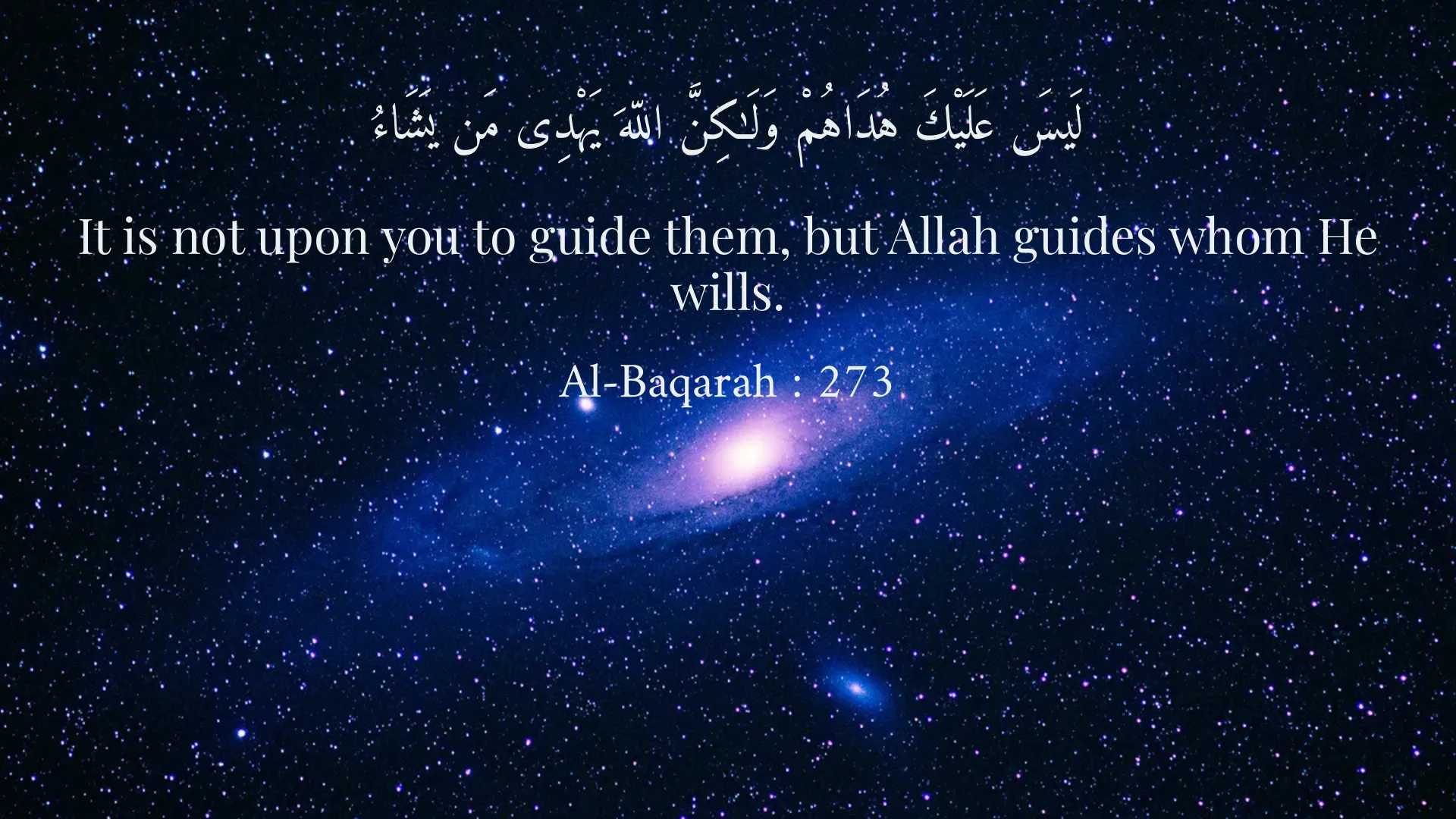
In the Holy Quran, the importance of helping the needy and the poor is outlined as one of the fundamental duties that every human being should uphold. The Quran serves as a guiding text for millions of followers, and its verses convey timeless wisdom on charity, compassion, and sincerity. As human beings, it is our responsibility to recognize those who are less fortunate and extend our hands to lift them from their hardships. Charitable acts are not merely recommended; they are mandated by Allah, and they form an essential part of our moral and ethical frameworks. One vital point emphasized in this context is the necessity of performing charitable acts sincerely, without ostentation or display. The intention behind any act of charity is critical, for it determines the moral worth and acceptance of that act in the eyes of Allah. In Surah Al-Baqarah, verse 273, it clearly states: "It is not upon you to guide them, but Allah guides whom He wills." This verse elucidates that guidance is in the hands of Allah, and as individuals, our responsibility is to help others with pure intentions, seeking nothing in return. This notion is essential because true charity stems from a selfless heart, one that desires to alleviate the suffering of others rather than to gain prestige or recognition. Helping the needy should be approached as a sacred duty, an obligation towards our fellow human beings. Moreover, in Surah Al-Imran, verse 92, it states: "Never will you attain the good reward until you spend in the way of Allah from that which you love." This powerful statement implies that genuine goodwill towards God is intimately linked to our willingness to part with those things that we cherish. The act of giving should be viewed not only as a support to others but also as a testament to our faith and love for Allah. It encourages us to sacrifice from our own resources and abundances, giving from what we hold dear. When we let go of what we value most for the sake of others, we are elevating our spiritual stature and drawing closer to the divine. Another vital aspect of charity highlighted in the Quran is the importance of secrecy in our charitable endeavors. In Surah Al-Mu’minun, verse 60, it states: "And those who are to their trusts and their covenant due." Upholding our trusts and maintaining the confidentiality of our charitable acts brings about an added layer of integrity and humility. When we help the poor and less fortunate, we must do so discreetly, without boasting or publicly disclosing our acts of charity. This lack of vanity ensures that our motives remain pure and unaffected by social pressures or the desire for validation. To help the needy with discretion also ties back into maintaining the dignity of those we aid. When we go out of our way to ensure that our assistance does not come with strings attached, nor does it demean the recipient, we foster an environment where our actions speak of genuine caring rather than a desire for recognition. This is not just an act of charity; it is an acknowledgment of their dignity as human beings and as brothers and sisters in faith. To treat the needy with kindness and respect will make our acts of charity more meaningful and impactful, creating a bond of empathy and understanding between individuals. We must strive to utilize kind and friendly phrases when interacting with those in need. The manner in which we approach them can significantly alter their perception of the aid being offered. When they feel respected and valued, rather than belittled or ashamed, it cultivates an atmosphere of mutual respect. Instead of adopting a condescending tone, we should remind ourselves that we, too, are part of a community, and it is our duty as believers to support one another. By fostering this sense of camaraderie, we not only fulfill our religious obligations but also reinforce the social fabric that connects us all. Ultimately, the most essential aspect of charitable deeds in light of the Quran is the purity of our intentions. To act without arrogance or vanity requires self-reflection and sincerity. Our generosity should emerge from a deep understanding of our shared humanity and the interconnectedness of our lives. Every individual, regardless of their circumstances, is deserving of compassion and support. By engaging in acts of charity consistently and with the right intentions, we can fulfill our duties as prescribed by Allah while also transforming our communities and the lives of those in need. In conclusion, the teachings of the Holy Quran guide us towards a path of empathy, generosity, and sincerity when it comes to helping the needy. The emphasis on pure intentions and the avoidance of display or pretense serves as crucial reminders of the essence of true charity. As believers, we are called not just to give, but to give with hearts untainted by pride or arrogance. By adhering to these principles, we can fulfill our noble responsibilities towards one another and work towards creating a more compassionate and supportive society. Together, we can embody the values of charity and kindness, ensuring that no one is left behind and that every individual feels valued and cherished.
Related Verses
لَيسَ عَلَيْكَ هُدَاهُمْ وَلَـٰكِنَّ اللّهَ يَهْدِى مَن يَشَاءُ
It is not upon you to guide them, but Allah guides whom He wills.
Al-Baqarah : 273
لَن تَنَالُوا الْبِرَّ حَتَّى تُنفِقُوا مِمَّا تُحِبُّونَ
Never will you attain the good reward until you spend in the way of Allah from that which you love.
Al-Imran : 92
وَالَّذِينَ هُمْ لِأَمَانَاتِهِمْ وَعَهْدِهِمْ رَاعُونَ
And those who are to their trusts and their covenant due.
Al-Mu'minun : 60
Short Story
One day, Arif decided to help a local charity. He would spend a portion of his money assisting the poor each week, always under the radar. He understood that helping the needy was a duty he had to fulfill. One day, he saw a desperate man feeding his children and thought to himself: 'This kindness and love should be pure and selfless.' From that moment, he committed to help the needy sincerely and without any expectation of recognition.