Quranic Answer
Internalizing moral behaviors is a fundamental aspect of personal development and societal progress. It requires not just an understanding of moral concepts but also a conscious effort to reflect on and embody these principles in our daily lives. As emphasized in the Holy Quran, the importance of moral conduct is central to the fabric of human interactions, which calls for a deeper understanding and appreciation of what it means to live a life governed by moral values. Awareness of moral concepts is the first step towards internalizing them. The Quran provides profound insights into these ethical principles, guiding believers towards a righteous and conscientious existence. An important verse that encapsulates this message is found in Surah Al-Hujurat (49:11), where Allah commands: 'O you who have believed, let not a people ridicule [another] people; perhaps they may be better than them.' This verse serves as a powerful reminder that we should not judge or mock others based on superficial characteristics such as race, ethnicity, or gender. Instead, it challenges us to foster an atmosphere of equality and respect, recognizing the inherent dignity of every individual. The implications of this verse extend far beyond the act of ridicule; they invite us to examine our attitudes and behaviors toward others critically. Mockery and derision often stem from ignorance, fear, or misunderstanding. Therefore, to internalize this moral lesson, we must cultivate empathy and strive to understand the lives and experiences of those who are different from ourselves. Engaging in conversations, reading diverse narratives, and asking questions can help dismantle biases and broaden our perspectives. Furthermore, to instill moral behaviors in our everyday lives, the recitation, contemplation, and application of the Quranic verses can serve as a significant source of inspiration. For instance, in Surah Al-Imran (3:134), Allah speaks of the virtue of forgiveness: 'And those who, when they commit an immorality or wrong themselves by [doing] evil, remember Allah and seek forgiveness for their sins.' Here, the act of remembering Allah is intrinsically tied to moral conduct. Reflecting on our shortcomings and seeking forgiveness enables us to develop a compassionate outlook toward ourselves and others. Kindness and forgiveness are vital aspects of our moral obligations. By practicing forgiveness, we not only liberate ourselves from emotional burdens but also set an example for others to follow. It creates a ripple effect that can foster a culture of understanding and compassion in our communities. However, it is essential to recognize that forgiveness does not mean condoning wrongdoing; rather, it signifies acknowledging our shared humanity, learning from our mistakes, and committing to a path of improvement. To internalize these qualities effectively, we can adopt practical methods that reinforce moral principles in our lives. One such method is meditation, which can help clear the mind and center our thoughts on important ethical frameworks. Through meditation, we can cultivate mindfulness, allowing us to become more aware of our actions and the potential impact they have on others. Regularly reminding ourselves of key moral tenets, سواء through journaling or engaging in discussions, can also strengthen our commitment to living according to these values. In addition, actively participating in social activities is another powerful avenue to strengthen our sense of moral responsibility. Engaging in community service, helping those in need, or advocating for social justice allows us to live out the principles we have internalized. These acts not only benefit others but also reinforce our own understanding of empathy and solidarity. Through service, we witness the challenges faced by different segments of society and develop a greater sense of responsibility toward one another. Moreover, self-reflection is a crucial component of moral development. Reflecting on our thoughts, behaviors, and decisions allows us to assess the alignment of our actions with our values. Through journaling or introspective conversations with trusted friends or mentors, we can identify areas for growth and take actionable steps toward becoming better versions of ourselves. This ongoing reflection helps us internalize moral principles, making them an integral part of our identities. Building a morally conscious character does not occur overnight; it is a gradual process requiring persistence and dedication. By being conscious of our thoughts and actions, as well as their consequences, we solidify the foundation of our moral framework. Education, both formal and informal, also plays a key role in developing moral behaviors. From a young age, we are taught the importance of honesty, integrity, and compassion. However, learning does not stop with formal education; it continues throughout our lives through experiences, observations, and continuous engagement with moral texts like the Quran. In today's world, where societal challenges such as inequality, discrimination, and moral ambiguity are prevalent, internalizing moral behaviors is essential for fostering a peaceful and harmonious community. The lessons drawn from the Quran encourage us to reflect upon our responsibilities not only as individuals but also as members of a collective society. By striving to internalize these moral behaviors, we contribute to a culture of kindness, forgiveness, and respect, ultimately paving the way for a more just and equitable world. In conclusion, the journey of internalizing moral behaviors begins with awareness and reflection upon moral concepts as guided by the teachings of the Holy Quran. By actively engaging with these principles through recitation, meditation, and practical application, we can cultivate a deep sense of moral responsibility. Participating in social activities and embracing self-reflection further empower us to embody these values in our daily lives. As we consciously work to internalize moral behaviors, we contribute to our own growth and the betterment of society as a whole, fostering a legacy of respect, equality, and compassion for generations to come.
Related Verses
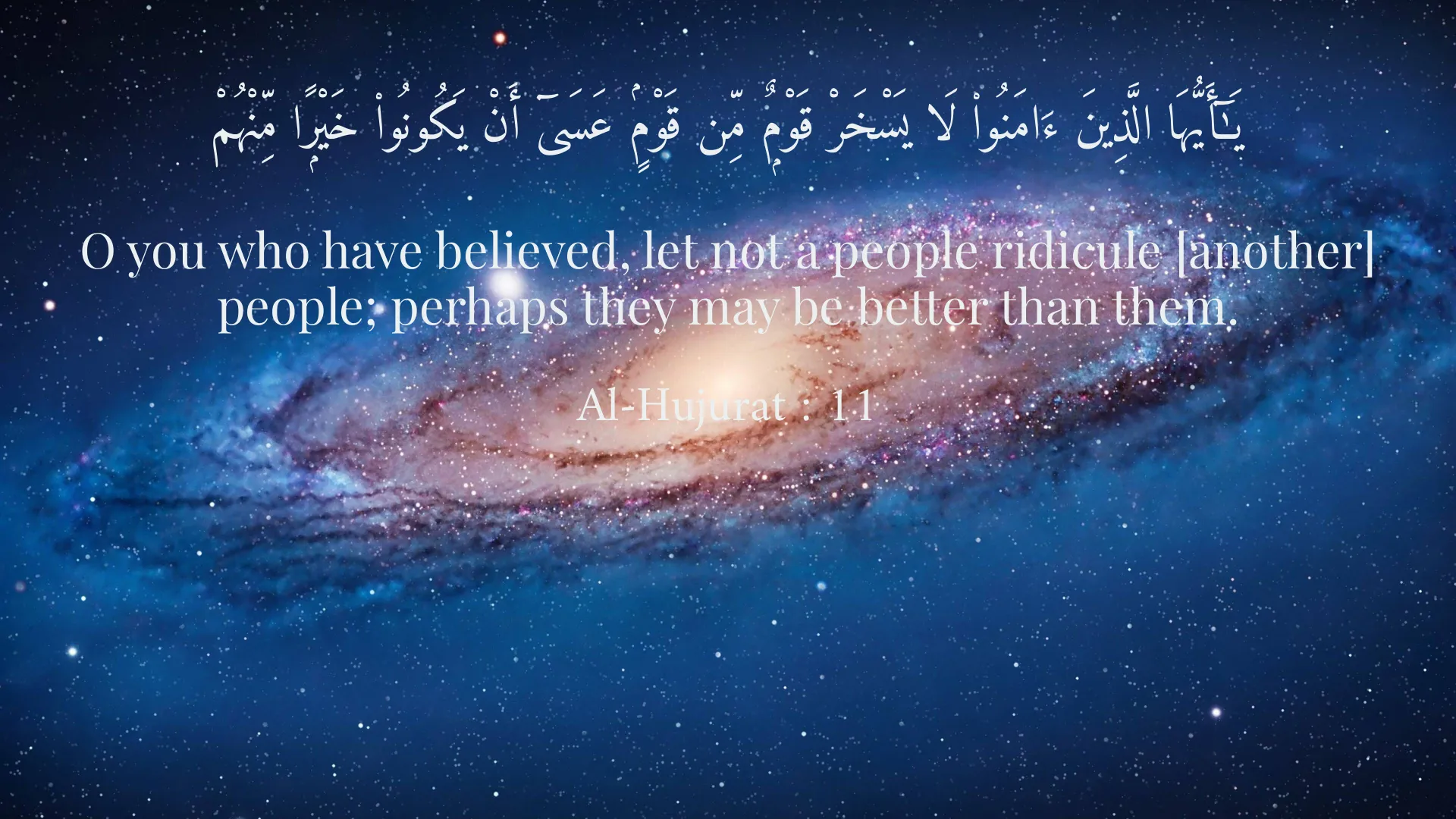
يَٰٓأَيُّهَا الَّذِينَ ءَامَنُوا۟ لَا يَسْخَرْ قَوْمٌۭ مِّن قَوْمٍۢ عَسَىٓ أَنْ يَكُونُوا۟ خَيْرًۭا مِّنْهُمْ
O you who have believed, let not a people ridicule [another] people; perhaps they may be better than them.
Al-Hujurat : 11
وَالَّذِينَ إِذَا فَعَلُوا۟ فَاحِشَةًۭ أَوْ ظَلَمُوا۟ أَنفُسَهُمْ ذَكَرُوا۟ ٱللَّهَ فَٱسْتَغْفَرُوا۟ لِذُنُوبِهِمْ ۖ وَمَن يَغْفِرُ ٱلذُّنُوبَ إِلَّا ٱللَّهُ
And those who, when they commit an immorality or wrong themselves by [doing] evil, remember Allah and seek forgiveness for their sins. And who can forgive sins except Allah?
Al-Imran : 134
Short Story
Once, a young man named Amir was in a school class when his teacher emphasized that the most important thing in life is to follow moral principles. He said that if each of us pays attention to our behavior, we can become a moral community. After that, Amir decided to reflect on his actions daily. He began to study the verses of the Quran and tried to apply them in his life. Since then, he felt greater happiness and peace, and his friends were also influenced by his positive behavior.