Quranic Answer
Unconditional love is a concept that resonates deeply within various philosophical and religious frameworks, but it holds a particularly significant place in many religious teachings, especially in the Quran. This foundational concept encourages individuals to engage in acts of kindness, compassion, and selflessness without the expectation of receiving anything in return. Such ideals are fundamental in establishing meaningful connections among individuals, and they derive their power from spiritual beliefs and practices that promote altruism and empathy. The Holy Quran elaborates on the theme of unconditional love through various verses that speak to the principles of righteousness, charity, and the importance of selfless actions. One such example is found in Surah Al-Baqarah, verse 177, which beautifully outlines what true righteousness entails. Allah states: "Righteousness is not that you turn your faces toward the east or the west, but [true] righteousness is in one who believes in Allah, the Last Day, the Angels, the Book, and the Prophets and gives his wealth, in spite of love for it, to relatives, orphans, the needy, the traveler, those who ask [for help], and for freeing slaves; and [who] establishes prayer and gives zakah; [those who] fulfill their promise when they promise; and [those who] are patient in poverty and hardship and during battle..." This profound verse does more than just outline the characteristics of a righteous person; it challenges the conventional understanding of what it means to perform good deeds. It goes beyond mere rituals and ceremonial practices; instead, it emphasizes the purity of one's heart and the intentions driving their actions. True love, as highlighted in this verse, must arise from a genuine belief in Allah and be expressed through righteous acts that demonstrate compassion for others. Thus, unconditional love is intertwined with the notion of sacrifice. The verse suggests that the act of giving one's wealth, especially in times of hardship or when it is held dear, is an indicator of true righteousness. The act of giving—or loving—requires a spirit of sacrifice that mirrors an individual's commitment to the principles of Islam. This selfless act reinforces the belief that love should not be transactional; instead, it should be freely given without the anticipation of reward or recognition. Moreover, Surah Al-Imran, verse 92 echoes this sentiment by stating: "Never will you attain the good reward until you spend [in the cause of Allah] from that which you love." This verse serves as a reminder that goodness and true fulfillment come through the practice of unconditional love manifesting as giving from one's best possessions or resources. The challenge put forth by this verse serves as an inner reflection point for the believers, nudging them toward self-examination about their priorities and motivations. When one approaches the idea of unconditional love from a religious perspective, it naturally invites the encouragement of pure intentions as well. The connection between the individual's actions and the intention behind them plays a fundamental role in determining the value of those actions in the eyes of Allah. Practicing unconditional love requires believers to seek God's approval and goodwill in everything they do. This is especially significant in the context of social justice and charity, where one’s selfless contributions can create ripples of positivity throughout society. Additionally, the principle of unconditional love embraces a broader sociocultural context. It calls for a profound sense of empathy and understanding among community members, regardless of differences. This ideal not only strengthens interpersonal relationships but also promotes a more supportive and harmonious society. For example, when individuals practice kindness towards orphans, the needy, or even those who ask for assistance, they transcend societal expectations and reinforce the social fabric that binds communities together. The act of serving others willingly creates a sense of community and belonging. A deeper understanding of unconditional love can also be drawn from the teachings of the Prophet Muhammad (peace be upon him), who exemplified this love through his actions and teachings. His life was filled with examples of showing mercy, care, and kindness to others—be it his companions, family, or even strangers. One famous saying of the Prophet asserts: "None of you truly believes until he loves for his brother what he loves for himself." This statement captures the essence of unconditional love in a mutual social environment, emphasizing that one’s care is not limited to familial bonds but extends to all of humanity. Furthermore, the practice of unconditional love transcends religious boundaries, influencing various aspects of daily life. Whether it is parental love towards children, friendships that endure hardship, or simply offering kindness to strangers, the application of this love fosters deeper connections and encourages a culture of support. The universal truth that one experiences love immensely when they give love willingly is a testament to the cyclical nature of kindness—it not only uplifts others but paradoxically nourishes one’s spirit as well. In conclusion, unconditional love, as articulated in the Quran, reflects a critical component of what it means to live a righteous life. It emphasizes the need for absolute sincerity in intentions and actions while encouraging believers to contribute positively to the lives of others without expectation. This sacred form of love not only advances spiritual principles but also offers a guiding light for effective engagement in society. By holding true to these teachings and fostering unconditional love, individuals can create an enduring legacy of kindness and compassion that resonates throughout generations.
Related Verses
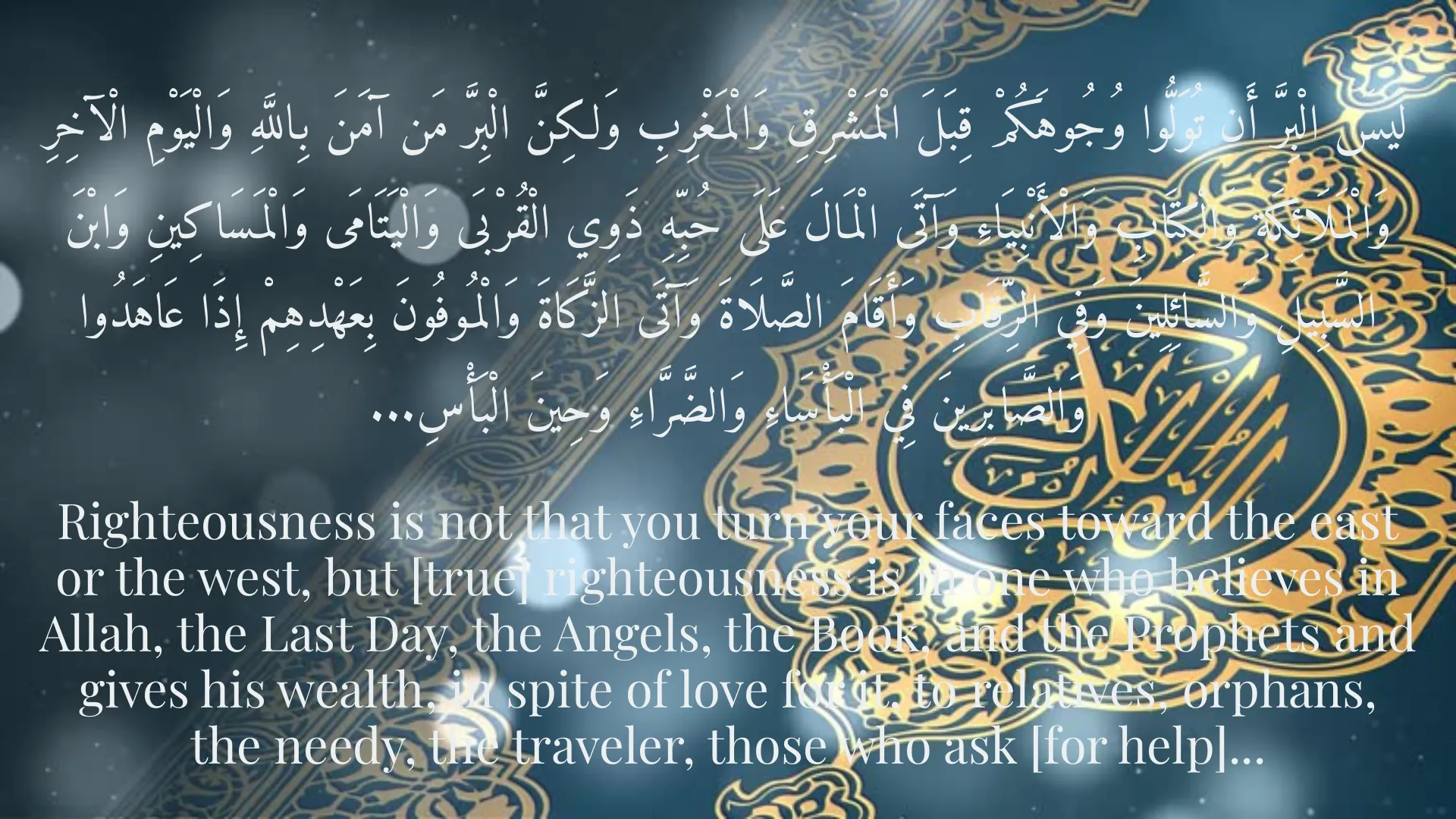
لَيسَ الْبِرَّ أَن تُوَلُّوا وُجُوهَكُمْ قِبَلَ الْمَشْرِقِ وَالْمَغْرِبِ وَلكِنَّ الْبِرَّ مَن آمَنَ بِاللَّهِ وَالْيَوْمِ الْآخِرِ وَالْمَلَائِكَةِ وَالْكِتَابِ وَالْأَنْبِيَاءِ وَآتَى الْمَالَ عَلَى حُبِّهِ ذَوِي الْقُرْبَى وَالْيَتَامَى وَالْمَسَاكِينِ وَابْنَ السَّبِيلِ وَالسَّائِلِينَ وَفِي الرِّقَابِ وَأَقَامَ الصَّلَاةَ وَآتَى الزَّكَاةَ وَالْمُوفُونَ بِعَهْدِهِمْ إِذَا عَاهَدُوا وَالصَّابِرِينَ فِي الْبَأْسَاءِ وَالضَّرَّاءِ وَحِينَ الْبَأْسِ...
Righteousness is not that you turn your faces toward the east or the west, but [true] righteousness is in one who believes in Allah, the Last Day, the Angels, the Book, and the Prophets and gives his wealth, in spite of love for it, to relatives, orphans, the needy, the traveler, those who ask [for help]...
Al-Baqarah : 177
لَن تَنَالُوا الْبِرَّ حَتَّى تُنفِقُوا مِمَّا تُحِبُونَ...
Never will you attain the good reward until you spend [in the cause of Allah] from that which you love.
Al-Imran : 92
Short Story
On one warm summer night, Narges was sitting in a café, pondering over her life. She thought about how she could express her love without expecting anything in return. She recalled the Quranic verses that teach unconditional love. Narges decided to engage in charitable acts, such as helping orphans and giving wages to day laborers. Gradually, she felt that her life became brighter and happier.