Quranic Answer
Title: The Importance of Treating Others with Respect in the Holy Quran Introduction In the teachings of the Holy Quran, the importance of treating others with respect is emphasized as a fundamental principle of Islam. The Quran serves as a moral compass for Muslims, guiding them in their interactions with others. Key verses from the Quran highlight various aspects of respect, kindness, and cooperation within the community. This article delves into specific verses from the Quran that convey these significant lessons, ultimately illustrating how respect fosters positive relationships and builds a healthy community. Respecting Our Elders and the Vulnerable One of the key instructions given in the Holy Quran is found in Surah An-Nisa, verse 36. Allah directs Muslims to treat their parents, relatives, orphans, and the needy with utmost goodness. This verse serves as a reminder that respect begins at home and extends to those who are vulnerable in society. By treating our parents and elders with honor and respect, we acknowledge their sacrifices and wisdom. Likewise, caring for orphans and the needy showcases a community's compassion and commitment to helping those less fortunate. In Islamic teachings, the act of respecting and providing for the less fortunate is not merely an act of charity; it is regarded as a moral duty. When individuals acknowledge and fulfill the rights of others, they contribute to societal cohesion and stability. Therefore, respecting others is intertwined with acts of kindness, which ultimately uplifts the entire community. Building Respectful Relationships with Neighbors and Friends In the same verse from Surah An-Nisa, Allah emphasizes the importance of treating neighbors and friends with respect. Relationships with neighbors are particularly significant in Islamic culture. Neighbors are often considered an extension of one's family, and the Quran encourages Muslims to engage with them respectfully. This fosters harmony and creates a sense of belonging within the community. Creating strong bonds with friends based on respect can lead to fruitful and positive interactions. When individuals treat each other with kindness and consideration, it lays the groundwork for building lasting friendships and trust. Fundamentally, respect is the foundation upon which relationships flourish, and when mutual respect is present, conflicts can be resolved amicably, and support can be provided readily. Embracing Differences and Promoting Diversity The Holy Quran also addresses the importance of accepting and respecting differences among people. In Surah Al-Hujurat, verse 13, Allah instructs humanity to appreciate diversity and avoid judgment. This verse underscores the notion that people are created with unique attributes, backgrounds, and perspectives. Instead of fostering division through judgment, the Quran encourages individuals to engage with one another cooperatively and supportively. In today's globalized world, embracing diversity has never been more essential. As individuals from various cultures, languages, and traditions come together, understanding and respecting each other's differences become imperative. Promoting an inclusive environment where different viewpoints can coexist fosters social harmony and collaboration. It leads to increased openness and diminishes prejudices or biases against others. Fostering Mutual Cooperation and Support The principle of cooperation is further emphasized in Surah Aal-E-Imran, verse 159. In this verse, Allah highlights the importance of seeking consultation with one another. This molding of respectful dialogue manifests itself in daily life through listening to others' opinions and expressing our viewpoints with courtesy. Engaging in constructive dialogue and considering differing perspectives nurtures mutual respect and understanding. In a community where cooperation is encouraged, individuals feel valued and empowered. It is crucial for everyone, especially leaders, to cultivate a culture of openness that allows everyone to express their thoughts and concerns without fear of judgment. When community members respect one another's opinions and collaborate, it fosters a supportive environment where positive outcomes can be achieved. Respect as a Fundamental Religious Duty The Quran's teachings establish treating others with respect as a fundamental religious duty for Muslims. Respecting others is not limited to specific groups; instead, it encompasses everyone in the community, including colleagues, strangers, and even those with differing beliefs. This inclusive principle emphasizes the notion that every individual deserves dignity and respect, irrespective of their background, beliefs, or status. As Muslims navigate their daily lives, they should strive to embody this principle consistently. Being respectful and compassionate reflects the essence of Islam and a believer’s character. The demonstration of respect can take many forms, such as active listening, being considerate, and recognizing the dignity of every person. These behaviors are not only taught through religious texts but are also instrumental in building a promising future where kindness reigns. Creating a Healthy Community The act of treating others with respect ultimately contributes to the formation of a harmonious and healthy community. When individuals approach each other with kindness and understanding, it lays the groundwork for constructive interactions. Respectful behavior reduces the likelihood of conflict and misunderstandings, allowing communities to function cohesively. Moreover, when people feel respected, they are more likely to extend that respect to others. This creates a ripple effect, improving the overall dynamics of interpersonal relationships within the community. Therefore, fostering an environment rooted in respect can lead to the cultivation of positive relationships that further benefit society as a whole. Conclusion In summary, the Holy Quran teaches Muslims the vital importance of treating others with respect through various verses that illuminate the significance of kindness, cooperation, and understanding. By embracing these principles, individuals can create a nurturing environment that promotes peace and mutual support within the community. Respect is not merely a moral duty; it is the pathway to building lasting relationships and a healthier community. As Muslims, adhering to these teachings elevates their character and fosters connections, paving the way toward a more harmonious and compassionate society.
Related Verses
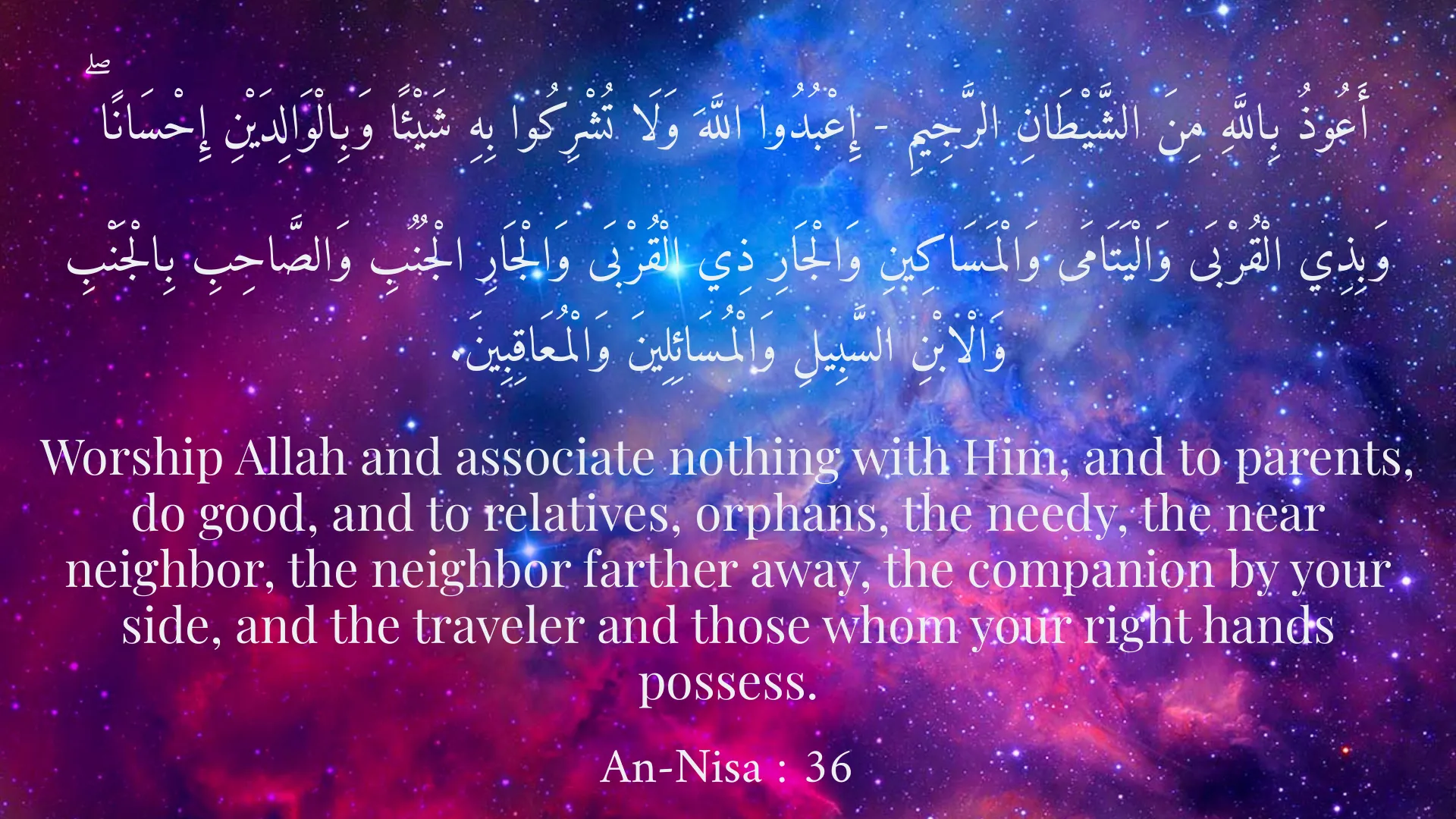
أَعُوذُ بِاللَّهِ مِنَ الشَّيْطَانِ الرَّجِيمِ - إِعْبُدُوا اللَّهَ وَلَا تُشْرِكُوا بِهِ شَيْئًا وَبِالْوَالِدَيْنِ إِحْسَانًا ۖ وَبِذِي الْقُرْبَى وَالْيَتَامَى وَالْمَسَاكِينِ وَالْجَارِ ذِي الْقُرْبَى وَالْجَارِ الْجُنُبِ وَالصَّاحِبِ بِالْجَنْبِ وَالْابْنِ السَّبِيلِ وَالْمُسَائِلِينَ وَالْمُعَاقِبِينَ.
Worship Allah and associate nothing with Him, and to parents, do good, and to relatives, orphans, the needy, the near neighbor, the neighbor farther away, the companion by your side, and the traveler and those whom your right hands possess.
An-Nisa : 36
يَا أَيُّهَا النَّاسُ إِنَّا خَلَقْنَاكُم مِّن ذَكَرٍ وَأُنْثَى وَجَعَلْنَاكُمْ شُعُوبًا وَقَبَائِلَ لِتَعَارَفُوا ۚ إِنَّ أَكْرَمَكُمْ عِندَ اللَّهِ أَتْقَاكُمْ ۗ إِنَّ اللَّهَ عَلِيمٌ خَبِيرٌ.
O mankind, indeed We have created you from male and female and made you peoples and tribes that you may know one another. Indeed, the most noble of you in the sight of Allah is the most righteous of you. Indeed, Allah is Knowing and Acquainted.
Al-Hujurat : 13
فَبِمَا رَحْمَةٍ مِّنَ اللَّهِ لِنتَ لَهُمْ ۖ وَلَو كُنتَ فَظًّا غَلِيظَ الْقَلْبِ لَانفَضُّوا مِن حَوْلِكَ ۖ فَاعْفُ عَنْهُمْ وَاسْتَغْفِرْ لَهُمْ وَشَاوِرْهُمْ فِي الْأَمْرِ ۖ فَإِذَا عَزَمْتَ فَتَوَكَّلْ عَلَى اللَّهِ ۚ إِنَّ اللَّهَ يُحِبُّ الْمُتَوَكِّلِينَ.
So by mercy from Allah, [O Muhammad], you were lenient with them. And if you had been rude in speech and harsh in heart, they would have disbanded from about you. So pardon them and ask forgiveness for them and consult them in [matters of] conduct. And when you have decided, then rely upon Allah. Indeed, Allah loves those who rely [upon Him].
Aal-E-Imran : 159
Short Story
One day, a man named Hasan decided to create a respectful and friendly atmosphere among his friends. He always made it a point to listen to others' opinions and treat them with respect during their meetings. When he treated others with respect, his friends responded warmly, leading to a warm and friendly environment. Hasan realized that respect and kindness have a profound impact on relationships and can strengthen friendships.