Quranic Answer
Managing anger is one of the significant challenges that humans face in everyday life. Anger is a natural emotion experienced by everyone; however, how we cope with it ultimately shapes our relationships and overall well-being. Whether it arises from frustration, disappointment, or misunderstandings, uncontrolled anger can lead to regrettable actions that can cause significant harm—not only to ourselves but also to others. In this article, we will delve into how the teachings of the Holy Quran provides guidance on how we can effectively manage our anger. By doing so, we can lead a more peaceful and fulfilling life, embracing the virtues of patience, forgiveness, and self-control. The Holy Quran serves as a moral and ethical reference for millions of Muslims around the world and offers comprehensive guidance for numerous facets of life, including emotional management. In Surah Al-Imran, verse 134, Allah refers to the people of better character and virtue, stating that they are those who control their anger and act with forgiveness towards others. This verse lays the groundwork for the practice of anger management as it highlights that true strength lies not in the absence of anger but in the ability to manage it constructively. Controlling anger involves self-awareness, practice, and unwavering commitment. Recognizing the triggers of our anger is the first step towards mastering it. Understanding what causes us to feel angry can help us respond more calmly. When angry, it is essential to take a moment to pause and reflect rather than react impulsively; this coincides with the divine command in Surah Ash-Shura, verse 37, where Allah instructs believers to abstain from hatred and enmity. The principle that we must favor rational thinking and analytical reasoning over jeopardizing our relationships is vital. When we are gripped by anger, it can cloud our judgment and lead us to say or do things we may later regret. Practicing mindfulness—being present at the moment without judgment—can help us understand our emotions better and respond appropriately. Using breathing techniques or stepping away from the situation temporarily can give us the space to cool down and approach the issue with a clearer mind. Furthermore, many verses in the Quran underline the importance of patience, a key component in emotional regulation. In Surah Al-Baqarah, verse 153, it is said: "O you who have believed, seek help through patience and prayer." This phrase emphasizes that cultivating patience through prayer and reliance on Allah’s guidance can serve as an effective method for calming our anger and controlling our emotions. Developing a daily prayer routine can significantly enhance our ability to cope with life's challenges and handle our anger. Building a dialogue with oneself can be beneficial in reframing anger-inducing thoughts. Instead of allowing anger to take control, we can ask ourselves why we feel this emotion and what actions would lead to a more productive outcome. The Quran teaches us the importance of self-reflection, and this introspective approach towards managing anger can be transformative. Moreover, empathy plays a crucial role in anger management. Understanding the perspective of others and recognizing that everyone has their struggles can soften our hearts and reduce feelings of hostility. Fostering compassion in our hearts enables us to practice forgiveness—a fundamental principle emphasized throughout the Quran. When we forgive, we liberate ourselves from the shackles of anger and resentment, allowing ourselves to experience peace and tranquility. The consequences of impulsive anger can be disastrous. Relationships may fracture, careers can be jeopardized, and the emotional toll can lead to further complications, including anxiety and depression. Reflecting on these outcomes can reinforce our commitment to managing anger more effectively. As individuals, we need to remind ourselves that the value of forgiveness and maintaining peace far outweighs the temporary relief of releasing our anger. In addition to scriptural teachings, various real-life scenarios may illustrate how these principles are applied. For instance, in the family context, a parent might feel anger rising during a conflict with their child. Instead of reacting harshly, they could take a moment to breathe, remember the importance of patience, and strive to communicate in a loving manner. By doing so, not only do they model healthy behaviors for their children but also enable a much more positive resolution to the conflict. In the workplace, emotions can often run high due to deadlines and demanding environments. Colleagues may find themselves in tense situations. However, if they adopt the principles of rational discussion over halfhearted reactions, a collaborative environment is cultivated instead. By practicing empathy and patience, workplace relationships can improve, leading to enhanced teamwork and productivity. In conclusion, managing anger effectively is undoubtedly one of the most important challenges we face on a daily basis. By reflecting on and applying the timeless teachings of the Holy Quran, such as the need to control anger and the significance of forgiveness, we can strive to manage our emotions better. Establishing practices that promote patience, self-awareness, and empathy can help us navigate through life's inevitable challenges and foster healthier relationships with ourselves and others. The impact of choosing peace over anger can be profoundly transformative, leading to a more harmonious existence rooted in love, understanding, and compassion. As we continue to grow and develop, let us keep in mind the value of self-control, and find strength in our faith. Through dedication to these principles, a mindful approach to managing anger can pave the way to a fulfilling, peaceful life.
Related Verses
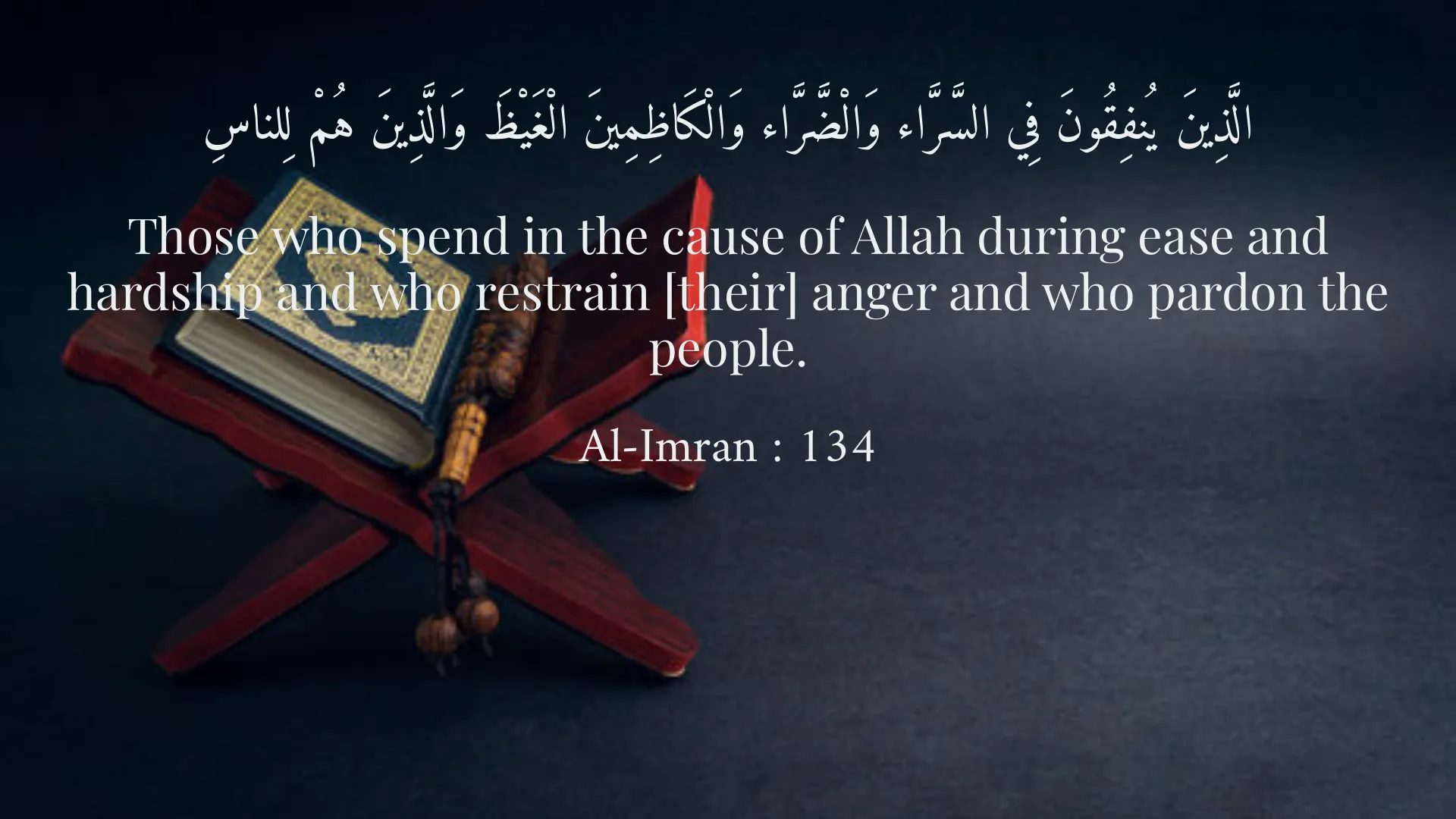
الَّذِينَ يُنفِقُونَ فِي السَّرَّاء وَالْضَّرَّاء وَالْكَاظِمِينَ الْغَيْظَ وَالَّذِينَ هُمْ لِلناسِ
Those who spend in the cause of Allah during ease and hardship and who restrain [their] anger and who pardon the people.
Al-Imran : 134
وَالَّذِينَ لَا يَشْهَدُونَ الزُّورَ وَإِذَا مَرُّوا بِاللَّغْوِ مَرُّوا كِرامًا
And those who do not witness falsehood, and when they pass by ill speech, they pass by with dignity.
Ash-Shura : 37
يَا أَيُّهَا الَّذِينَ آمَنُوا اسْتَعِينُوا بِالصَّبْرِ وَالصَّلَاةِ ۖ إِنَّ اللَّهَ مَعَ الصَّابِرِينَ
O you who have believed, seek help through patience and prayer. Indeed, Allah is with the patient.
Al-Baqarah : 153
Short Story
One day, a man named Ahmad who was middle-aged was losing his temper against his wife. He decided to study the verses of the Quran. One day he came across verse 134 of Surah Al-Imran and decided to control his anger. Over time, he felt that his life was moving towards greater peace and his relationships with his family improved.